Focus on Physicians:
Insights, Ideas, and Strategies






















Mindfulness: A Surprisingly Practical Tool for Time Management
When you’re busy and feeling time-pressured, mindfulness may seem to be an uneasy, even unwelcome, construct. Who has time for it? Yet it turns out that simple mindfulness practices can help you to reframe and de-escalate the struggles of the day. In this article I will show you how using mindfulness can create the mental space you need to confidently and calmly manage patient care while protecting your precious time.
An earlier version of the article appeared on this website in November 2024
You’ve studied, trained, and practiced for years to provide the best care for your patients. But as the world has become increasingly tech-driven and relentlessly connected, the pressures from both within and outside of the healthcare workspace for your time and attention have multiplied.
Whether it’s pings from the EHR, text messages from the hospital, urgent calls from colleagues or families, or the never-ending firehose of emails, it’s likely that your attention has become more fragmented than ever before.
When you’re busy and feeling time-pressured, mindfulness may seem to be an uneasy, even unwelcome, construct. Just another box to click and move on. Who has time for it? Yet it turns out that simple mindfulness practices can help you to reframe and de-escalate the struggles of the day.
Mindfulness won’t cure the ills that physicians face in the current healthcare environment, but it can mitigate their impact. In this article I will show you how using mindfulness can create the mental space you need to confidently and calmly manage patient care while protecting your precious time.

Start with Mindful Mornings
Mornings can often feel a little frantic, but making room for a simple 5-minute mindfulness practice can help to set the tone for your day. Here are some ideas to get you started:
🪷 Sit quietly with your morning coffee, allowing time for it to cool while you check in with your breath. Take a slow deep breath in through the nose, pause for a moment, and then breathe out through the mouth. You can use the box breathing technique, or simply find a rhythm that feels comfortable.
🪷 Use a mindfulness app like Insight Timer or Headspace. These programs have been linked to improved attention regulation and reduction in repetitive negative thoughts. Even a few minutes can make a difference.
🪷 Set a 5-minute timer and journal about anything that comes to mind.
Practice Mindful Transitions
Mindful task transitions can help you maintain your focus and prevent mental fatigue. Before moving on to a new task, appointment, or procedure, take a moment to pause, breathe deeply, and clear your mind.
You’ll be more present for your patient, which can build trust and connection. And this mindful pause can enhance your efficiency by helping to prevent the accumulation of mental clutter, or what is known as attention residue.
Embrace Single-Tasking
Multitasking used to be considered a prerequisite superpower for productivity. Doing two or more things at once--what could possibly go wrong? A lot, actually.
Emergency Department physicians may be the most pressed to multitask, with a recent Scandinavian study finding that almost 20 percent of their time is engaged this way. Not surprisingly, this study found that the more a physician multitasked, the more stressed they became. And other studies have found that multitasking can increase the risk for errors.
While you may not always have control over who or what interrupts you, it can help to remain mindful of the things that are pulling on your attention. When you are able to tune out distractions and put non-pressing matters on hold, you’re likely to be more productive and efficient with your time.
To tune up your ability to focus, regular meditation can help. That’s because mindfulness meditation is, at its foundation, a practice of returning your attention to the present moment.
Cultivate Presence
What exactly is presence? Actress Anna Deavere Smith, in her book Letters to a Young Artist, counsels that “Presence means you hold your own space, control the space around you, and sometimes welcome others into it.” As a physician, you too are tasked with holding space, while simultaneously creating a place of safety for your patients to enter.
In being present, you are listening mindfully, without jumping to conclusions or judgments. You’re paying attention not only to the words but to the body language and, sometimes, to the unspoken fears beneath the words.
This might sound like it could add time to the encounter, but the truth is that when you lead with mindfulness, your patient is more likely to feel heard and safe. You are more apt to integrate information that might otherwise slip beneath your radar, so your differential may be more accurate.
And as you build trust, your treatment plan may be more readily accepted, and you’re likely to get fewer in-box messages or worried phone calls after the encounter.
End with Mindful Reflection
As you close out the day, take five to ten minutes to reflect on your “wins”, your “dones”, and your “to-dos”. Acknowledge both your successes and areas for improvement, but avoid falling into self-criticism.
By creating a to-do list for the next day, you can set aside your lingering worries and unchecked boxes, knowing that you’ve made a plan to tackle them tomorrow.
Your closing-down practice could even include stopping at a coffee shop on your way home to enjoy a cup of decaf and take a few minutes to journal and debrief before entering into your home life.
This time between work and home can also give you a safe space to decompress from your work day so that you’re able to be present for your loved ones, making the most of the time remaining in the day.
Conclusion
Mindfulness is not going to solve all that is troubling healthcare. It doesn’t mean pretending that the troublesome systemic problems facing physicians don’t exist. But by cultivating a mindful approach to the day, you’ll set yourself up for greater focus and presence. And as a result, you’ll have more bandwidth for your patients, your staff, and your loved ones.
DISCLAIMER: As an Amazon Associate I may earn from qualifying purchases, which means that if you click on one of the product links, I’ll receive a small commission. This helps support the website, for which I am grateful! Please do your own research before making any important decisions.
If you’ve enjoyed this article and would like to stay in the loop for more insights on creating a sustainable, fulfilling, and happy life as a physician, sign up for my newsletter or reach out on my website. I’d love to hear from you.
And if you’d like to schedule a complimentary introductory meeting with me, click the link below.

Dealing with Regret: Discovering Growth and Self Compassion
When you’re a physician, it can sometimes feel as if the weight of the world is on your shoulders. Despite years of training and experience, dealing with the unexpected is part of the job.
Complex decisions with no easy solution, challenging interactions with patients and family, and outcomes that don’t always turn out as planned: these are unavoidable facts of life for most physicians.
Although you may thrive on the challenge of the unexpected, seemingly lost opportunities or unanticipated consequences may lead to feelings of regret that can haunt you when you least expect it.
This is completely normal, but coming to terms with regret can be difficult. What can make it especially painful is the fact that this aspect of professional life is rarely discussed out in the open.
In this article, we’ll talk about regret, what it can teach you, and how it might help you to become an even more effective physician.
An earlier version of this article appeared on this website in October 2024.
When you’re a physician, it can sometimes feel as if the weight of the world is on your shoulders. Despite years of training and experience, you can’t always predict a complication or an outcome. And you can never be certain how an individual or family is going to react, even when you believe you are offering good news. Dealing with the unpredictable is part of the job.
Although you may thrive on the challenge of difficult decisions and complex interactions, the shadow of lost opportunities or unanticipated consequences can sometimes lead to feelings of regret. These painful reminders may haunt you when you least expect them.
This is all completely normal, but coming to terms with regret can be difficult. What can make it especially distressing is the fact that this aspect of professional life is rarely discussed out in the open.
In this article, we’ll talk about regret, what it can teach you, and how it might help you to become an even more effective physician.
Regret is normal, and it’s a sign of compassion
Although it can feel crushing in the moment, regret is not a weakness or a marker of failure. Instead, it can be helpful to reframe regret as evidence that you are compassionate and invested in the outcome of your decisions. Whether that’s the well-being of your patients, the strength of your relationships, or the integrity of your work, you wouldn't feel regret if your work didn’t matter.
Learning from regret
When you recognize regret in this way, you can break the cycle of rumination and open yourself up to the multitude of lessons it holds, including opportunities for reflection and discovery.
Perhaps the lesson is learning to slow down, to listen more closely to your patient or their family, to take an extra breath before responding to a difficult conversation. Maybe it’s resolving to take a more active role, or advocating more effectively when faced with challenging situations. Or it could be a recommitment to ongoing learning and professional development.
It’s important to acknowledge that although the past cannot be changed, it can inform the future. If you can reframe a complication or a poor interaction as a catalyst for growth, it can help you to build strengths that will offer a way forward.
Here are some questions to ask yourself that might help to create mental space for new ideas:
Are there ways that you can mitigate the consequences, even now?
What would have needed to happen for things to have turned out differently?
What actions are within your control?
What resources might you need that were not available to you then?
How might you respond next time you’re faced with this situation?

The importance of self-compassion
As a physician, perfectionism is probably one of your driving forces. But at the same time, you may hold yourself to impossibly high standards.
Although you may never have been taught this in training, at some point in your career, you will very likely make a decision that, in hindsight, turns out to be wrong. Other times, some outcomes or reactions will simply be beyond your control.
Self-compassion means treating yourself with the same kindness and understanding that you would offer a colleague or friend. And at the same time, caring for yourself helps you to stay present and capable of providing the best care for your patients.
Of course, regret can sometimes feel overwhelming, despite your best efforts to overcome it. When this happens, professional help in the form of a counselor or a coach can be sustaining.
Turning regret into action
It’s important not only to acknowledge regret, but to turn your reflections into action. Use your hard-earned awareness to make adjustments, both big and small, that will help you navigate future challenges with more confidence and clarity. Depending on the source of your regret, it might mean
Taking a course
Learning or perfecting a skill
Seeking feedback or support from a trusted colleague, coach, or mentor
Implementing measurable changes in a process or procedure
Practicing mindful communication
Setting clearer boundaries
Reaching out to a mental health professional
Moving forward from regret is about progress, not perfection. It's about using each experience to inform your next steps without getting stuck in the past.
Discovering resilience and growth
Learning from regret will strengthen your resilience and shape your compassion for colleagues who may find themselves mired in similar situations. By being intentional rather than dwelling on self-blame, you will build a toolbox of strategies that will support you through the inevitable challenges that arise in the future.
Regret is a seldom-acknowledged part of the life of a physician. With time and practice, it can become a guide, pointing you towards opportunities for personal growth and a deeper connection with the values that first led you to find your place in the medical profession.
If you’ve enjoyed this article and would like to stay in the loop for more insights on creating a sustainable, fulfilling, and happy life as a physician, sign up for my newsletter or reach out on my website. I’d love to hear from you.
And if you’d like to schedule a complimentary introductory meeting with me, click the link below.

How Do You Know if You’re Burned Out? A Guide for Physicians
It’s no surprise that nationwide, levels of burnout reached record highs during the pandemic. But now that we are back to a semblance of normal, the percentage of physicians experiencing burnout symptoms still hovers a little under 50 percent-- far above the “baseline” of 38 percent in 2020. In this article, you'll learn how to know if you are burned out. And we'll go over the costs of burnout in both dollars and patient care.
An earlier version of this article was published on this website in April 2023.
Physician burnout may be out of the headlines, but it’s not a thing of the past. During the COVID-19 pandemic, burnout levels reached record highs, affecting more than 60 percent of physicians. While the pandemic is behind us, burnout rates remain stubbornly elevated.
Today, nearly half of physicians still report symptoms of burnout. That’s well above the pre-pandemic baseline of about 38 percent in 2020.
And even though the topic is no longer taboo, many physicians still find themselves wondering: Am I burned out? Or is this something else?
The challenge is that burnout isn’t always easy to recognize. This matters, because naming a problem is often the first step towards taking action. If you can’t name it, it’s harder to change it.
In the sections that follow, we’ll explore who’s most affected, how burnout is defined, the hidden costs, and a few simple ways to assess whether burnout may be affecting you.
Where Burn-Out Hits Hardest
Burnout hits physicians across the spectrum, but topping the list of burnout-inducing specialties are
💉Emergency Medicine
💉Family Medicine
💉OB-GYN
💉Pediatrics
💉Internal Medicine
💉Hospital medicine
Although burnout has decreased in all of these groups over the past several years, more than 40 percent of doctors surveyed in these specialties still report classic symptoms of burnout.

Why Burnout Matters
Not only is burnout demoralizing, but it has real consequences for physicians, patients, and the healthcare system.
Burnout has been linked to:
🔥 Increased physician turnover
🔥 Rising healthcare costs
🔥 Lower job satisfaction
🔥 Higher risk of medical errors
A 2019 study reported a conservative yearly cost of burnout to the US healthcare system of $4.6 billion dollars.
Is Burnout Just a Feeling?
Burnout is often misunderstood.
It’s easy to assume that burnout is simply a matter of stress management—or even a failure of resilience. But that’s not the case.
In fact, physicians tend to demonstrate higher levels of resilience than the general population, yet they also experience greater rates of burnout. While resilience is associated with lower burnout, even highly resilient physicians are not immune.
That’s because burnout is not a personal weakness or a failure to keep up. It’s not a mental illness that needs treatment. Burnout reflects a mismatch between the demands of the work and the resources available to meet those demands.
So how do you know if you're burned out?
❓ A. Is it just a feeling?
❓ B. Is it something we can measure?
If you answered B, you're right. Burnout isn’t just a vague feeling of unhappiness or a trending term. There are standardized tools to measure burnout. The most widely used assessment is the Maslach Burnout Inventory, which has been used in research and clinical settings since 1981.
You’re never too old— or too young. Burnout affects physicians across all career stages and ages, including residents and fellows. If you’re experiencing burnout, it’s important to understand that burnout is not your fault, and you’re not alone. Here’s what you need to know:
What Burnout Actually Means
According to the World Health Organization and the ICD-11, burnout results "from chronic workplace stress that has not been successfully managed." That means that it is considered an occupational phenomenon, not a mental illness.
Symptoms of burnout include:
🚫 feelings of low energy or exhaustion
🚫 negative feelings or cynicism about your job
🚫 loss of motivation and a sense of detachment from work
Check In with Yourself
If you're wondering whether you're experiencing burnout or simply going through a difficult period, you could complete the Maslach Burnout Inventory.
Or you could start with something simpler. Productivity researcher Chris Bailey created a Two-Minute Burnout Inventory that offers a quick way to assess your current stress and burnout level. Even this short self-assessment can help you recognize patterns you may have been ignoring.
If You’re Burned Out, Don’t Struggle Alone
Burnout can feel isolating, but it can help to know that you’re not alone. Many physicians are facing the same challenges.
There is growing recognition that systemic changes in healthcare are essential to address physician burnout. That includes fundamental changes to the EHR along with better support for physicians’ focus, attention, and workflow. Encouragingly, many healthcare systems and professional organizations are beginning to take this issue more seriously. But systemic change takes time.
In the meantime, taking steps to support your own well-being is essential. Your health, your relationships, and your patients all depend on it.
Coaching can be one helpful strategy. Studies, including a randomized controlled trial published in 2024, have shown that professional coaching can significantly reduce physician burnout and improve well-being. Through coaching, physicians can clarify their priorities, set meaningful boundaries, and explore practical ways to align their work with their time, energy, and professional goals.
Finding Your Way Forward
There are no easy answers to the complex challenges facing healthcare today. But understanding your own values, priorities, and needs can help you navigate the path forward.
Burnout may feel overwhelming when you’re in the midst of it, but gaining clarity about your priorities, your time, and how you want to work can help you take intentional steps toward a more sustainable and fulfilling career and life.
If you’ve enjoyed this article and would like to stay in the loop for more insights on creating a sustainable, fulfilling, and happy life as a physician, sign up for my newsletter or reach out on my website. I’d love to hear from you.
If you’d like to learn more about my coaching practice, you can schedule a complimentary introductory meeting by clicking the link below.

Using Tension as a Tool: Turning Discomfort into Strength
It’s normal to try to smooth over any sense of discomfort as soon as it arises. But what if you reframed tension as a tool—something to be explored and used to your advantage? Something that might even help you to create balance in your life and greater satisfaction in your medical practice. In this article, we’ll explore the ways that you can make tension work for you.
What do you feel when you think of the word tension? Maybe it’s a furrowed brow, a tightening in the shoulders, or a clenching of the jaw? Why wouldn’t you want to avoid such an uncomfortable feeling?
The Miriam Webster Dictionary defines tension as “inner striving, unrest, or imbalance, often with physiologic indication of emotion”, but also as “a balance maintained in an artistic work between opposing forces or elements.”
It’s normal to try to smooth over any sense of discomfort as soon as it arises. But what if you reframed tension as a tool—something to be explored and used to your advantage? Something that might even help you to create balance in your life and greater satisfaction in your medical practice. In this article, we’ll explore the ways that you can make tension work for you.
Tension as a Stimulus
Tension is a natural part of growth. In the body, muscles strengthen when they are challenged with resistance.
In the mind, as with problem solving, scientific research or even art, breakthroughs happen when we hold space for competing ideas and perspectives. And in personal and professional development, tension often signals the moments where change is possible.

Tension as a Signal
As a physician, you may experience tension as a pull between the demands of patient care and personal well-being, or between your role as a trusted healer and the bureaucratic realities of modern healthcare. Instead of always seeing this as a burden, what if you used it as a signal to reassess, reprioritize, and innovate?
As a coach, I work with physicians who may yearn for immediate relief from career dissatisfaction, burnout, or decision fatigue. But sustainable change doesn’t usually come from escaping tension—it comes from staying with it long enough to understand what it’s trying to reveal.
The tension between wanting stability and craving change, between honoring commitments and protecting personal boundaries, can become the catalyst for transformation when approached with curiosity instead of resistance.
Tension as a Creative Tool
Tension in a work of art—whether through contrast, unexpected juxtapositions, or asymmetry—creates interest. A perfectly balanced, symmetrical photograph might be beautiful, but it can also be forgettable, lost in a sea of similar work. It’s the unexpected tension in a frame that pulls the viewer in, making them linger and engage.
The same is true in problem-solving. Whether you are navigating career decisions, leadership dynamics, or personal dilemmas, the most creative and impactful solutions often emerge from the friction between opposing forces. This idea can also be applied to patient care, for instance when trying to devise a complex treatment plan for a patient with competing health and personal issues.
When you try to escape tension, it can be tempting to settle for the easiest answer instead of the best one. Instead, if you stay with the discomfort a little longer, you may allow space for deeper insight and more creative approaches.
Using Tension Intentionally
Just as yoga can teach you to breathe through physical tension rather than fight it, we can apply the same principle to mental and professional challenges. By leaning into discomfort with awareness, you allow yourself room to experience growth.
Pause Instead of Reacting
When you feel tension -- whether in a difficult conversation, a contentious committee meeting, or an internal conflict—take a moment to pause. Instead of immediately resolving the discomfort by taking the path of least resistance, ask yourself “What is this tension telling me?”
Reframe Tension as Information
Instead of trying to scape it, view tension as a source of data. If a decision is difficult, what values or priorities are in conflict? If a conversation is uncomfortable, what truths might need to be acknowledged?
Use Tension to Expand Possibilities
In my coaching practice, I often ask my clients “What if you didn’t have to choose one or the other? What if both things could be true?” Tension can lead to a binary mindset, an either/or perspective, but staying with it can reveal more nuanced, integrated, and interesting solutions.
Apply Tension to Leadership and Communication
Great leaders use tension productively. Instead of avoiding difficult conversations or suppressing dissent, they recognize that discomfort can lead to clarity, deeper alignment, and stronger teams. Productive tension—when handled with respect—can push individuals and teams toward innovation and better decision-making that makes room for everyone’s perspective.
Let Tension Strengthen Your Work
Whether you’re navigating a career transition, leading a team, or developing a new project, tension signals that something important is at stake. Instead of smoothing things over too soon, ask yourself: How can I use this tension to create something better?
Leaning into Tension
When used mindfully, tension can deepen your thinking, sharpen your skills, and lead to better outcomes in virtually any aspect of your life.
Instead of asking, How do I get rid of this tension? try asking yourself, What can this tension teach me? That shift in perspective might be the key to unlocking your next breakthrough.
If you’ve enjoyed this article and would like to stay in the loop for more insights on creating a sustainable, fulfilling, and happy life as a physician, sign up for my newsletter or reach out on my website. I’d love to hear from you.
And if you’d like to schedule a complimentary coaching discovery meeting, click the button below.

Creating Boundaries and Reclaiming Values: My Podcast Appearance on Dr. Bill Lombardi’s Journey to Better
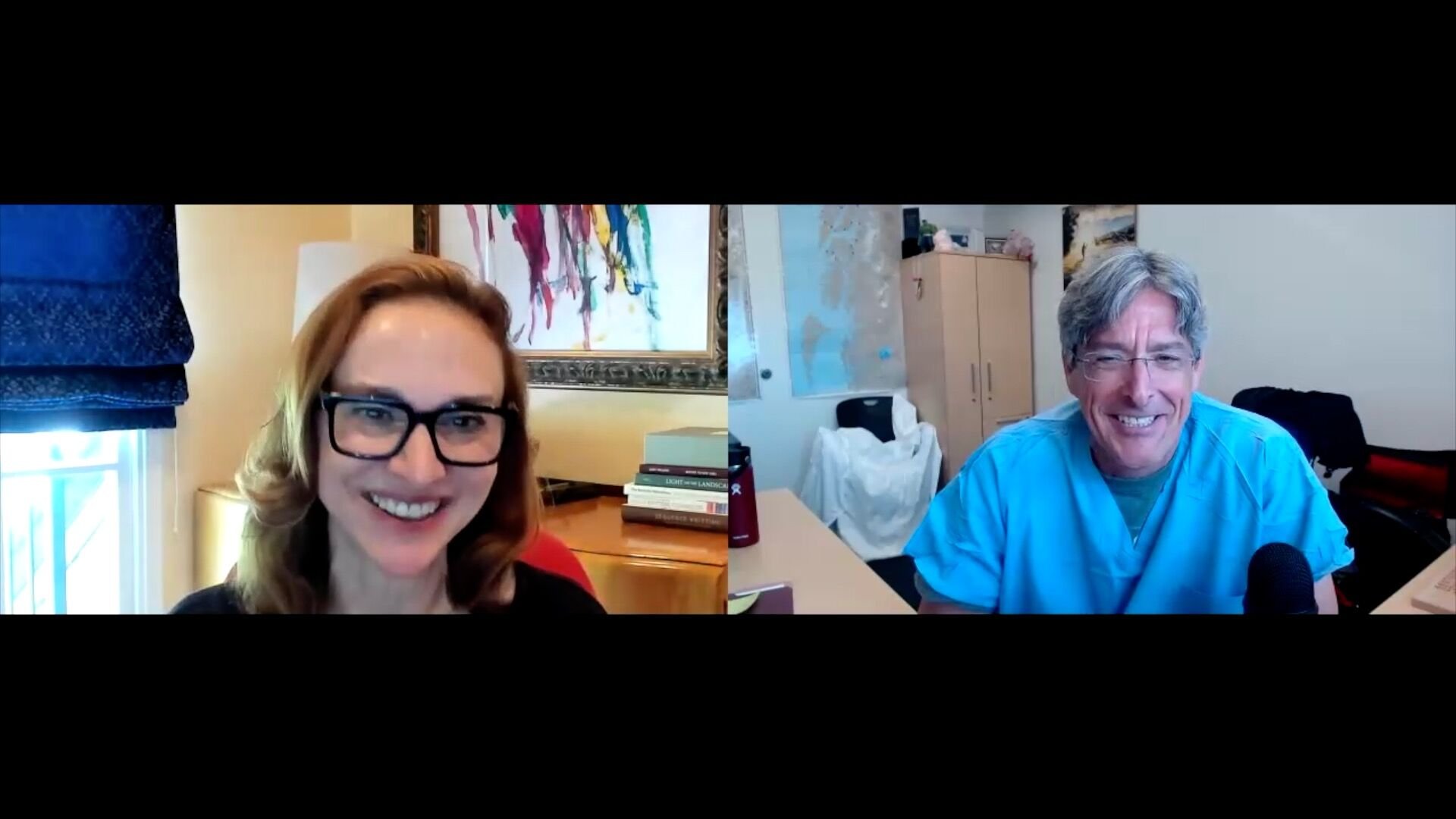
I recently had the great privilege to be invited back to trail-blazing cardiologist Dr. Bill Lombardi's Journey to Better podcast. This is truly one of the best physician-focused podcasts out there.
Bill is a fantastic and thought-provoking interviewer! We discussed a wide range of issues facing physicians today, including the importance of setting boundaries, the crucial role of effective and engaged leadership, and how coaching can work for physicians dealing with challenges of transitions, time management, and leadership opportunities.
I recently had the great privilege to be invited back to trail-blazing cardiologist Dr. Bill Lombardi's Journey to Better podcast. This is truly one of the best physician-focused podcasts out there.
Bill is a fantastic and thought-provoking interviewer! We discussed a wide range of issues facing physicians today, including
⚕️The importance of setting boundaries
⚕️How to integrate the experience of the arts into medical practice
⚕️The crucial role of effective and engaged leadership
⚕️Why defining your personal values can help you to make better decisions for yourself and your practice
⚕️How coaching can work for physicians dealing with challenges of transitions, time management, and leadership opportunities.
You can find our conversation wherever you get your podcasts, including Spotify and Apple Podcasts, or take a listen below. And if you want to listen to my first podcast appearance on the show, you can find it here.

Compassion Without Burnout: How Physicians Can Balance Empathy and Sustainable Practice
Balancing deep compassion with professional distance in the face of suffering and death can be challenging for newer physicians. Learning to care deeply while maintaining emotional boundaries is a skill that takes time to develop. Intense suffering, tragedy, and death are circumstances that most people only experience a handful of times in their lives. When your job is to make strategic decisions and take decisive action, the ability to harden yourself against another’s anguish is not a flaw; it is a necessary adaptation.
Balancing deep compassion with professional distance in the face of suffering and death can be challenging for newer physicians. Learning to care deeply while maintaining emotional boundaries is a skill that takes time to develop. This is the practice of equanimity. For many seasoned physicians, sustaining this balance is a lifelong point of tension.
Whether you work in a high-intensity surgical or critical care specialty or an outpatient practice in which you nurture long-term relationships with your patients, you are likely to face this challenge many times through your professional life.
Detachment as a Survival Mechanism
Intense suffering, tragedy, and death are circumstances that most people only experience a handful of times in their lives. For many physicians, this is the reality of a normal day at work.
When your job is to make strategic decisions and take decisive action, creating separation from another’s anguish is not a flaw; it is a necessary adaptation. It allows you to effectively care for your patients, alleviating the source of their distress without taking on the burden of every painful story. And it protects your patients, because it means that your decisions come from a place of wisdom and expertise.
At the same time, maintaining an emotional distance can often come across as distant and unfeeling. When it becomes habitual, you may even begin to believe that you’ve lost your ability to experience compassion. It’s a fine line to walk, and it’s something that is rarely taught.
If taken too far, suppressing your inherent pull of empathy can erode patient trust and increase your risk of professional burnout. It may also spill over into your personal life, impacting your ability to connect with those you love and risking your present and future well-being.

One Doctor’s Struggle: When Emotional Armor Becomes a Burden
A highly skilled interventional cardiologist I know recently reflected on the ways that his years of exposure to suffering created a powerful emotional detachment that threatened his health and his marriage.
Early in his career, the heavy weight of each patient’s experience felt overwhelming, as if every tragedy could pull him underwater. He often cared for people who sought him out knowing that their advanced heart disease left them with few remaining options. Many times, the procedures he could offer carried great risk. And while most patients benefited, some did not. There was a high risk of complications, and he knew that a few would die despite his best efforts.
Attempting to protect himself, he grew a thick, protective, rational shell which numbed him emotionally and created an aura of impassiveness that was often perceived as indifference and even coldness. Over time, this self-protection extended into his personal life, putting his marriage and family at risk.
His case-hardened persona was at odds with his personal values and created a feeling of disunity and distress. He was often tempted to numb himself to exhaustion with extreme exercise before going home, even when it was very late in the evening. He eventually realized that change was necessary—not only to sustain his career in interventional cardiology but also to repair and preserve his relationships with his wife and family.
When it became clear that he was about to lose the people who mattered most to him, he reached out for help. Over time, through a practice of mindfulness and self-care, he became able to extend compassion to his patients without becoming emotionally engulfed in each case. As a result, he could nurture his personal relationships without fear that this vulnerability would bleed into his professional role.
Finding a Sustainable Path Forward
How can you begin to find the balance between maintaining compassion and protecting yourself? It can be helpful to remember that detachment doesn’t mean not caring—it means setting boundaries to ensure longevity in a profession that demands so much of you.
Your emotional capacity is rarely infinite. It may help to think of it as an energy bank account that requires careful management. When you worry endlessly about outcomes beyond your control, you’re spending your energy recklessly, draining your account without benefiting yourself or your patients.
Just like a bank account, emotional capacity is not only about withdrawals, but also about strategic savings and interest. This comes through self-care. This might mean practicing mindfulness, connecting with colleagues who understand the emotional toll and have found healthy ways to manage the distress, or engaging in fulfilling activities outside of medicine.
Studies of surgeons engaging in a surgeon-focused mindfulness-based stress reduction program known as Enhanced Resilience Stress Training have shown important benefits. Similar programs are likely to help others who deal with high-stakes situations on a daily basis.
Coaching can also be a meaningful tool, providing a supportive space to reflect, gain clarity, and develop your own path forward. If the weight of it all feels too heavy, working with a therapist who understands the unique challenges physicians face can provide valuable support.
Compassionate Boundaries
If you’ve ever felt guilty for not feeling deeply every time you witness a patient suffering, you are not alone. This is not a failure of empathy; it is a recalibration that allows you to keep showing up, day after day, for the people who need you. Compassion and detachment are not mutually exclusive, and compassion is not measured by how much suffering you absorb,
By setting boundaries, recognizing your own limits of emotional energy, and applying mindful detachment with care, you will find your way to practice compassionately while protecting your own well-being. You’ll create a meaningful separation between work and home. And you’ll be present and effective for your patients in their time of need.
If you’ve enjoyed this article and would like to stay in the loop for more insights on creating a sustainable, fulfilling, and happy life as a physician, sign up for my newsletter or reach out on my website. I’d love to hear from you.
And if you’d like to schedule a complimentary coaching discovery meeting, click the button below.

Coaching for Healthcare Leaders
As a member of the American College of Cardiology’s Physician Well-Being Working Group, I am fortunate to be part of the change that’s happening within cardiology and healthcare in general.
Coaching is increasingly recognized as a way to support and retain physicians, an aid for reducing burnout, and a tool that can improve the healthcare environment for physicians, staff, and the patients that we serve.
The first in a series of webinars put on through the ACC was presented in early 2024. You can watch it here, or maybe take it along with you and listen during your commute to work.
As a member of the American College of Cardiology’s Physician Well-Being Working Group, I am fortunate to be part of the change that’s happening within cardiology and healthcare in general.
Coaching is increasingly recognized as a way to support and retain physicians, an aid for reducing burnout, and a tool that can improve the healthcare environment for physicians, staff, and the patients that we serve.
The first in a series of webinars put on through the ACC was presented in early 2024. You can watch it here, or maybe take it along with you and listen during your commute to work.