
Focus on Physicians:
Insights, Ideas, and Strategies





















The Hidden “Deep Work” of Medicine: Why Your Inbox Is More Demanding Than It Looks
For many physicians, the electronic health record (EHR) inbox is treated as “light work.”
A message from a worried patient. A lab result. A radiology report to review. Something you’re expected to squeeze in between patients, or finish at the end of the day.
But if you’ve ever sat down to thoughtfully review a complex lab trend, interpret an imaging report in context, or respond to a nuanced patient message, you know this is not light work.
In many cases, it’s exactly what productivity expert Cal Newport would call deep work.
For many physicians, the electronic health record (EHR) inbox is considered “light work.” It’s necessary but unrewarded. The only metric that matters is whether it gets done within a prescribed time frame.
A closer look reveals more depth: A message from a worried patient. A lab result that’s a little bit off. A radiology report that raises more questions. A preauthorization for a needed test. They’re important and necessary, but something you’re expected to squeeze in between patients, or finish at the end of the day.
Let’s be clear: It’s not light work when you
⚕️take the time and mental energy to thoughtfully review a complex lab trend
⚕️interpret an imaging report in context of the past medical history and recent symptoms
⚕️advocate for your patient with a persuasive argument to a nameless utilization review auditor
⚕️respond to a nuanced message
In many cases, it’s exactly what productivity expert Cal Newport would call deep work.

What Is “Deep Work”—and Why Does It Matter in Healthcare
Cal Newport describes deep work as cognitively demanding high-value work that requires sustained focus, careful thinking, and meaningful decision-making.
Many inbox tasks fit the definition of deep work. They may be considered task completion, but in reality it’s clinical decision-making. And this work often requires the same level of focus as seeing a patient face-to-face.
The Hidden Cost: Attention, Energy, and Time
One of my recent coaching clients—a highly skilled subspecialist—put it perfectly: “It’s not only the volume, which is a lot. It’s the work of thinking.”
Patients are complicated human beings. Decisions about their care are rarely binary, and small, easily overlooked details can change management. Reviewing the chart, searching out records from the hospital or outside sources, and responding to a patient’s concerns takes time and mental energy.
Because inbox work is not formally structured into the clinical day, it often gets pushed to the margins. That usually means between visits, during lunch, at the end of the day, or at home, late at night.
One physician I know gets up in the middle of the night to work on his charts, because it’s the only time he can work without interruptions.
It’s easy to see how these strategies can lead to cognitive fatigue and even burnout. Increased risk of errors, an anxiety-producing sense of always falling behind, and difficulty feeling finished at the end of the day are natural consequences of a perpetually replenishing inbox.
This physician-level work largely goes uncompensated. But because it happens in small, fragmented pieces, it’s easy for both institutions, and physicians themselves, to underestimate its true impact.
The Mismatch: Deep Work in a Fragmented Environment
According to Cal Newport, deep work requires:
🔺Focus
🔺Time
🔺Continuity
But the typical clinical environment offers:
🔻Interruptions
🔻Time pressure
🔻Constant task switching
This mismatch is at the heart of why inbox work feels so draining, and why it can be a driver of moral distress. You’re being asked to do cognitively demanding work in conditions that actively undermine your ability to do it well.
A Call to Healthcare Leaders
If we continue to treat inbox work as administrative overflow, we will continue to underestimate its impact on physician capacity, decision-making, and patient care.
It’s time to take a closer look:
⭕ How much cognitively complex work is being done outside of scheduled hours?
⭕ How often are physicians expected to perform deep clinical thinking in fragmented time?
⭕ How can this work be fairly compensated?
⭕ How can tasks be pre-screened and delegated to other qualified staff members when appropriate?
Instead of relying on physicians to absorb this work at any cost, how can systems better support them in doing it well?
Providing the time and space for deep work in all its forms is essential for both physician sustainability and high-quality patient care.
This post contains Amazon affiliate links. If you choose to purchase through these links, I may earn a small commission at no extra cost to you. Thank you for supporting the work I share here.
If you’ve enjoyed this article and would like to stay in the loop for more insights on creating a sustainable, fulfilling, and happy life as a physician, sign up for my newsletter or reach out on my website. I’d love to hear from you.
And if you’d like to schedule a complimentary introductory meeting with me, click the link below.

Strategies for Success for New Physicians in Outpatient Care
If you’re just getting started in practice, or beginning a new role, it’s important to set yourself up for success from the very beginning. Whether your career path is in academic medicine, a large healthcare system, or a private practice, the habits and systems you develop early on can shape both your professional trajectory and your personal well-being for years to come
In this article, we’ll focus on five key areas that will help you provide the best care while managing the demands of a busy practice. Developing these strategies early on can improve both patient outcomes and your own well-being.
An earlier version of this article appeared on this website in September 2024
If you’re just getting started in practice or beginning a new role, it’s important to set yourself up for success from the very beginning. Whether your career path is in academic medicine, a large healthcare system, or a private practice, the habits and systems you develop early on can shape both your professional trajectory and your personal well-being for years to come.
The good news? Although delivering excellent care is a given, success in outpatient medicine is not simply about working harder. It’s also about building sustainable systems and developing strong communication skills, while at the same time protecting your own well-being.
In this article, we’ll focus on five key areas that can help you thrive in outpatient practice while managing the demands of a growing clinical workload.

Master Time Management and Efficiency
Let’s be honest: managing a busy outpatient schedule without sacrificing the quality of care can feel overwhelming. Physicians often find themselves juggling patient visits, charting, inbox messages, and administrative tasks without a clear strategy. The result? Late nights spent finishing notes, mounting frustration, and an overextended staff.
If your role also includes hospital responsibilities, teaching, supervision, or research, the complexity grows quickly. And while it can be tempting to cut corners just to survive the day, shortcuts often create even more stress and inefficiency down the road.
Your strategy for success:
Developing strong time management skills early on is crucial. Prioritize workflows that reduce unnecessary friction and preserve your attention for the work that matters most.
Consider:
⭐Using EHR templates and smart phrases thoughtfully
⭐Building efficient charting workflows
⭐Creating systems for task delegation when appropriate
It’s also worth investing a few hours up front to customize your EHR tools and workflows, including appropriate AI-assisted documentation if available within your system.
When your day is structured intentionally, you’ll not only reduce after-hours charting, but you’ll also improve patient care, communication, and overall satisfaction.
Cultivate Work-Life Balance
In medicine, it’s become increasingly common for work to spill into personal time. What starts as “just finishing a few charts” can gradually become evenings, weekends, and vacations consumed by unfinished work.
Over time, that lack of control affects not only you and your family, but also the quality of care you provide. Chronic exhaustion and burnout can impair focus, increase the risk of mistakes, and diminish your sense of fulfillment in medicine.
Your strategy for success:
Create clear boundaries intentionally rather than waiting for them to appear naturally. One of the most important skills you can develop early in your career is learning when to say “no,” and when to say “later.”
As a new physician, opportunities may come quickly — committee invitations, leadership projects, research collaborations, teaching requests, and extra clinical responsibilities. While some of these opportunities can be valuable, saying yes to everything often leads to overload and resentment.
Before taking on additional responsibilities, pause and ask yourself:
❓Does this align with my long-term goals?
❓Do I realistically have the time and energy for this right now?
❓What will I need to give up in order to say yes?
Sometimes the answer truly is “no.” Other times, “not right now” is the wiser and more sustainable choice.
Protecting time for rest, relationships, exercise, and activities outside of medicine is not selfish. It helps preserve the energy, focus, and emotional presence needed to care well for your patients over the long term.
If there’s a hobby or interest you’ve been wanting to explore, give yourself permission to begin, without expecting perfection. Reconnecting with curiosity and enjoyment outside of work can be deeply restorative.
Focus on Connection and Communication
Strong patient relationships are at the heart of excellent outpatient care. When patients trust you, communication becomes more effective, visits become more efficient, and misunderstandings are less likely to spiral into repeated calls or after-hours messages.
Patients want to feel heard, respected, and cared for. But building rapport can feel difficult when schedules are tight and complex conversations are emotionally demanding.
Your strategy for success:
Start with preparation. Keeping charts current and reviewing key information before the visit helps patients feel confident that they are in capable hands.
But communication is about more than preparation alone. Your ability to listen actively, communicate clearly, and respond with empathy has a major impact on both patient outcomes and patient experience.
Especially when discussing complex diagnoses or treatment plans, setting expectations early and explaining decisions clearly can reduce confusion, improve adherence, and strengthen trust. Over time, strong communication skills can also make your workday easier and more rewarding.
Sharpen Your Decision-Making Skills
As a physician, you are constantly asked to make important decisions, often quickly, and sometimes with incomplete information. Early in practice, managing uncertainty can feel especially challenging.
But one of the most important things to remember is this: becoming an attending does not mean your skillset is complete. Medicine is continually changing. Lifelong learning and continual refinement of clinical judgment is part of the job, and something that makes this work both challenging and fulfilling.
Your strategy for success:
Stay engaged and intellectually curious.
In addition to maintaining CME requirements:
✅Stay current with evidence-based guidelines
✅Use clinical decision support tools when appropriate
✅Build strong referral and consultation networks by meeting and collaborating with your new colleagues
✅Get to know your more experienced colleagues, and respectfully reach out to them when you need their input
Resources such as journal summaries, evidence-based newsletters (like NEJMClinician), and curated educational platforms can help you stay informed without becoming overwhelmed by information overload.
Most importantly, recognize that confidence grows through repetition, reflection, and experience. You’re not expected to know everything on day one.
Cultivate Emotional Resilience and Stress Management
Outpatient medicine can be emotionally demanding. Physicians routinely navigate uncertainty, grief, high expectations, administrative burden, and emotionally charged interactions.
And while personal resilience matters, it’s important to acknowledge that physician burnout is not an individual failure. Healthcare systems play a major role, and the cost of burnout affects everyone, including patients.
If your work environment feels consistently toxic or unsustainable, it may be time to explore other opportunities that better align with your values and well-being. Still, there are often constructive ways to improve your day-to-day experience and protect your emotional health without exiting your practice or career path.
Your Strategy for Success:
Incorporate stress-reducing practices into your routine before you reach a crisis point.
This might include:
⭕Regular physical activity
⭕Mindfulness and/or meditation practices
⭕Adequate sleep
⭕Nutritious meals
⭕Time outdoors
⭕Meaningful social connection
Building a strong support system matters too. Trusted colleagues, friends, family members, mentors, therapists, or coaches can all provide perspective and emotional support during difficult periods.
Many healthcare organizations now offer physician coaching and wellness resources. Take advantage of those opportunities when they’re available. And if you are struggling with depression, anxiety, or other mental health concerns, seeking professional support from a therapist is a sign of wisdom, not weakness.
You’ve worked hard to get here. You deserve to feel healthy, engaged, and fulfilled in your career.
Building a Sustainable Career in Medicine
Starting your career in outpatient medicine comes with real challenges, but it also offers tremendous opportunities for growth, connection, and meaningful impact.
By developing strong systems for time management, communication, decision-making, and well-being, while also building strong professional relationships, you can build a more sustainable and rewarding career.
Success is not simply about endurance. It’s about creating a way of practicing that allows you to continue showing up with skill, presence, and humanity over the long term.
If you’ve enjoyed this article and would like to stay in the loop for more insights on creating a sustainable, fulfilling, and happy life as a physician, sign up for my newsletter or reach out on my website. I’d love to hear from you.
If you’d like to learn more about my coaching practice, you can schedule a complimentary introductory meeting by clicking the link below.

How to Manage Interruptions and Limit Attention Residue: A Guide for Physicians
Attention residue happens when you switch tasks, but a part of your mind remains stuck on the previous task. The little breadcrumbs that remain can significantly decrease your cognitive performance and make it harder to focus. And once you’re interrupted, no matter whether the issue was urgent or trivial, it’s easy to switch over into another unrelated brain drain, such as checking your email or social media, rather than returning to the task at hand.
In this article, we’ll explore strategies that you can use to retake control of your mental focus, manage interruptions, and minimize attention residue in your daily practice.
An earlier version of this article appeared on this website in July, 2024
It’s not just your imagination. It really is more challenging than ever to maintain your mental focus at work.
💉 EHR alerts
💉 Phone notifications
💉 Interruptions from staff
💉 Attention sapping apps
All of these and more conspire to make staying focused a daily struggle for many physicians, regardless of specialty.
Repeated interruptions and the lingering effects of shifting attention, known as attention residue, can severely hamper not only your effectiveness and productivity, but also your personal well-being.
Resolving the current state of disorder in healthcare will require systemic change, including a fundamental shift in the functionality of many EHRs. But protecting your headspace now is a critical skill that can help you stay above the fray.
In this article, we’ll explore strategies that you can use to retake control of your mental focus, manage interruptions, and minimize attention residue in your daily life and practice.
Understanding Attention Residue
Attention residue happens when you switch tasks, but a part of your mind remains stuck on the previous task.
The little breadcrumbs that remain can jumble up your thoughts and make it harder to focus. And once you’re interrupted, no matter whether the issue was urgent or trivial, it’s easy to drift over into another unrelated brain drain, such as checking your email or social media, rather than returning to the task at hand.

Realistically, interruptions have always been part of life in most medical settings. But the challenge has intensified due to
💉 EHR systems that promise constant accessibility
💉 Increasing patient complexity
💉 Expanding administrative burdens
💉 Widespread staff reductions
💉 Growing supervisory responsibilities for non-physician staff
Except for the small but growing number of forward-thinking healthcare systems, the current environment is a near-perfect recipe for attention residue.
This isn’t just theoretical. Studies show that interruptions from a broad range of sources may happen more than every 6 minutes in busy medical environments like the Emergency Department. It’s no surprise that these repeated interruptions can seriously degrade your ability to remain focused and aware.
How to Reclaim Your Mental Focus
Ideally, healthcare leaders will recognize the need for systems and workflows that reduce unnecessary interruptions. Some organizations are already making meaningful progress in this area. But even under the best of circumstances, interruptions are going to happen. Here are a few ways that you can limit the mental drain.
Prioritize and Plan
This can be a difficult step for physicians, since we don’t always have control over the way the day might go. But simply outlining your top priorities can help by giving you a focus and a “north star” for the day.
Start by outlining your top priorities. Whenever possible, focus on these high-impact tasks when your mental energy is at its peak. For many people, that is the first thing in the morning.
Use tools like the Eisenhower Matrix (also known as the Time-Priority Matrix) to strategize your urgent and important tasks, and mitigate those less important time-wasters.
Time Blocking
Consider setting aside specific time blocks for different types of tasks. For example, set aside uninterrupted time to study for your boards, or for administrative work. If you have some control over your schedule at work, scheduling similar patient visits can be helpful, so that your mental flow is less likely to be interrupted.
Communicate your schedule and your plan to create these focused blocks of time to your team (or your family) to minimize unnecessary interruptions. Getting buy-in from your schedulers and administrative staff can help to make time blocking work for you.
Mindfulness and Meditation
Mindfulness is more than a catch-phrase. Techniques like deep breathing, meditation, or yoga can sharpen your ability to focus and help regulate stress. These are tools that can help you to strengthen your cognitive resilience in the face of a demanding clinical environment.
Meditation in particular has been found to be helpful in improving attention, focus, and memory and reducing stress. Just like medication or physical therapy, consistency matters. In one study, it took 8 weeks of regular practice before the impact of meditation was clear.
Taking a mindful pause before and after each patient, study, or procedure is a great way to mentally reset. In many cases, even this very brief break can improve your efficiency and help you to regain a sense of control.
Limit Multitasking
Multitasking was once considered a badge of honor, and something to aspire to. But now we know that when people multitask, they often make more mistakes.
Research shows that multitasking also leads to longer completion times and greater mental fatigue. This is especially true when both (or more) tasks require cognitive effort rather than simple rote actions. In reality, tackling one task at a time is usually faster and far more effective.
So what’s the alternative? When you're faced with a task that’s too large to complete in a single sitting, try breaking it down into smaller, more manageable steps. Each sub-task becomes its own achievable goal, which can help reduce overwhelm and maintain your momentum. Writing these steps out and checking them off as you go can boost motivation and give you a sense of progress, even during busy or fragmented days.
As you knock out these smaller to-dos, you’ll build a sense of accomplishment. That feeling of progress can help quiet the mental clutter and reduce the attention residue that builds up when unfinished work lingers in the background.
Set Boundaries
Not only are they annoying, but interruptions increase the likelihood of errors, directly impacting patient safety. What’s more, these unwanted intrusions also impact your own mental well-being and your relationships by triggering heightened levels of anxiety and annoyance. That’s why setting boundaries is a crucial skill.
Whenever possible, set clear boundaries around your availability with colleagues, staff, and patients. Visual cues such as a closed door or a sign that reads “Do Not Disturb Unless Urgent” can signal your need for focused time without seeming unapproachable. And if you’re in the operating room or in a procedure, be sure that the parameters for interruptions are very clear.
When you're engaged in cognitively demanding work like surgery or a procedure, reviewing charts, developing treatment plans, or reading studies, it’s a good idea to minimize social or nonessential conversation. Let your colleagues know when you're in a focused work mode so they understand that any delay in response is intentional, not personal. Over time, this kind of clear communication builds mutual respect and helps foster a team culture that supports protected time for high-concentration tasks.
It can also be helpful to set expectations with patients and staff that non-urgent in-box messages will only be addressed during or after certain hours of the day.
Reclaiming Your Focus
Maintaining mental focus requires practical, intentional strategies and consistent follow-through. By experimenting with the time-tested approaches I’ve offered above, you’ll strengthen your ability to concentrate, reduce attention residue, and better manage the inevitable interruptions in your day.
If you’ve enjoyed this article and would like to stay in the loop for more insights on creating a sustainable, fulfilling, and happy life as a physician, sign up for my newsletter or reach out on my website. I’d love to hear from you.
If you’d like to learn more about my coaching practice, you can schedule a complimentary introductory meeting by clicking the link below.

Overcoming Your Roadblocks: A Physician's Guide to Navigating Change When it’s Time to Move On
If you're a physician considering a change, you’re not alone. But that doesn’t make the decision easy. Physicians are often motivated by loyalty and compassion. But we are also creatures of habit, and veering off the well-worn path can feel daunting.
That change doesn’t always mean leaving medicine or even leaving your organization. For many, transformation begins by renegotiating how they work: seeking new roles, advocating for flexibility, or crafting a job description that better aligns with their strengths and goals.
Still, thinking about change of any type can feel like stepping into the unknown.
In this article, I’ll give you seven actionable steps that can help you move forward when you’re feeling stuck.
An earlier version of this article appeared on this website in December, 2023.
If you’re feeling stuck in your practice, torn between your current role and the pull toward something different, you’re not alone. In the old paradigm, physicians assumed they’d join a practice after training and remain there until retirement. Especially in private practice, moving locations, switching roles, or stepping away from clinical work altogether was rare and even stigmatized.
But the landscape has changed. Across every sector, more physicians are re-evaluating what fulfillment means—and realizing that staying true to your values may require reimagining your role, whether within your current system or beyond it.
It’s a deeply personal realization, and one that can feel both unsettling and energizing. And it’s becoming increasingly common.
In fact, a recent Mayo clinic survey reported that one in five physicians plan to leave their practices within the next two years, and one in three expect to reduce work hours. A second study found that amongst academics, one in three felt a moderate or greater intention to leave. And a 2023-2024 AMA survey of nearly 18,000 physicians from more than 100 health care systems reported similar finding across all physicians. What’s more, the number may be closer to 40 percent in some specialties, including Anesthesiology, Radiology, and Vascular and General Surgery. Burnout, excessive EHR requirements, and lack of support from their organizations were primary issues cited in these studies.
All of this is to say that if you're considering a change, you’re not alone. But that doesn’t make the decision easy. Physicians are often motivated by loyalty and compassion. But we are also creatures of habit, and veering off the well-worn path can feel daunting.
You’re someone who’s used to thinking independently and making critical decisions, but it’s likely that your roadmap was clearly defined from the start: college, medical school, residency, maybe fellowship. As long as you followed this straight and narrow track, and nothing unexpected knocked you off course, you would make it down the road. Waiting for you at the end of the trail would be a satisfying profession, a place of respect in your community, and a happy home life to balance it all out.
Over the past decade, that promise has faded for many physicians. Burnout due to lack of autonomy, higher patient demands, a sicker and older population, falling reimbursements, the unrelenting pace of EHR tasks: all have contributed. So have our increasingly disconnected healthcare systems. It’s not surprising that more and more doctors are reflecting on what they want from their careers, and what might need to shift.
Moving on is sometimes the best and healthiest choice. But change doesn’t always mean leaving your organization or giving up your practice altogether. Sometimes transformation begins by renegotiating how you work: seeking new roles, advocating for flexibility, or crafting a job description that better aligns with your strengths and goals.
Still, thinking about change of any type can feel like stepping into the unknown. The hardest part is often getting started. It may even feel as if your feet are stuck in quicksand. That’s normal. But once you begin, you’ll discover that your momentum will build and possibilities will unfold as you continue to move forward.

In this article, I’ll give you seven actionable steps that can help you move forward when you’re feeling stuck.
1. Self-Reflection
Before deciding what’s next, take time to reflect on what matters most, both professionally and personally. You don’t need to know the final destination yet, but clarity around your values, interests, and strengths is essential.
Journaling for a few minutes each day can help. Ask yourself:
❓What are my defining values? How do I want to manifest those values in my daily life?
❓What aspects of my current role energize me—or drain me?
❓What skills do I love using? And what would I be happy to give up?
❓How do I want to feel at the end of each day?
❓What would I regret not doing, both personally and professionally?
❓How will any change I make impact my loved ones, either positively or negatively?
Making time for self-reflection will lay the foundation for building a more aligned, satisfying professional life, whether that’s in a new place or a new role within your current setting.
2. Recognize Your Triggers and Limiting Beliefs:
When you’re contemplating change, it’s natural for doubts to arise: “I can’t start over,” “I’m too far along,” “What would my colleagues/ family/friends think of me?” or “I’m lucky to have a job—why rock the boat?”
Instead of pushing these thoughts aside, examine them:
❓What stories am I telling myself?
❓What are these beliefs protecting me from?
❓Are they actually true—or just familiar?
❓What would it take to feel more confident in exploring a new path?
❓If there are meaningful limitations that are holding me back, how can I close the gaps?
Acknowledging and challenging these beliefs is a key step toward moving forward.

3. Seek Guidance
Talk to mentors, colleagues, or others who’ve made career shifts, whether big or small. You may be surprised by how many have reimagined their roles without leaving their organizations. Others may have made audacious shifts and found greater fulfillment. And some may have dealt with regrets and learned from their mistakes. The point is not to recreate anyone’s story, but rather to understand that your own possibilities may be more expansive than you realize.
Tapping into others’ experiences can offer both perspective and inspiration. Just be thoughtful about whom you confide in—especially if your plans are still unfolding.
4. Set Achievable Goals
Break your career change into smaller, manageable goals. This not only makes the process less intimidating but also gives you a way to envision the road ahead.
Rather than winging it and hoping for the best, create a timeline with defined milestones. These might include:
✅Gaining specific qualifications or licensure
✅Attending relevant conferences,
✅Researching places you might want to live
✅Identifying internal opportunities that might better align with your goals
✅Exploring part-time or leadership roles within your system
✅Updating your CV or LinkedIn profile
✅Reaching out to potential employers or colleagues in your desired field.
Use the SMART framework—Specific, Measurable, Achievable, Relevant, and Time-bound—to track your progress and stay motivated.
5. Reframe Setbacks as Lessons
Rejection can sting. And not every door will open right away. Setbacks are part of any meaningful journey. Instead of seeing them as failures, view them as data.
What did you learn? What might you do differently next time? What can you take with you to the next opportunity?
Stay rooted in your “why,” and let that guide your next move.
6. Get Comfortable with the Unknown
Uncertainty is normal. It’s uncomfortable, especially if you’ve grown accustomed to defined pathways. But the unknown becomes less intimidating when you ground yourself in research and preparation.
If you’re exploring a nonclinical role, learn the landscape. If you’re considering a new position, understand the expectations, workflows, and culture. And if your skills need to be refreshed, find out what you need to do to make that happen, then make a plan to get it done.
The more you know, the more confident you’ll feel taking the next step.
7. Keep an Open Mind
You don’t need to have everything figured out right now. Stay open to possibilities while keeping your perspective grounded. Often unexpected new opportunities will present themselves while you are putting in the work.
Seek input from those you trust, but recognize that you’re the one who knows yourself best. Give yourself the space to grow into what’s next.
Final Thoughts
Redefining your path as a physician takes courage, clarity, and commitment. You’ve honed these skills over the past decades of training and professional practice. Now, it’s about using them to design the life that you want to live. Whether you're stepping into a new career, transitioning into a different role within your current system, or simply giving yourself permission to explore, start by addressing the internal roadblocks that stand in your way.
Be willing to ask bold questions and take thoughtful action. Most of all, trust in your ability to create a more fulfilling and sustainable future.
If you’ve enjoyed this article and would like to stay in the loop for more insights on creating a sustainable, fulfilling, and happy life as a physician, sign up for my newsletter or reach out on my website. I’d love to hear from you.
And if you’d like to schedule a complimentary introductory meeting with me, click the link below.

Creating Boundaries and Reclaiming Values: My Podcast Appearance on Dr. Bill Lombardi’s Journey to Better
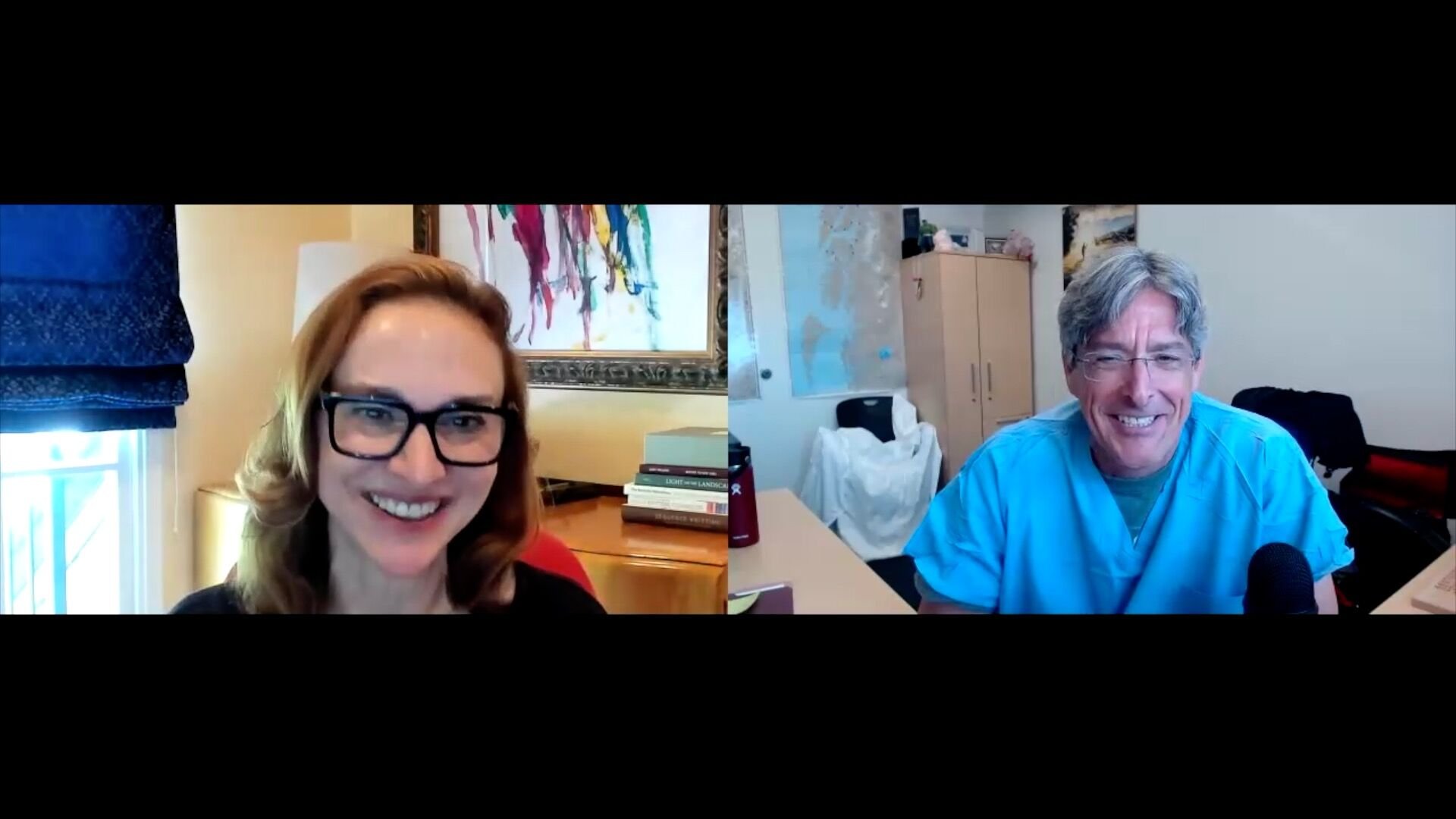
I recently had the great privilege to be invited back to trail-blazing cardiologist Dr. Bill Lombardi's Journey to Better podcast. This is truly one of the best physician-focused podcasts out there.
Bill is a fantastic and thought-provoking interviewer! We discussed a wide range of issues facing physicians today, including the importance of setting boundaries, the crucial role of effective and engaged leadership, and how coaching can work for physicians dealing with challenges of transitions, time management, and leadership opportunities.
I recently had the great privilege to be invited back to trail-blazing cardiologist Dr. Bill Lombardi's Journey to Better podcast. This is truly one of the best physician-focused podcasts out there.
Bill is a fantastic and thought-provoking interviewer! We discussed a wide range of issues facing physicians today, including
⚕️The importance of setting boundaries
⚕️How to integrate the experience of the arts into medical practice
⚕️The crucial role of effective and engaged leadership
⚕️Why defining your personal values can help you to make better decisions for yourself and your practice
⚕️How coaching can work for physicians dealing with challenges of transitions, time management, and leadership opportunities.
You can find our conversation wherever you get your podcasts, including Spotify and Apple Podcasts, or take a listen below. And if you want to listen to my first podcast appearance on the show, you can find it here.

Rediscovering Your Why: A Road Map for Physicians
If you ever find yourself questioning whether you’ve chosen the right job, the right specialty, or even the right profession, it may help to know that you’re in good company.
Most physicians go through cycles of doubt, revisiting old decisions when things aren’t going well.
But if this seems like a theme song that just won’t stop playing, then it might be time to rediscover your why.
An earlier version of this article appeared on this website in November 2023.
If you ever find yourself questioning whether you’ve chosen the right job, the right specialty, or even the right profession, it may help to know that you’re in good company.
Most physicians go through cycles of doubt, revisiting old decisions when things aren’t going well. Times of stress, exhaustion, or disconnection often trigger these seasons of questioning. This type of critical reflection isn’t a sign of failure. Instead, it’s an opportunity for growth and realignment. And with time and support, it often opens a door to greater clarity and purpose.
Of course, dissatisfaction today doesn’t always mean that you need to make a drastic change tomorrow. Perhaps it’s a signal that it’s time to take a break. It may even be a reminder to keep pushing through. Avoiding unease is not always the best choice. Discomfort can be a sign of growth, and sometimes short-term pain and sacrifices are necessary to get you where you want to go.
But if this seems like a theme song that just won’t stop playing, then it might be time to rediscover your why.
Why Your Why Matters
Often when you feel unfulfilled or frustrated at work or in your personal life, it’s because you are not living a life that feels authentic to you.
❓ Perhaps you are trying to live up to someone else’s ideal
❓Maybe your life has moved in a different direction since you first chose your current path
❓It could be the job itself that has changed or not lived up to your expectations
❓Perhaps you simply need to rediscover the reason that you chose to become a physician so many years ago
"Finding your why" is the process of discovering and understanding the deeper purpose or meaning behind your actions, goals, and choices. It's about identifying the core values and beliefs that drive you and give your life a sense of meaning and fulfillment.
This concept is often associated with personal development and leadership, and it's a key element in the philosophy of Simon Sinek, an author who has been hugely influential in the business world. Sinek argues that successful individuals and organizations are those who are able to articulate and align their actions with a clear sense of purpose or "why." In fact, one of Sinek’s most popular books is called Find Your Why.
The idea is that when you have a clear understanding of why you do what you do, it can serve as a powerful motivator and guide for decision-making. It can help you stay focused, overcome challenges, and find a greater sense of satisfaction at work and in your personal life as well.
As Sinek puts it
⭐ Your why is your driving force
⭐ Your how is the actions that you take to bring your why to life
⭐ Your what is the manifestation of your why—the actual work that you do

Once you understand your why, everything else starts to make sense. Your decisions will become clearer and your actions more purposeful and meaningful.
Coming Home to Your Why
Knowing your why is so integral to being a physician that it’s surprising this concept is not routinely taught in medical schools. Discovering your why is not a “one and done”, check-it-off-the-list sort of thing, but it’s logical and easy to understand.
Finding your why involves introspection and reflection. It means clarifying your own unique values, passions, and the impact you want to make on the world. It’s about you, and not somebody else’s version of you. It means going beyond your surface-level goals and digging deeper into the fundamental reasons that drive your choices and actions today.
If those goals and values are different than they were when you started the journey, that’s normal and healthy. Keep excavating until you discover your own truth.
Unearthing Your Why, One Page at a Time
To help you find your why, get a piece of paper or a journal and start writing. You could do this on your computer or your tablet, but writing by hand tends to engage the brain more fully than typing on a keyboard. If paper isn’t your thing, a writable tablet like the Remarkable is a great alternative. Most importantly, choose a method and a time that works for you.
Over the next few weeks, consider taking a few minutes every morning or evening to discover the patterns and thoughts that arise. Here are some questions to get you started. You don’t need to take on all of them. Just pick and choose what is calling to you.
🔍 What do I find fulfilling about my current job?
🔍 What do I not like about my current job?
🔍 What values do I seek to honor in my work and in my life?
🔍 What other goals and aspirations, professional and personal, do I have?
🔍 What are my strengths, my natural talents, my soft skills?
🔍 What strengths and talents would I like to develop further?
🔍 What are the common ideas and threads that run through my life over the years?
🔍 What makes me happy at work, at home, and in my private life?
🔍 What do people thank me for?
🔍 What do I enjoy teaching?
🔍 What do I enjoy learning?
🔍 What keeps me up at night?
🔍 What moves me to take action?
🔍 What is my ideal day?
After sitting with your reflections for a few weeks, try distilling what you’ve discovered into a single, powerful sentence—a personal mission statement that captures the heart of your why. You might start by asking: What do I want to contribute? What kind of impact do I hope to have?
There’s no need for it to be perfect—or permanent. This isn’t about meeting anyone else’s expectations. It’s about articulating something that feels true to you. Your statement may evolve as you allow it room to breathe, but by simply starting, you’ll begin to align your goals with a deeper sense of purpose.
When you know your why, it can shift everything, bringing your actions into alignment with your values and your deeper self. In this way, your own North Star begins to emerge: steady, clear, and sustaining.
P.S. If you want to learn more about defining your values, click here to sign up for my free Values Workbook.
DISCLAIMER: As an Amazon Associate I may earn from qualifying purchases, which means that if you click on one of the product links, I’ll receive a small commission. This helps support the website, for which I am grateful! Please do your own research before making any important decisions.
If you’ve enjoyed this article and would like to stay in the loop for more insights on creating a sustainable, fulfilling, and happy life as a physician, sign up for my newsletter or reach out on my website. I’d love to hear from you.
And if you’d like to schedule a complimentary introductory meeting with me, click the link below.