Focus on Physicians:
Insights, Ideas, and Strategies





















When Physicians are Disrespected: My Guest Appearance on the Podcast by KevinMD
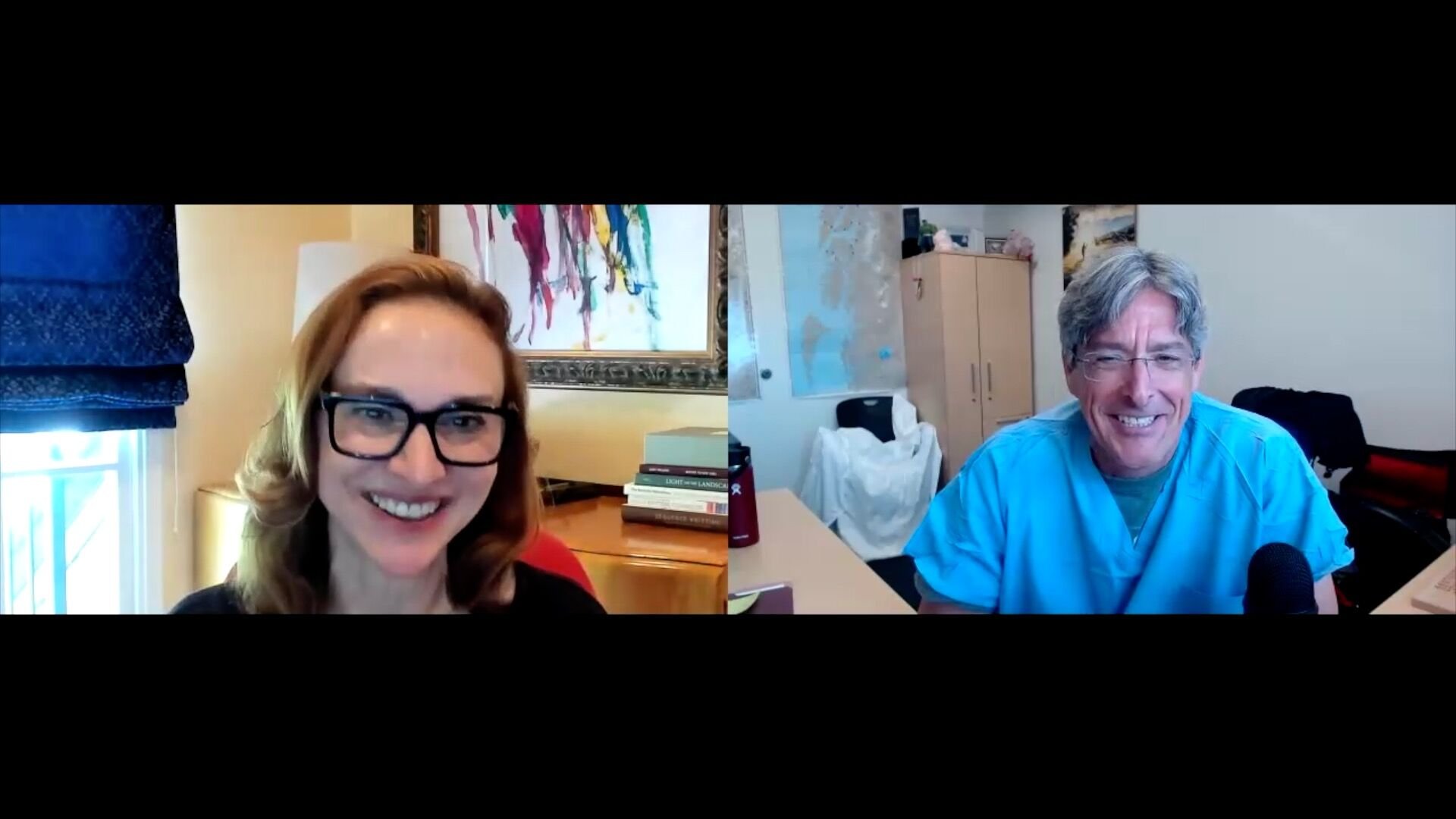
It was an honor to be invited back to Kevin Pho, M.D.'s KevinMD Podcast.
In this episode, we talk about the epidemic of disrespect faced by physicians today, and steps you can take to advocate for yourself and reclaim your dignity.
When physicians and others in healthcare are treated respectfully, the practice of medicine becomes more sustainable and more inclusive.
If you’re a physician, or anyone active in healthcare today, you have probably heard of Dr. Kevin Pho and his KevinMD podcast and website.
Not only does he offer a curated selection of articles tailored to physicians and others in healthcare, Dr. Pho also hosts a podcast for thought leaders in the medical field. I was honored to be invited back as a guest.
In this episode, which originally aired in October 2023, we talk about the epidemic of disrespect faced by physicians today, and clear steps you can take to advocate for yourself and reclaim your dignity.
This is a topic I wrote about in Preventing Physician Burnout: Reclaiming Your Dignity. An earlier version of the article also appeared on the KevinMD website.
When physicians and others in healthcare are treated respectfully, the practice of medicine becomes more sustainable and more inclusive.

Thriving Amidst Chaos: Prioritizing Health, Self-Care, and Mindfulness
When your days are busy and your evenings are full, making time for your own well-being can sometimes feel like another thing to check off your endless to-do list. If you’re like many physicians, self-care often falls by the wayside.
The truth is that you need to recharge and refresh in order to be the best version of yourself. And, as important as it is to care for your health and happiness, it’s not just about you. When you care for yourself, you’ll be better equipped to care for those who depend on you.
In this article, we’ll explore why self-care matters, including the impact of self-care on stress management, and I’ll give you some simple steps that will help you to thrive amidst the daily storm of clinical practice.
An earlier version of this article appeared on this website in October 2023
When your days are busy and your evenings are full, making time for your own well-being can sometimes feel like just another thing to check off your endless to-do list. If you’re like many physicians, self-care often falls by the wayside.
The truth is that you need to recharge and refresh in order to be the best version of yourself. And, as important as it is to care for your own health and happiness, it’s not just about you. When you care for yourself, you’ll be better equipped to care for those who depend on you.
In this article, we’ll explore why self-care matters, including the impact of self-care on stress management. Next, I’ll give you some simple steps that will help you to put these ideas into motion. By caring for yourself, you’ll be empowered to thrive amidst the daily storm of medical practice.
The Impact of Stress on Burnout
It’s common to think of stress as harmful and something to be avoided. But stress can affect your health positively as well as negatively.
Positive stress (or eustress) happens when you face a challenge or a deadline that you know you are capable of meeting. It might be a stretch, but you know it’s possible. And importantly, there is a reward waiting on the other side.
While positive stress can propel you towards your goals, negative stress (sometimes called distress) can lead to frustration and burnout. Negative stressors are those forms of stress over which you have no control. A boss (or spouse) who is never happy, a job for which you are never rewarded or thanked, and escalating demands at work without adequate time off to rest and reset are all forms of negative stress.
Constant and unrelenting stress can lead to burnout. The World Health Organization defines burnout as an “occupational phenomenon.” Burnout is characterized by
Exhaustion and loss of motivation
Cynicism and negativity
Inefficiency
Given the current state of healthcare, it’s no surprise that nearly half of physicians reported at least one manifestation of burnout in 2024.
It’s important to remember that burnout is not your fault. By definition, it is a symptom of a dysfunctional system or workplace. Perfectionists, people-pleasers, and so-called workaholics seem to be more susceptible. Not surprisingly, these personality types are common for physicians. But developing some tools to help you get through tough times can lessen the impact and improve your overall happiness and wellbeing.

Self Care and its Benefits
Self-care is not just about pampering yourself. It's about taking care of your mental, emotional, and physical well-being.
Committing to self-care can enhance your focus, improve relationships, lower stress, and mitigate burnout. Acknowledging the mind-body connection is often the first step towards effective self- care.
Nutritional Psychiatry and Stress Management
The new field of Nutritional Psychiatry focuses on the growing body of research that strongly connects what you eat to how you feel. Without a doubt, mental health is complex and multifaceted. Diet is only one part of the big picture.
But when you’re famished and pressed for time, the quickest options can undermine you, sabotaging your best intentions and sapping your energy.
As it turns out, those ultra-processed foods that often pass for nutrition in the doctor’s lounge or office snack machine can raise your risk of anxiety, sleep disturbance, depression, food addiction, alcohol use disorder, and increased inflammation. Artificial sweeteners in particular have been linked to a greater risk for depression.
Instead, consider switching in simple elements of the Mediterranean diet like fruits, nuts, whole grains, olive oil and fish. You probably know that the Mediterranean diet supports heart health and may reduce the risk for certain cancers. But this diet is also linked to improved symptoms of depression and better mental health and well-being. There’s also emerging evidence that a Mediterranean diet can improve perceptual performance.
It might take a little planning, but going Mediterranean doesn’t have to be complicated. Simply packing a nourishing lunch or advocating for healthier options at work can make a difference.
Exercise and Health
You already know that regular exercise will lower your risk for heart disease, cancer, bone disease, and dementia, among other dreaded conditions.
But research has also shown that exercise can reduce anxiety, improve sleep, and improve immune function. It doesn’t take a lot of exercise to reap the benefits. A brisk 15 minute walk a few days a week is a great way to get started.

Mindfulness and Self-Care
"Mindfulness is the awareness that arises when we nonjudgmentally pay attention in the present moment.” These are the words of Jon Kabat-Zinn, PhD., Professor of Medicine Emeritus at the University of Massachusetts Medical School, and the godfather of mindfulness in healthcare.
Put even more simply, mindfulness is undistracted attention.
Practicing mindfulness has a wealth of benefits, some of which you might not anticipate, including
Less stress and anxiety
Greater parasympathetic tone
If it all sounds a little woo, know that mindfulness doesn’t have to be about practicing yoga or meditating. You don’t need a special cushion or a meditation app, although those can be nice. Instead, it’s about being undistracted, nonreactive, and fully present in the moment.
Getting started with mindfulness isn’t complicated. Simply set aside 3-10 minutes of quiet time each day to observe the present moment. Notice your thoughts and let them go, returning to the present when your mind wanders.
It is this practice of continually returning to the present moment that develops the “mindfulness muscle.”
When you practice mindfulness, you may find that your presence, and hence communication, with patients and colleagues becomes easier and more engaged.

Create an Action Plan
Creating an action plan will help you to set realistic goals and track your progress. Write out the steps that you need to take to commit to your self-care. And develop a plan that is realistic and actionable.
Consider enlisting a partner or friend with whom you can share accountability to help you to stay committed. Something as simple as a daily reminder on your phone may also keep you on track.
The ripple effect of taking your own self-care to heart will show up in your energy level, creativity, and relationships. You may notice a greater sense of self-compassion and equanimity. And in time, your path forward toward the goals that matter will become more clear.
If you’ve enjoyed this article and would like to stay in the loop for more insights on creating a sustainable, fulfilling, and happy life as a physician, sign up for my newsletter or reach out on my website. I’d love to hear from you.
And if you’d like to schedule a complimentary coaching discovery session, click the button below.
References
Adan, R. A. H. et al. (2019). Nutritional psychiatry: Towards improving mental health by what you eat. European neuropsychopharmacology : the journal of the European College of Neuropsychopharmacology, 29(12), 1321–1332.
American Medical Association & American Medical Association. (2024, July 2). Physician burnout rate drops below 50% for first time in 4 years. American Medical Association. https://www.ama-assn.org/practice-management/physician-health/physician-burnout-rate-drops-below-50-first-time-4-years
APA Dictionary of Psychology. (n.d.). https://dictionary.apa.org/eustress
Brulé, G., & Morgan, R. (2018). Editorial Working with stress: can we turn distress into eustress? ResearchGate. https://www.researchgate.net/publication/324531212_Editorial_Working_with_stress_can_we_turn_distress_into_eustress
Davidson, R. J. et al. (2003). Alterations in brain and immune function produced by mindfulness meditation. Psychosomatic medicine, 65(4), 564–570.
Ezzatvar Y, Ramírez-Vélez R, Izquierdo M, et al. (2022). Physical activity and risk of infection, severity and mortality of COVID-19: a systematic review and non-linear dose–response meta-analysis of data from 1 853 610 adults. British Journal of Sports Medicine 56:1188-1193.
Gilbert, D., & Waltz, J. (2010). Mindfulness and health behaviors. Mindfulness, 1(4), 227–234
Lane, M. M. et al. (2022). Ultra-Processed Food Consumption and Mental Health: A Systematic Review and Meta-Analysis of Observational Studies. Nutrients, 14(13), 2568.
Loucks, E. B.et al. (2015). Mindfulness and Cardiovascular Disease Risk: State of the Evidence, Plausible Mechanisms, and Theoretical Framework. Current cardiology reports, 17(12), 112.
Martinez-Gonzalez, M. et al. (2019). The Mediterranean Diet and Cardiovascular Health: A Critical Review. Circulation Research 124:779-787
Munoz, M.A. et al. (2009). Adherence to the Mediterranean diet is associated with better mental and physical health. British Journal of Nutrition. 101 (1821-1827),
Samuthpongtorn C et al. (2023). Consumption of Ultraprocessed Food and Risk of Depression. JAMA Netw Open. 2023;6(9):e2334770. doi:10.1001/jamanetworkopen.2023.34770
Shanafelt, Tait D. et al. (2022). Changes in Burnout and Satisfaction With Work-Life Integration in Physicians During the First 2 Years of the COVID-19 Pandemic. Mayo Clinic Proceedings, Volume 97, Issue 12, 2248 - 2258
Stubbs, B. et al. (2017). An examination of the anxiolytic effects of exercise for people with anxiety and stress-related disorders: A meta-analysis. Psychiatry research, 249, 102–108.
World Health Organization: WHO. “Burn-out an ‘Occupational Phenomenon’: International Classification of Diseases.” World Health Organization, 28 May 2019, www.who.int/news/item/28-05-2019-burn-out-an-occupational-phenomenon-international-classification-of-diseases.
Yin, W. et al. (2021). Mediterranean Diet and Depression: A Population-based Cohort Study. International Journal of Behavioral Nutrition and Physical Activity, 18(1). https://doi.org/10.1186/s12966-021-01227-3
Young, H. A. et al. (2022). Mediterranean diet, interoception and mental health: Is it time to look beyond the ‘Gut-brain axis’? Physiology & Behavior, Volume 257.

My Podcast Appearance on Sustainable Clinical Medicine
I'm excited to share my recent podcast appearance on Sustainable Clinical Medicine with The Charting Coach, a podcast for physicians and others in healthcare hosted by Dr. Sarah Smith.
In this episode we talk about values alignment, when to say no, and how to combine your passions outside of medicine with your life in healthcare.
I'm excited to share my recent podcast appearance on Sustainable Clinical Medicine with The Charting Coach, a podcast for physicians and others in healthcare hosted by Dr. Sarah Smith. Dr. Smith not only helps physicians who are struggling to keep up with charting, but she also hosts a podcast focused on the ideas and challenges that matter most to physicians and others in healthcare.
Here are three key takeaways from our conversation:
🔑Values Alignment: Discover the power of aligning your career and personal life with your core values.
🔑Saying No and Carving Time: Learn how to set boundaries and prioritize what brings you joy and fulfillment.
🔑Exploring New Avenues: Possibilities open up when you allow yourself to pursue interests outside of traditional medical roles, sustaining and supporting your life in medical practice.

Journaling for Physicians: Find Balance, Gain Clarity, and Envision Your Future
In previous articles, we’ve explored the way that journaling can help you think through challenges, reflect on the present, and see yourself through your own words and dreams. In this third and final set of journaling prompts for physicians, I offer prompts that you can use to explore your own definition of balance both now and for the future.
Journaling can help you to perceive the lines that connect the dots. Through this accessible and time-tested form of self-reflection, you can build stronger connections with what and who matters most, At the same time, a writing practice may help you to give name to the obstacles that may be keeping you from living a life aligned with your values and goals.
In previous articles, we’ve explored the way that journaling can help you think through challenges, reflect on the present, and see yourself through your own words and dreams. In this third and final set of journaling prompts for physicians, I offer prompts that you can use to explore your own definition of balance both now and for the future.
As you gain clarity on the ways the diverse branches of your life intertwine, unexpected or creative ways to bring harmony to your work, your personal life, and your passion projects may emerge. Through journaling, you'll gain a deeper understanding of how you want to shape the life you envision. You may even rediscover a path that you lost sight of years ago and find that it is ready to be explored once again.

Finding Balance
How do my work, personal projects, family, and relationships influence each other? Are they currently in harmony? If not, what might need to change?
What does a balanced and fulfilling life look like to me? How close am I to that vision? What small steps might I take to start the journey?
Are there areas of my life (work, personal projects, family, or relationships) that I feel are receiving too much or too little attention? How can I redistribute my time and energy?
How do I prioritize between competing demands from work, personal projects, and loved ones? Is this system serving me well?
What is one thing I could change this month to better integrate work, personal projects, family, and relationships?
Creating Alignment
How do my work and personal projects align with my values and the type of life I want to build for myself, my family and/or my relationships?
What shared values or goals do I want to cultivate in my family and/or relationships, and how can my work and personal projects support these?
Are there ways I can involve my loved ones in my personal projects or bring my personal passions into my professional life?
Are there personal projects that I enjoy or aspire to that could open the door to new and sustaining relationships or communities? If so, how might that look?
Evaluating Impact
How does my work affect my personal projects, family, and relationships? Are these effects positive or negative? What adjustments could I make so that the impact is positive and sustaining?
How do my personal projects enrich my work, family life, or relationships? Are there new projects I could pursue to strengthen these connections?
When was the last time I felt deeply connected to both my professional and personal life simultaneously? What factors contributed to that feeling?
Fostering Connection
How do I make space for meaningful connections with my family and/or relationships despite work and personal project commitments? Is there one thing I could do this week to foster a deeper connection?
What specific actions can I take to ensure my loved ones feel valued and supported while I also pursue my work and personal goals?
How can I communicate my professional and/or personal aspirations and priorities with my family and relationships in a way that strengthens our connection?
Reframing Challenges
What challenges arise from balancing work, personal projects, family, and/or relationships? How can I view these challenges as opportunities for growth?
How do I handle moments when one area of life feels overwhelming and starts to impact others? What strategies or boundaries might help?
Are there sacrifices I’m making in one area of life for another? Are those sacrifices necessary or avoidable?
Is there something that I should let go of in order to give space for other opportunities, or for my relationships?
Visioning the Future
What would an ideal day look like if I seamlessly integrated work, personal projects, family, and/or relationships? What steps can I take toward that vision?
How do I want my work, personal projects, family, and relationships to evolve in the next 5-10 years? What specific actions can I take to guide this evolution?
Imagine celebrating a major milestone in my personal or professional life with my loved ones. What does that moment look and feel like, and how can I create more of those moments?
Reflecting on Fulfillment
What brings me the deepest sense of fulfillment? How can I prioritize those elements so that it encompasses the people and things that matter the most to me?
How do I ensure that my successes in work and personal projects don’t come at the expense of meaningful relationships and family life?
What legacy do I want to leave behind in my career, personal life, and relationships? Are my current efforts moving me toward that legacy?
I hope that you’ve enjoyed this journaling series. If you have any prompts that you’d like to share, I’d love to hear from you!
If you’ve enjoyed this article and would like to stay in the loop for more insights on creating a sustainable, fulfilling, and happy life as a physician, sign up for my newsletter or reach out on my website. I’d love to hear from you.
And if you’d like to schedule a complimentary coaching discovery session, click the button below.

Bike Shedding for Physicians: Avoiding Trivial Time Wasters
Your time is precious. You have a demanding and consuming professional life. In all likelihood, you're juggling multiple priorities at any given time. Sometimes the most trivial issues seem to claim the most attention. But as a physician, it's important to be able to focus on the things that really matter, and to avoid getting dragged down into the weeds.
It’s useful to consider the phenomenon known as bike shedding. In a nutshell, bike shedding is a term used to describe the tendency to spend disproportionate amounts of time and energy on relatively minor issues, while neglecting more important but complex concerns.
An earlier version of this article appeared on this website in August, 2023
Your time is a precious commodity, but if you’re like many physicians, you give it away freely. In all likelihood, you're juggling multiple priorities at any given time, trying to get it all done while striving to stay on schedule and keep your patient satisfaction scores high.
Sometimes it’s the most trivial issues that seem to claim the most attention. But as a physician, the work you do has value, and your best work often takes time. Protecting your attention is critical. That’s why it's important to be able to focus on the things that really matter, and avoid getting dragged down into the weeds.
In thinking about the way you use your time, it can be helpful to consider the phenomenon known as bike shedding. The concept isn’t new, but it may be unfamiliar if you don’t hang out with business gurus. The term was coined by C. Northcote Parkinson, a British management expert and naval historian, in the 1950s. In introducing the idea of bike shedding, he described a committee meeting that is called to discuss a specific financial agenda. On the agenda is:
a nuclear power plant costing tens of millions of dollars
a bike shed for the plant costing a few hundred dollars
a coffee budget amounting to about twenty-five bucks
The nuclear power plant is way out of anyone’s comfort zone, and no one wants to look ignorant or ask too many questions. So they quickly approve the budget and proceed to focus on the more familiar topic of the bike shed. After extensive discussion, argument, and finally compromise and agreement, they complete the deliberations over the bike shed with a feeling of satisfaction. They round out the meeting with an hour-long debate over the coffee budget, a topic on which they all have a strong opinion.

How Doctors Fall Victim to Bike Shedding
In a nutshell, bike shedding is a term used to describe the tendency to spend disproportionate amounts of time and energy on relatively minor issues, while neglecting more important but complex concerns. If you’ve spent any time in hospital committee meetings, you can probably relate to this phenomenon. Issues such as EHR functionality and staff management can sometimes fall into this category.
But bike shedding can also happen in your personal life. For example, you might spend hours researching the perfect running shoes, instead of focusing on your training plan. Or you might spend days agonizing over the color scheme of your living room, while putting aside more important but complicated family issues at home.
It’s natural to want to escape from stressful decisions by focusing on things that don’t really matter. And the importance of taking time to step away from the chaos of the day cannot be overstated. But spending that precious time perseverating over things that are not meaningful can be counterproductive.
The bigger problems are still looming. What’s worse, these are the issues that tend to build up steam the longer they are ignored. Eventually you may find that you are pushed or dragged into action, whether you feel ready or not.
From Spinning Wheels to Forward Motion
So how to shift gears and get back on the road? Here are some tips to help you identify and avoid bike shedding, whether at work or at home:
Identify your priorities
🚳What's most important to you? Once you know your priorities, you can make decisions more easily and avoid getting bogged down in trivial matters and unnecessary conflicts.
Delegate
🚳If you can delegate tasks, do it. Delegation is important both at home and at work. This will free up your time so you can focus on the things that matter most
Remember the big picture
🚳When you're feeling overwhelmed, take a step back. What are your long-term professional goals? What do you want to achieve in your personal life? How can you break that down into achievable steps? Keeping your goals in mind will help you to stay focused on the important things.
Set boundaries
🚳It's important to set boundaries so that you spend your time purposefully. This could mean saying no to extra work commitments with little upside so that you can make time for yourself and your loved ones. Or it could mean giving up your spot on the neighborhood committee that causes you stress and lost sleep, when you’d really rather be gardening.
It’s natural to default to bike shedding. It’s a way of avoiding stress and putting off difficult questions. But it's something that you can learn to recognize, navigate, and redirect.
If you find yourself getting caught up in bike shedding, tap the brakes and ask yourself if it's really worth your time and energy. If not, let it go and move on.
If you’ve enjoyed this article and would like to stay in the loop for more insights on creating a sustainable, fulfilling, and happy life as a physician, sign up for my newsletter or reach out on my website. I’d love to hear from you.
And if you’d like to schedule a complimentary coaching discovery session, click the button below.

Journaling Prompts for Physicians: Rediscovering Your Personal Life
Journaling has been called the “paper mirror.” It reflects back to you, the writer, what you might not see of yourself. Yet unlike a true mirror, this mirror is private and personal. Studies of journaling have reported evidence of improvement in both psychological and physical well-being.
In this article, I am offering prompts that will give you space to dive into your personal life, including your family, relationships, and personal projects.
In an earlier article, I explored the way that journaling can help you to reconnect with your inner wisdom, helping you to find a path forward when you feel stuck or uncertain. In that article, I delved deeper into the practical mindfulness of journaling, and the benefits of writing by hand, whether in a conventional notebook or a handwriting tablet .
Journaling has been called the “paper mirror.” It reflects back to you, the writer, what you might not see of yourself. Yet unlike a true mirror, the journal’s mirror is private and personal. Given this introspective aspect, it’s not surprising that studies of people engaged in journaling have reported evidence of improvement in both psychological and physical well-being.
Of course, journaling can also resurface unpleasant thoughts and memories. That’s not always bad. Some people find the safe space of their notebook to be a perfect container for catharsis. Getting the words out of your head and onto the page can be uncomfortable, but the process may allow you to let go of those thoughts and fears that are holding you back, freeing up mental space. If it feels right, you might even want to ceremonially destroy your journal once the “bad” stuff is out.
But if it feels overwhelming or resurfaces trauma that you’ve suppressed, then journaling may also be the nudge you need to begin working with a therapist who can help you process complex memories and emotions.
In this article, I am offering prompts that will give you space to dive into your life outside of work. Let them be a scaffolding that helps you to explore the ways that personal projects, family, and relationships might intersect in your life. By intentionally putting your thoughts on paper, you may uncover ideas for mindful action that begin to align these aspects of your life with your ideal self.

Exploring Family Through Journaling
How do I currently nurture my relationships with my family? What more could I do?
What values do I want to model for my family? How can I live those values more fully?
What are some of the most meaningful moments I’ve shared with my family recently? How can I create more moments like those?
If I could describe the ideal dynamic I want with my family in one sentence, what would it be?
Are there any unresolved tensions or conflicts in my family relationships? How might I approach them with compassion?
How does my professional life affect my family life, and are there changes I could make that might bring greater harmony?
What are some small ways I can show appreciation to my family this week?
Journaling to Strengthen Relationships
Which relationships in my life feel most nourishing? What makes them important to me? How can I deepen those connections?
Are there relationships that feel draining or misaligned with my values? What boundaries might I need to set?
What does a fulfilling relationship with a romantic partner look and feel like to me? How about a friend? How do my current relationships align with that vision? How can I create more of that?
When was the last time I expressed gratitude or love to someone important in my life? How did it feel?
Who do I turn to for support, and how can I show them appreciation for being there for me?
Are there people I’ve lost touch with who I’d like to reconnect with? What’s one small step I can take this week to reach out?
What qualities do I bring to my relationships that make them stronger? How can I lean into those strengths?
How can I better communicate my needs, desires, and feelings in my closest relationships?
Empowering Personal Projects
What personal project excites me the most right now? What about it feels important or meaningful to me?
Are there projects I’ve set aside that I would like to revisit? What’s holding me back?
How do my personal projects reflect who I am and who I want to become? Where might they lead me?
Is there a skill I’ve been meaning to learn, a book I want to read, a trip I want to take, or something else? What small step can I take this week to make progress on something that I care about?
If I had unlimited time and resources, what would I pursue? Why? How might that change my life?
How do my personal projects bring a sense of balance to my life, and how can I prioritize them more effectively?
What have I learned about myself through my personal projects? What strengths or interests have I uncovered?
Integrating Self, Family, and Community
How do my personal projects, family, and relationships influence each other? Are they in harmony or competition?
How might the personal projects that inspire me connect me more deeply with people who share my passions and values?
What would it look like to balance meaningful work, personal growth, and rich relationships all at once?
What’s one thing I can do this week to bring these aspects of myself into greater alignment?
How do I want the people closest to me to remember me, and what can I do now to honor that vision?
I hope this list has inspired you. In the next article in this series, I’ll provide you with a series of prompts that will help you go deeper into creating balance, fostering connections, reframing challenges, and envisioning the future.
This post contains Amazon affiliate links. I may earn a small commission when you click on the links, at no additional cost to you. These commissions help to support the website.
If you’ve enjoyed this article and would like to stay in the loop for more insights on creating a sustainable, fulfilling, and happy life as a physician, sign up for my newsletter or reach out on my website. I’d love to hear from you.
And if you’d like to schedule a complimentary coaching discovery meeting, click the button below.

Using the Language of Art to Create Work-Life Balance
Most physicians cite work-life balance as a top priority. Yet there is little clarity on what exactly work-life balance means.
You might be surprised to learn that art theory holds the answer.
In this article we’ll explore ideas of symmetric, asymmetric, radial, and crystallographic balance. And you’ll discover why asymmetric balance might hold clues for your own unique form of work-life balance.
An earlier version of this article was published on KevinMD.com in 2023
For most physicians, achieving work-life balance is a top priority. But what does balance mean? And is it even possible?
In this article, I propose that there is more than one way to conceptualize balance. Before we explore these new perspectives, it’s important to address a common alternative: the concept of work-life integration.
Because the concept of balance often feels unattainable, and perhaps even undesirable, some argue that “work-life integration” is the better term. This popular terminology implies that somehow work and personal life should seamlessly intertwine, one gently flowing into the other.
It’s a trendy buzzword in managerial circles, but for physicians, work-life integration is often not a choice—it’s a given. And between taking call, attending after hours committee meetings, slogging through the EHR, and making time for CME and recertification, what’s labeled as “personal time” often gets consumed by work-related demands.

That’s why the work-life integration construct for physicians often means no real boundaries at all.
In this model, work doesn’t just blend into your personal life—it takes over. And yet, the reverse is rarely possible. There may be no space in the work day for your own needs.
Let’s be honest: it’s rare that you can realistically bring family or personal responsibilities into the hospital or clinic. For most physicians, that’s neither practical nor desirable.
So where does that leave us? I believe that work-life balance—not integration—is still the better goal. But the way we think about balance is often flawed.
When we picture balance, most people imagine a seesaw or a perfectly balanced scale, where equal weight on both sides creates harmony. It’s a tidy image but one that’s unrealistic for most lives, especially for physicians.

Instead, there’s a deeper, more creative way to think about balance—one that borrows from the language of art. By embracing this alternative perspective, you will discover a dynamic and fulfilling concept of balance that can help you to create a more sustainable and happy life.
Before we go any further, it’s valuable to think about work-life balance as more than simply “work” and “life”. Work is an important part of life, and perhaps even a defining feature of the life you’ve chosen. But “life” isn’t just what’s left over after work. It can be useful to think about life as a array of different elements. Broadly speaking, these may include
Family
Friends
Leisure
Self-Care
Anything else that’s meaningful to you
Equalizing all of these factors our using traditional concepts of balance is virtually impossible.
But if we borrow the concept of balance from art theory, it all starts to make more sense.
Concepts of Balance
In art, balance can be
Symmetric
Asymmetric
Radial
Crystallographic (Mosaic)
Let’s take a little detour into art theory so I can show you what this means.

Symmetric
Think of the typical balanced scale, or a mirrored pair.
This is the traditional way that we think of balance.

Asymmetric
The perception of weight across the composition may be balanced, but each element has a different size or mass.
This form of balance tends to create more interesting and dynamic images.

Radial balance
This type of balance uses a central focal point
Rays, spirals, or ripples radiate outward

Fragment, Peru c. 1000-1476 AD, Kate S. Buckingham Endowment, Art Institute of Chicago
Crystallographic (Mosaic) balance
A large number of elements share equal weight
There is no single focal point
Choosing Asymmetry
Any of these constructs may work for you. For many physicians, an asymmetric concept of balance can be especially useful. Think about the way you might create a rock garden. With asymmetric balance, you have wide latitude to play with different scale and elements. There is no exact formula, but you feel it when it’s right.
Compared to the symmetric form of balance, where both sides hold equal weight, asymmetric balance falls apart when the elements are too similar.
In asymmetric balance there is usually a dominant element, with the other components playing a supportive or bridging role. Often two smaller elements work harmoniously to balance a larger one. In an asymmetric painting like Van Gogh’s Starry Night, there may be some tension, but the image still feels complete.

Asymmetric balance can be interesting to play with. Moving one element often means that the others must also be moved in order to maintain a sense of harmony. This new configuration might strike a different, even unexpected, chord and create different relationships between the pieces.
When thinking about creating your own work-life balance, asymmetric balance may be a good starting point to consider. As your priorities shift over time, your vision of balance may also change. At any time, you can rearrange the elements to make them work for you.
How do you begin to define your own work-life balance? Take another cue from the art world. Sit down with pen and paper and sketch it out in words or pictures. This form of reflection is a great way to get clarity on your own ideas so you can create your vision for the future.
If you’ve enjoyed this article and would like to stay in the loop for more insights on creating a sustainable, fulfilling, and happy life as a physician, sign up for my newsletter or reach out on my website. I’d love to hear from you.
And if you’d like to schedule a complimentary coaching discovery session, click the button below.

Connecting With Your Inner Wisdom: A Journaling Guide for Physicians
If you’re a physician, journaling is a wonderful way to access your own thoughts and values, getting in touch with what matters most to you. It’s a form of mindfulness that doesn’t require any skills or knowledge. All you need is a pen and paper and as few as five minutes.
This article is the first in a three-part series. In each one, I’ll share a different collection of journaling prompts designed to help you to connect your own dots and rediscover what truly matters to you. Whether you’re exploring a new professional path, planning for retirement, or seeking greater happiness and satisfaction in your life, these prompts will guide you towards clarity and self-awareness.
With countless demands on your time and attention, it’s easy to lose touch with yourself as you slingshot from one task to the next. This can get you through the day, but after a few months, years, or maybe even decades of living this way, it can be difficult to find your way back to your true self.
I know this, because I experienced this sense of disconnection firsthand. From starting medical school in 1984, through decades of practice, I felt as if I was on a treadmill. I was constantly striving for the next level, whatever that was, and rarely taking a chance to pause or to celebrate. I stayed active, had hobbies and friends, but it all felt pretty frantic. As I began to contemplate my life after cardiology, I wasn’t exactly sure who the “real” me was, or what she wanted next. That’s when I began journaling as a regular practice.
As a full time cardiologist with a busy practice, my days and evenings were highly regimented, with little room to add on yet another task. I was getting nowhere with perseverating over what was making me discontent, and I knew that I needed a way to sort things out.
Journaling was something that I played with over the years, but the habit had never stuck. To be honest, the empty pages always felt a little daunting. So this time, I made a commitment to myself to spend just 10 minutes a day sitting with my thoughts.
The Power of Journaling: A Path Back to Your True Self
Every evening I would pose questions to myself, trying to unravel the knots that I had tied over the years, until I rediscovered the threads that could lead me to my next steps. And remarkably, the process worked! Through introspection and time, I developed a set of goals and a sequence of tiny little steps that got me farther than I ever could have imagined.
This article is the first in a three-part series. In each one, I’ll share a different collection of journaling prompts designed to help you to connect your own dots and rediscover what truly matters to you. Whether you’re exploring a new professional path, planning for retirement, or seeking greater happiness and satisfaction in your life, these prompts will guide you towards clarity and self-awareness.
Getting Started with Journaling
Journaling is a wonderful way to access your own thoughts and values, getting in touch with what matters most to you. It’s a form of mindfulness that doesn’t require any skills or knowledge. All you need is a pen and paper and as few as five minutes.
Why do I say pen and paper, and not a keyboard? Because research has convincingly shown that writing by hand is far more activating for the brain than typing. Newer devices that save and transcribe handwriting, like the reMarkable, may help to bridge the gap between analogue and tech. If writing doesn’t come easily, you could also experiment with dictation. Most important is that you find something that works for you and feels comfortable and natural.
Journaling to Uncover Your Next Steps
This series of prompts will help you to reflect on your values and your sense of purpose, realigning the trajectory your life into something that feels resonant and clear.
For a kick start, if you haven’t already completed the Values Workbook, this is a great time to begin that exercise. You can get your free copy through my website.
Don’t feel as if you need to take on every prompt. There’s a lot to ponder here! Perhaps choose one or two for the week and see where it takes you.

Exploring Your Values
What do I value most about my role as a physician? Are these values reflected in my daily work and life? If not, what changes would need to happen in order for my values to be aligned with my work?
If I could describe the legacy I want to leave in one sentence, what would it be? How do I want people to remember me?
When have I felt most fulfilled in my career? What about those moments made them meaningful?
Clarifying Your Purpose
Why did I choose to become a physician? Does that "why" still resonate with me today? If it has changed, does it still feel true? And if not, what is missing?
What parts of my work energize me the most? How can I focus more on these aspects?
How does my work align with my personal definition of success? Where am I now in relation to that definition?
Evaluating Your Current Path
If my current career trajectory continued for the next 10 years, would I feel proud and content with my life?
What sacrifices am I making to sustain my current career path, and are they worth it?
Are there aspects of my personal life or passions that I’ve neglected? How can I reintegrate them?
Imagining the Future
If I could design my ideal work-life balance, what would it look like? What small steps could I take to get closer to that vision? What could I do today that would start to change things?
Imagine a day in your dream life. What are you doing, who are you with, and how do you feel?
What skills or interests do I have that I’m not currently using in my career? How might I incorporate them? And what skills do I wish I had? Are they important enough that I want to explore how to acquire them?
Confronting Barriers
What fears or doubts are holding me back from making a change I know I need? Are these fears grounded in reality? If so, is there something within my power to change?
Who or what am I afraid of disappointing if I follow my heart? How might I address that fear?
What is the worst that could happen if I pursued a career change or took on a new role? What strategies could I take to mitigate that? Are there other opportunities that outcome might open up for me?
Building Resilience and Courage
When have I faced significant challenges and grown from them? What strengths did I discover?
What does courage look like for me right now? How can I embody it in my decisions?
Who in my life inspires me to live authentically? What lessons can I learn from them?
Finding Alignment
Are there moments in my work when I feel disconnected from my authentic self? How can I realign?
How do I want to feel at the end of each day? What changes would help me experience that feeling more often?
What small, actionable steps can I take this week to bring more meaning into my work and life?
Cultivating Gratitude and Joy
What aspects of my career am I most grateful for? How can I focus more on these positives?
When was the last time I felt joy in my personal or professional life? What contributed to that moment?
What can I do today to make space for more joy and connection in my life?
In the next article in this series, I’ll share prompts to guide your exploration of personal projects, family connections, and meaningful relationships. The final article of the series explores journaling to envision your future.
If these prompts have been useful, or if you have some of your own that you’d like to share, drop me a line! I’d love to hear from you.
This post contains Amazon affiliate links. I may earn a small commission when you click on the links, at no additional cost to you. These commissions help to support the website.
If you’ve enjoyed this article and would like to stay in the loop for more insights on creating a sustainable, fulfilling, and happy life as a physician, sign up for my newsletter or reach out on my website. I’d love to hear from you.
And if you’d like to schedule a complimentary coaching discovery session, click the button below.

My Podcast Interview with Livia Robic of Withings for BeamO
I recently spoke with Livia Robic of Withings about the BeamO device for the TechLink Health podcast. BeamO is designed to help physicians take better care of their patients remotely, and was named one of Time magazine's "Best Inventions of 2024". This was such an interesting and engaging episode, and I can imagine a number of scenarios where this device could make a difference for patients with chronic disease or those recovering from surgery. I’m excited to see what the future holds for BeamO!
I recently spoke with Livia Robic of Withings about the BeamO device for the TechLink Health podcast. This handheld consumer device includes a pulse oximeter, a thermometer, a mini-ECG and an electronic stethoscope.
BeamO is designed to help physicians take better care of their patients remotely, and was named one of Time magazine's "Best Inventions of 2024". This was such an interesting and engaging episode, and I can imagine a number of scenarios where this device could make a difference for patients with chronic disease or those recovering from surgery. I’m excited to see what the future holds for BeamO!
You can find our conversation anywhere you listen to podcasts, or through the Spotify link below.

My Podcast Interview with Peter Adams for Vielight Inc.
As a podcast host for TechLink Health, I had the opportunity to interview Peter Adams with Vielight Inc. This is a fascinating new technology integrating photobiomodulation for brain health. The device is already being used by athletes, including former NFL players, for brain recovery protocols. Leading medical centers including UCSF and Harvard, have published research on Vielight, as has the Veterans Administration. I thoroughly enjoyed our conversation, which you can find anywhere you listen to podcasts.
As a podcast host for TechLink Health, I had the opportunity to interview Peter Adams with Vielight Inc. This is a fascinating new technology integrating photobiomodulation for brain health.
The device is already being used by athletes, including former NFL players, for brain recovery protocols. Leading medical centers including UCSF and Harvard, have published research on Vielight, as has the Veterans Administration.
I thoroughly enjoyed our conversation, which you can find anywhere you listen to podcasts, or through the Spotify link below.

Coaching for Healthcare Leaders
As a member of the American College of Cardiology’s Physician Well-Being Working Group, I am fortunate to be part of the change that’s happening within cardiology and healthcare in general.
Coaching is increasingly recognized as a way to support and retain physicians, an aid for reducing burnout, and a tool that can improve the healthcare environment for physicians, staff, and the patients that we serve.
The first in a series of webinars put on through the ACC was presented in early 2024. You can watch it here, or maybe take it along with you and listen during your commute to work.
As a member of the American College of Cardiology’s Physician Well-Being Working Group, I am fortunate to be part of the change that’s happening within cardiology and healthcare in general.
Coaching is increasingly recognized as a way to support and retain physicians, an aid for reducing burnout, and a tool that can improve the healthcare environment for physicians, staff, and the patients that we serve.
The first in a series of webinars put on through the ACC was presented in early 2024. You can watch it here, or maybe take it along with you and listen during your commute to work.

My Podcast Interview with Cyber-Security Expert Anand Naik
We all know that cybersecurity is crucial in healthcare to protect sensitive patient data, ensure the integrity of medical devices, and maintain the overall trust in healthcare systems. Whether in the role of physician or patient, we depend on the people and systems working behind the scenes to keep us safe.
As a host of the recent episode of Techlink Health Podcast, I learned a lot from Anand Naik, including how advancements in IoHT/IoMT security and AI-driven protection are being harnessed to safeguard the future of connected health.
We all know that cybersecurity is crucial in healthcare to protect sensitive patient data, ensure the integrity of medical devices, and maintain the overall trust in healthcare systems. Whether in the role of physician or patient, we depend on the people and systems working behind the scenes to keep us safe.
As a host of the recent episode of Techlink Health Podcast, I learned a lot from Anand Naik, including how advancements in IoHT/IoMT security and AI-driven protection are being harnessed to safeguard the future of connected health.
For tech-savvy physicians looking for alternatives to clinical medicine, or side gigs in the healthcare sphere, cybersecurity might be an area that could use your expertise and insight.

My Podcast Interview with Dr. Kevin Smith
This was such an interesting conversation with facial plastic surgeon and ENT Dr. Kevin Smith for TechLink Health! I was fascinated to learn about the link between migraines and nasal health. Dr. Smith’s journey from college athlete to cutting edge surgeon gives him a unique perspective, which he shares on the podcast.
This was such an interesting conversation with facial plastic surgeon and ENT Dr. Kevin Smith for TechLink Health! I was fascinated to learn about the link between migraines and nasal health. Dr. Smith’s journey from college athlete to cutting edge surgeon gives him a unique perspective, which he shares on the podcast.
Dr. Smith's story shows how the combination of clinical excellence, curiosity, and persistence can impact patients' lives in meaningful ways and spark new innovations.

My Podcast Interview with Mastek’s Ritwik Batabyal
My podcast interview with Mastek’s Ritwik Batabyal was a great reminder of how integral sophisticated behind-the-scenes technology is to providing optimal health care.
Rightfully, there is a lot of trepidation around the use of AI in healthcare and health technology, but the truth is that it’s already here. By understanding and optimizing the ways that we as physicians use AI, we will ensure that we have a say in the way it changes our landscape and the ways that care is delivered.
I enjoyed this conversation with Mastek's Ritwik Batabyal and David Sanchez, RN. It was a great reminder of how integral sophisticated behind-the-scenes technology is to providing optimal health care.
Rightfully, there is a lot of trepidation around the use of AI in healthcare and health technology, but the truth is that it’s already here. By understanding and optimizing the ways that we as physicians use AI, we will ensure that we have a say in the way it changes our landscape and the ways that care is delivered.

TechLink Health Podcast on Heart Smart Mindfulness
It was an honor to be featured as a guest on the TechLink Health podcast. I shared my insights on maintaining heart health with a busy lifestyle, the role of mindfulness on outcomes in healthcare, and the importance of addressing issues that lead to burnout in physicians and others.
I often host the TechLink Health podcast, a show devoted to exploring the gamut of new technologies and innovations in health care. I began this journey as a guest on the podcast in 2022. The interview went so well that I was subsequently invited to host.
It’s been a lot of fun, and I always learn so much from our guests. My experience is a great example of what can happen when you take chances and say yes to opportunities that align with your purpose, even when you don’t know exactly what will happen next.
This week I’m re-sharing my first episode. The conversation ranges from insights on maintaining heart health with a busy lifestyle to the role of mindfulness on outcomes in healthcare, and the importance of addressing issues that lead to burnout in physicians and others. We also discussed the ways a creative practice can help physicians and others in healthcare.
If you’re interested in accessing some of the resources we discussed, I’ve linked to them below.
A version of this article originally appeared on this website in November, 2022
DISCLAIMER: As an Amazon Associate I may earn from qualifying purchases, which means that if you click on one of the product links, I’ll receive a small commission. This helps support the website, for which I am grateful! Please do your own research before making any important decisions.
If you’ve enjoyed this article and would like to stay in the loop for more insights on creating a sustainable, fulfilling, and happy life as a physician, sign up for my newsletter or reach out on my website. I’d love to hear from you.
And if you’d like to schedule a complimentary introductory meeting with me, click the link below.

My Podcast Interview with Digital Diagnostic’s John Bertrand
Artificial intelligence is making its way into healthcare at a rapid pace. By harnessing its benefits while at the same time recognizing its limitations, we have an opportunity to improve and expand access to care for a wide range of people.
This was a thought-provoking podcast conversation with John Bertrand of Digital Diagnostics about the practical and potentially life-changing uses of AI for early detection of diabetic retinopathy. The beauty of the process is the fact that it can be used virtually anywhere, and does not require a highly skilled technician to acquire the data.
Artificial intelligence is making its way into healthcare at a rapid pace. By harnessing its benefits while at the same time recognizing its limitations, we have an opportunity to improve and expand access to care for a wide range of people.
This was a thought-provoking podcast conversation with John Bertrand of Digital Diagnostics about the practical and potentially life-changing uses of AI for early detection of diabetic retinopathy. The beauty of the process is the fact that it can be used virtually anywhere, and does not require a highly skilled technician to acquire the data.
My Podcast Interview with AI Pioneer Dennis Cogan of Caresyntax
As a TechLink Insights podcast host, I enjoyed this very forward-thinking and inspiring conversation with Dennis Kogan of Caresyntax about the role of AI in surgical practice.
The future looks bright for innovations in care when AI is applied thoughtfully and collaboratively.
It’s no secret that artificial intelligence (AI) is rapidly becoming a powerful tool in healthcare and medical science.
As a TechLink Insights podcast host, I enjoyed this very forward-thinking and inspiring conversation with Dennis Kogan of Caresyntax, a company pioneering the use of AI in surgical practice.
It’s normal to feel uneasy about these new technologies. But AI is already here, and it’s up to physicians and others in healthcare to guide its implementation and develop reasonable safety rails to protect our patients. Having met with a number of pioneers in this space through the podcast, I believe that the future looks bright for innovations in care when AI is applied thoughtfully and collaboratively.
My Podcast Interview with Tax Expert Alexis Gallati, MBA
I really enjoyed my conversation with tax expert Alexis Gallati, EA, MBA, MS Tax, CTS for TechLink Health. This was such a practical and well explained deep dive into tax strategies for physicians.
I really enjoyed my conversation with Alexis Gallati, EA, MBA, MS Tax, CTS for TechLink Health. This was such a practical and well explained deep dive into tax strategies for physicians.
Alexis is married to a surgeon, so she has seen firsthand how little education most of us have in financial strategies, and how this lack of knowledge can hurt us and leave us vulnerable to bad advice.
This podcast addressed financial strategies related to side gigs, managing independent practices and more. Alexis is an engaging speaker and shares a wealth of practical insight.

My Podcast Interview with Health Tech Expert Shanil Ebrahim
Shanil Ebrahim is on the cutting edge of healthcare technology, with expertise not only as a scientist but also with meaningful experience in the fields of AI and health equity. His insights are timely and thought provoking.
Shanil Ebrahim is on the cutting edge of healthcare technology, with expertise not only as a scientist but also with meaningful experience in the fields of AI and health equity. His insights are timely and thought provoking.
As a frequent host of the TechLink Health podcast, it's always such a pleasure and a privilege to meet with leading innovators in the health and tech space. The industry is moving at warp speed, and it's great to have a front row seat!
You can listen to the podcast at TechLink Health as well as Spotify and Apple Podcasts.

My Podcast Interview with Grenville Thynne of Neuroflex
I recently had a fascinating conversation with Grenville Thynne for the Techlink Health Podcast. We discussed his work with the trailblazing Neuroflex company. Neuroflex’s portable technology can quickly detect evidence of concussion on site, which makes it especially valuable to athletes of all types. The technology is also being studied in aging, and has the ability to provide objective measurements of brain function that can be tracked over time.
I recently had a fascinating conversation with Grenville Thynne for the Techlink Health Podcast. We discussed his work with the trailblazing Neuroflex company. Neuroflex’s portable technology can quickly detect evidence of concussion on site, which makes it especially valuable to athletes of all types.
The technology is also being studied in aging and neurodevelopmental disorders, and has the ability to provide objective measurements of brain function that can be tracked over time.
This was one of my favorite podcasts of the year. I hope you enjoy it.