Focus on Physicians:
Insights, Ideas, and Strategies





















Making Peace with Your Inner Critic: A Guide for Physicians
Your inner critic is that harsh internal voice muttering in the shadows of your thoughts, constantly critiquing, second-guessing, and comparing. It may take form as the voice of a family member, a tough or challenging attending from your years in training, or a demanding patient. It might even arrive in the guise of your own voice. It’s not surprising that most physicians have their own version of the inner critic.
In this article, you’ll learn how to recognize the inner critic as a voice rather than a truth. And you’ll see how you can put it to work to develop a more compassionate self-dialogue, creating conditions that allow you to thrive and grow.
Your inner critic is that harsh internal voice muttering in the shadows of your thoughts, constantly critiquing, second-guessing, and comparing. It may take form as the voice of a family member, a tough or challenging attending from your years in training, or a demanding patient. It might even arrive in the guise of your own voice. It’s not surprising that most physicians have their own version of the inner critic.
No one likes the inner critic, but here’s what you might not realize: Despite its harsh and heckling tone, constantly telling you that you’re not good enough, the inner critic may actually believe that it’s on your side. It may be trying to protect you from what it senses as impending harm or shame.
Of course, sometimes the inner critic is intentionally cruel. That’s a voice that needs to be locked in a box and put out with the trash. It does not deserve your attention or respect. If it is especially powerful, therapy can be life changing.
But your inner critic often emerges from an authentic drive for self-improvement and accountability. Although its intentions may be well-meaning, if left unchecked, this inner critic inevitably creates an unhealthy cycle of self-doubt, perfectionism, and burnout.
In this article, you’ll learn how to recognize the inner critic as a voice rather than a truth. And you’ll see how you can harness its intentions, putting it to work to develop a more compassionate self-dialogue that allows you to thrive and grow.
Noticing the Inner Critic
Your inner critic might say things designed to make you question yourself, such as:
"You should have caught that diagnosis sooner."
"What if you made a mistake during that procedure?"
"You’re not smart enough to keep up with your colleagues."
The inner critic thrives on echoing your deepest fears, drawing strength from your attention. The more you engage with it, the more amplified and persistent it becomes. That’s why it’s crucial to recognize its influence and take steps to quiet its power.
You might visualize your inner critic as an annoying and unwelcome distant relation, tagging along for the ride. But instead of sitting quietly like a polite passenger, or offering constructive advice, this protective character goes into overdrive, grabbing the steering wheel and becoming harsh and punitive when it senses danger ahead. It might believe that it is trying to protect you. But instead of helping you discover your own route, the inner critic may actually run you off the road and into a ditch.
To create some distance, it can help to give your inner critic a name. Take away its sting by making it something ridiculous or silly.
No matter how you conceptualize it, keep an eye out for this dangerous character. By tuning in to the patterns and triggers of the inner critic, you can begin the process of disarming it.

Facing Down the Inner Critic
Identify Patterns
When does the inner critic tend to appear? Does it strike at a specific time of day, day of the week, or month? Do you notice it when you are doing certain types of tasks? Or does it show up when you’re exhausted and unable to block out its annoying chatter?
Understanding the recurring patterns can provide insights into the core issues your inner critic is amplifying.
Voices in Your Head
Delve into the narratives your inner critic spins. Recognize its dramatic and querulous nature. When your inner critic surfaces, pay attention to the specific phrases and statements it uses. These may include self-defeating remarks, doubts about your abilities, or a barrage of negative predictions.
Tap into the self-talk your inner critic stirs up and ask yourself if there might be a different way to see things. For instance, if your inner critic says, “You’ll never get this right,” counter it by recalling times you’ve successfully navigated similar challenges. Reframe its negativity into constructive, empowering thoughts. By turning its drama into dialogue, you’ll regain control.
Emotional Impact
Explore how your inner critic drives your emotions. Does it trigger self-doubt, frustration, or a sense of being overwhelmed? What are the underlying fears it amplifies? Can you seek out the root causes? Perhaps there’s a different way to tackle these issues.
For instance, if fear is present, can you dissect it into its parts? What are you afraid of, and what's the worst-case scenario? What skills and knowledge do you already possess? How might you target areas for improvement in knowledge or skillset that might disarm the fear?
Physical Sensation
Consider the physical manifestations caused by the inner critic. Do you notice increased stress, tension, or even physical discomfort? Recognizing your physiological responses can serve as an early warning sign when the inner critic is near.
This is a perfect time to integrate mindfulness techniques like focused breathing or even a brief walking meditation. Just a minute or two can break the spell. When you feel the inner critic approaching, remind yourself to be present in the here and now, avoiding the temptation to ruminate over the past or over-analyze what’s to come.
Excessive Restraint
Pinpoint the actions your inner critic prevents you from taking. Evaluate how the inner critic seeps into your decision-making process. Does it hinder your ability to take calculated risks or make decisions with confidence? Is it fear or is there something you need in order to gain confidence? Acknowledge the limitations, if they are real, but then make a plan.
Are these limitations that you want to overcome? Envision them as roadblocks and strategize how you might get over, around, or through. You don’t need to go it alone. Perhaps a coach or a therapist would be valuable, depending on the type of obstacle that you’re facing.
Transforming the Inner Critic
Imagine your world without the inner critic. If nothing was holding you back, what are three small actions you'd take immediately in your medical practice or your life? How might that improve your well-being, or your capacity to practice your profession at a level you aspire to?
While it may not be possible to squelch the inner critic completely, there are several important ways that you can disarm it, turning it into an ally instead of a fiend.
Acknowledge Its Intentions
When your inner critic pipes up, pause and ask, “What is this voice trying to protect me from?” Naming the underlying fear—like avoiding a mistake or preserving your reputation—can reduce its intensity while offering a tool for reflection and positive action.
Reframe the Dialogue
Instead of letting the critic dominate, respond with curiosity and self-compassion. For example, “I hear you’re worried I missed something, but I reviewed everything thoroughly.” This turns self-judgment into a productive conversation.
Redirect Its Energy
Channel the inner critic’s vigilance into positive actions. This might include creating a checklist for complex tasks, learning new skills, or seeking feedback from a trusted mentor to grow your expertise.
Balance with Self-Compassion
Remind yourself that mistakes can happen even under the best circumstances. Failure doesn’t always mean that you did something wrong. Learn from less-than-ideal outcomes and move forward. Your patients, family, and community need you.
Why Taming the Inner Critic Matters
What’s your inner critic trying to protect you from? Next time it speaks up, take a moment to listen with curiosity, not judgment. You don’t need to hand over control, but you might be surprised at how much it’s been trying to help.
By recognizing the inner critic as a well-meaning—if sometimes misguided— ally, you can reclaim your confidence, stay motivated to grow, and expertly care for your patients. At the same time, you’ll cultivate the self-compassion you so readily give to others. When needed, a coach or a therapist can be a valuable ally. In the end, taming the inner critic is about becoming the best version of yourself.
If you’ve enjoyed this article and would like to stay in the loop for more insights on creating a sustainable, fulfilling, and happy life as a physician, sign up for my newsletter or reach out on my website. I’d love to hear from you.
And if you’d like to schedule a complimentary coaching discovery session, click the button below.

Why Are We Afraid to Talk About Work-Life Balance?
For many physicians, work-life balance (WLB) is the elephant in the room. In 2022, 85% of physicians finishing residency cited work-life balance as their number one consideration when choosing a job.
Dissatisfaction with WLB is strongly correlated with burnout, and is a common reason that many physicians choose to leave their current practice. Although women physicians tend to rate WLB as somewhat more important than men, among millennials it is a top priority for both genders. Yet physicians often avoid raising this crucial issue with potential employers and even colleagues for fear of being judged.
In this article I’ll give you nine ways to create your own version of work-life balance.
An earlier version of this article appeared on Doximity, where I was a 2022-2023 Op-Med Fellow.
For many physicians, work-life balance (WLB) is the elephant in the room. According to CHG Healthcare, in 2018, 63% of physicians finishing residency programs cited WLB as their number one consideration when choosing a job. In 2022, it was 85%.
Dissatisfaction with WLB is strongly correlated with burnout, and is a common reason that many physicians choose to leave their current practice.
Although women physicians tend to rate WLB as somewhat more important than men, among millennials it is a top priority for both genders.
Yet physicians often avoid raising this crucial issue with potential employers and even colleagues for fear of being judged and found lacking.
The Fear is Real
This fear of judgment is based in reality: providing the best and most timely care to patients often requires self-sacrifice. The profession is demanding and the stakes are high; it’s a given that occasionally, or maybe even often, you will have to put personal needs aside to care for patients whose needs can’t wait.
But it’s not uncommon for physicians to fall prey to the notion that consistently putting aside their own, or their family’s, well-being is necessary to answer the “calling” of medicine. Healthcare institutions sometimes perpetuate this with an “always on” culture, idealizing self-sacrifice without adequately compensating for it.
For physicians whose work requires collaboration and partnership with others in the profession, openly wanting more from life may also stir up fears of being perceived as weak, lazy, or not a team player.
These concerns are real, and the demands of the profession are heavy. But when you get past the angst of admitting that you want more out of life and make an effort to seek balance, you will find that your relationships, your sense of fulfillment, and ultimately the care you give your patients can flourish.
Tangible Benefits of Seeking Balance
Research shows that not only do people who make time for family, hobbies, and health feel a greater sense of balance, but they may also become better physicians for it.
A British study found that employees who engaged in creative activities were more likely to discover creative solutions to problems at work.
A study of nearly 300 ICU staff members, including physicians, found that those who engaged in hobbies experienced less post-traumatic stress.
And a Duke study found that higher WLB measures among hospital staff, including physicians, correlated with greater patient safety and improved teamwork.

On the opposite end of the spectrum, not attending to life outside of work can have serious consequences. A study of members of the American College of Surgeons published in 2012 found that those with conflicts between work and home life were more than twice as likely to experience burnout and depression. Experiencing this conflict also meant that the surgeons surveyed were more likely to leave their current practice.
And yet, balancing your life is easier said than done.
A Personal Story
Each doctor has a different story. Here’s mine:
As a cardiologist I was able to find WLB, although it required a substantial degree of focus and dedication. While in practice, I wrote four books (admittedly health related), became a yoga teacher, and competed successfully with my horses. I also made time to travel and hike around the world.
However, these efforts were not without sacrifice: I had to give up significant income in order to take a half day off a week to train with my horses. And I usually chose to take most of my allotted (uncompensated) vacation time.
Although I was fortunate enough to have an organized system of cross-coverage with my partners, the time off nevertheless meant that I was often catching up on EHR responsibilities late into the evening, sometimes even from the other side of the world.
Still, for me the loss of income and long nights catching up on charts was worth it. Not only was my life richer, but my diverse experiences and friendships made me a more compassionate and open-minded physician. My patients were always curious about my adventures, and often felt more connected to me when they realized that I shared some of their own interests. And having the opportunity to “fill my cup” gave me more energy and enthusiasm for my work.
What Does Work-Life Balance Look Like for You?
Work-life balance is deeply personal. It shifts with life’s seasons—whether you’re a new parent, an early-career physician, or a seasoned leader.
Parents of young children might prioritize family time and set hobbies aside for a while.
New physicians may need to focus on building their patient base and refining their skills.
Ambitious professionals seeking leadership roles might accept that these positions come with time demands that require trade-offs.
Whatever your circumstances, achieving balance starts with acknowledging your needs and crafting a plan to meet them.
Discovering Balance
Here are some things to consider as you embark on your new path:
Acknowledge Your Desires: Wanting more from life doesn’t make you less dedicated. You’re allowed to be a doctor and a spouse, parent, or adventurer.
Create a Plan: Start small. Identify what balance looks like for you right now, and map out achievable steps to get there.
Reassess Your Practice: Are there opportunities to cut back hours or take a regular day off? Could changing roles or employers help you reclaim time?
Delegate Wisely: Hire help where needed—whether it’s a scribe, a babysitter, or a housecleaner. Small investments in assistance can free you for the things that matter most.
Reevaluate Your Commute: Use your travel time for audiobooks, meditation, or CME. Or consider moving closer to work to reclaim precious hours.
Say No Strategically: Not every committee or project is worth the sacrifice. Be intentional about the responsibilities you take on.
Embrace Imperfection: You don’t need to dive headfirst into a new hobby. Start small—10 minutes of yoga, a quick walk, or a short meditation can work wonders.
Limit Distractions: Replace mindless scrolling with meaningful activities, whether it’s reading, journaling, spending time with loved ones, or pursuing a creative interest.
Try Something New: Join a workshop or pick up a hobby you’ve always been curious about. The joy of learning can be invigorating.
Book a Getaway: Set a date, buy a ticket, and commit to taking time off. The anticipation alone can be rejuvenating.
Taking the First Step
No matter what work-life balance means to you, realize that an ideal balance looks different for each person. It can change over the course of a lifetime.
The most important way to achieve the balance you’re seeking is to put your ideas into action. Your life will be so much richer if you consciously put in the effort, often in ways that you might not anticipate today. And you may find that in the process, you generate more joy, creativity, and resilience in your medical practice.
If you’ve enjoyed this article and would like to stay in the loop for more insights on creating a sustainable, fulfilling, and happy life as a physician, sign up for my newsletter or reach out on my website. I’d love to hear from you.
And if you’d like to schedule a complimentary coaching discovery session, click the button below.
References

Visual Thinking Strategies for Healthcare Teams: Elevating Collaboration, Care, and Creativity
Visual Thinking Strategies (VTS) is a dynamic, evidence-based approach that uses art as a springboard for exploration and collaboration. By engaging with visual art, healthcare professionals can unlock critical thinking and communication skills—cornerstones of effective medical teamwork. These skills not only enhance team cohesion but also translate into improved patient care and outcomes.
Visual Thinking Strategies (VTS) is a dynamic, evidence-based process that uses art as a springboard for exploration and collaboration within medical teams. By engaging with visual art, physicians and other healthcare professionals can unlock critical thinking and communication skills—cornerstones of effective medical teamwork. These skills not only enhance team cohesion but may also translate into improved patient care and outcomes.
What sets VTS apart from simply art appreciation is its ability to
nurture active listening,
enhance observational skills,
build cultural awareness, and
foster a tolerance for ambiguity
These are qualities essential for leaders in our increasingly complex healthcare landscape. Over the past three decades, VTS has been widely adopted and studied across universities, medical schools, and healthcare settings, attesting to its versatility and impact.
Unlike traditional arts-based programs, VTS requires no prior knowledge, experience, or even a passion for art. Instead, a work of art serves as a neutral and engaging medium to spark conversations that might otherwise feel forced or uncomfortable.
By focusing on observation and open-ended discussion, participants uncover new insights, foster deeper connections, and gently challenge their own preconceived ideas and biases. This process creates a safe and creative space for professional growth and team development.

How to Access Visual Thinking Strategies
Visual thinking doesn’t require artistic skill or an aesthetic eye; it simply asks you to think differently. Here are a few ways you can begin:
Team Workshops
VTS follows a very specific evidence-based process, so it’s important that your facilitator has been trained in the method.
In a VTS session, a facilitator presents an artwork, allowing participants time for close looking. The process then transitions to asking each individual to describe what they think is going on in the picture. After they have shared their perspective, the facilitator follows up with a question asking them to relate what they see in the work that makes them say that.
Each person takes turns, so no one's interpretation bears more weight than another's. Many times the interpretations differ a great deal between participants. Often, the observations surface ideas or assumptions that the participant may later decide are not exactly what they expected. At times, this might even feel uncomfortable, but since VTS is designed to be supportive, not confrontative, this is part of the unfolding experience.
After everyone has a chance to speak, there is a debriefing that includes a discussion of what might have been challenging or unexpected. We also talk about how this experience might connect to something that would be encountered in the clinic or hospital.
For those in healthcare, Harvard offers an extensive VTS training course that includes an option to apply for certification after completion. As a student of this program, I can vouch for its high quality and engaging, thorough training.
Daily Observational Practice
Spend a few minutes observing an image, whether it’s art, a medical scan, or even nature. Ask yourself: What do I notice? What stands out? How does this relate to my work today? You might use this as a journaling prompt, perhaps setting a timer for 10-15 minutes to give yourself time to go deeper.
Patient Communication
Visual tools can help simplify complex medical concepts for patients, improving understanding and trust. By understanding how VTS works, and putting the method to use in your encounters, you may create deeper and more trusting relationships with your patients.
Why Physicians Can Benefit from Visual Thinking Strategies
More than most professionals, physicians operate in a world of complexity, ambiguity, and precision. Visual thinking strategies can:
Enhance Diagnostic Skills: By practicing detailed observation through VTS exercises, you can sharpen your ability to notice subtle clinical signs and patterns.
Improve Team Collaboration: Through VTS, each person has an opportunity to share their own experience of the work being presented. This can open up diverse perspectives, especially in interdisciplinary teams.
Boost Creative Problem-Solving: Medicine often requires innovative thinking, whether solving a patient care dilemma or optimizing workflow. Visual brainstorming can unlock new approaches.
Foster Emotional Intelligence: Engaging with imagery—whether art, diagrams, or patient stories—can help cultivate empathy and awareness.
Improve Comfort with Ambiguity: Patient presentations are often nuanced, diagnoses may be unclear, and treatment outcomes can be uncertain. Developing comfort with ambiguity allows physicians and other healthcare professionals to remain calm, curious, and open to new ways of seeing, enabling them to make sound decisions even in the face of incomplete information.
Why I’m Passionate About VTS
As a physician and coach, I’ve experienced firsthand the ways that VTS can spark new insights and foster confidence and team cohesion. In a profession where burnout is all too common, VTS provides a refreshing, engaging way to reconnect with your sense of purpose and curiosity.
Final Thoughts
Visual thinking strategies offer physicians a unique and valuable way to navigate the complexities of modern medicine. By integrating these techniques into your daily practice, you can enhance your observational skills, improve communication, and reignite your passion for the art of healing.
I’m considering offering a free workshop on VTS tailored specifically for physicians. If this is something that piques your interest, I’d love to hear from you!
If you’ve enjoyed this article and would like to stay in the loop for more insights on creating a sustainable, fulfilling, and happy life as a physician, sign up for my newsletter or reach out on my website. I’d love to hear from you.
And if you’d like to schedule a complimentary coaching discovery session, click the button below.

Learning the Art of Delegation: A SMART Tool for Physicians
Delegating can be a challenging skill for many physicians to master. The need to maintain control over every detail—especially when you bear ultimate responsibility—can make letting go feel risky.
In this article, we’ll explore which tasks are most suitable for delegation, how this practice can strengthen teamwork, and strategies to make the process efficient and effective. Plus, I’ll share a practical template to help you overcome common barriers, enabling you to maximize your team’s potential.
An earlier version of this article appeared on this website in July 2023.
Delegating can be a challenging skill for many physicians to master, but it’s often an integral part of safe and efficient patient care. The need to maintain control over every detail—especially when you bear ultimate responsibility—can make letting go feel risky. That’s why the most effective delegation is not just about offloading tasks; it’s about empowering your team to work at their best.
In this article, we’ll explore which tasks are most suitable for delegation, how this practice can strengthen teamwork, and strategies to make the process efficient and effective. Plus, I’ll share a practical template to help you overcome common barriers, enabling you to maximize your team’s potential.
Of course, you can’t (and won’t) simply assign a task and hope it all works out. Instead, when you delegate, the goal is to get the same or better result than if you did the task yourself.
As a physician, there can be a blurry line between what you need to do to assure the optimal care for your patients and what others must do in order for you to accomplish your best work. Creating a cohesive team mentality will help you to reach these goals with greater confidence.

Begin with creating clarity around responsibilities and purpose. You are the team leader. The goal is to provide the best and most timely care for your patients, and to administer that care with compassion and professionalism. By establishing clear and well documented instructions and expectations, you’ll set your team members up for success.
You may already know about SMART goal setting, but the SMART Delegation mnemonic is a distinct tool designed to help you manage your workload more effectively and make the most of your time. By following its steps, you can delegate tasks successfully while empowering and motivating your team to perform at their best.
SMART Delegation
(Based on the work of Kate Christie of Time Stylers)
SELECT: Choose the best person for the task. This may be someone with little experience but a willingness to learn, or it could be someone with years of practice in the same or related field. Be choosy, but consider thinking outside the box.
MOTIVATE: Motivate your team by explaining why the task is important. This will create buy-in and a sense of importance and pride. This step is important to revisit periodically, especially at first.
ACTIVATE: Explain the details of the task in detail. Be sure to include a checklist if appropriate, and a written guideline that can easily be referred to and updated as needed. Once you put in the work to create the guideline, this bit of heavy lifting is done. This is a crucial part of time management.
RESULTS: Describe and explain clearly what a good result looks like. Be sure your delegated team member understands the purpose of their work, and how to recognize common complications.
TIME FRAME: Set realistic but firm deadlines when implementing new protocols. Consider setting up a mid-point check in if appropriate.
What to Keep in Mind When Delegating
Trust but Verify
Delegation requires trust in your team, but it’s also essential to check in periodically to ensure the task is on track. Verifying progress not only helps catch potential issues early but also reinforces accountability and builds confidence in your team’s ability to meet expectations.
Acknowledge the Learning Curve
Remember, your team or individual members may be learning a new skill. Take time at the outset to be available, approachable, and patient—especially in the early stages. The time you spend now will be paid back in multiples once the process is clear. Ensure the person taking on the task fully understands their role and the expectation that they will eventually handle it independently in most cases.
Keep Communication Open
Maintain open lines of communication so your team feels comfortable seeking help with complications or unexpected situations. Whenever possible, turn their questions into teaching opportunities instead of simply providing answers. Foster a spirit of teamwork by encouraging them to brainstorm solutions and come to their own conclusions, while also offering a safety net of support.
Utilize Supervisors as Needed
If appropriate, involve a supervisor to provide additional support. This allows your team members to seek guidance on minor issues or questions without always relying on you. It also brings the supervisor into the process, building camaraderie by acknowledging their role and creating stronger team cohesion.
Provide Constructive Feedback
Be generous with your praise and constructive criticism. Patience is essential, but if someone consistently struggles to meet expectations, consider delegating the task to someone better suited for it. Avoid slipping back into the time-consuming habit of doing everything yourself.
Embrace Discomfort
Delegating can feel like relinquishing control, so it’s normal to experience some discomfort at first. Be patient with yourself and your team while setting clear and achievable expectations.
The Ripple Effect of Effective Delegation
When you commit to the principles of SMART delegation, you’re not just easing your workload—you’re fostering a culture of trust, accountability, and growth. With the right people and processes in place, delegation can make you more productive, improve safety, strengthen teamwork, and enhance patient satisfaction.
If you’ve enjoyed this article and would like to stay in the loop for more insights on creating a sustainable, fulfilling, and happy life as a physician, sign up for my newsletter or reach out on my website. I’d love to hear from you.
And if you’d like to schedule a complimentary coaching discovery session, click the button below.

Mindfulness: A Surprisingly Practical Tool for Time Management
When you’re busy and feeling time-pressured, mindfulness may seem to be an uneasy, even unwelcome, construct. Who has time for it? Yet it turns out that simple mindfulness practices can help you to reframe and de-escalate the struggles of the day. In this article I will show you how using mindfulness can create the mental space you need to confidently and calmly manage patient care while protecting your precious time.
As a doctor you’ve studied, trained, and practiced for years, probably decades, to provide the best care for your patients. But as our world has become increasingly tech-driven and connected, the pressures from both within and outside of the healthcare workspace for your time and attention have multiplied.
Whether it’s pings from the EHR, text messages from the hospital, urgent calls from colleagues or families, or the never-ending torrent of emails, your attention has become more fragmented than ever before.
When you’re busy and feeling time-pressured, mindfulness may seem to be an uneasy, even unwelcome, construct. Who has time for it? Yet it turns out that simple mindfulness practices can help you to reframe and de-escalate the struggles of the day.
Mindfulness won’t cure the ills that physicians face in the current healthcare environment, but it can mitigate their impact. In this article I will show you how using mindfulness can create the mental space you need to confidently and calmly manage patient care while protecting your precious time.

Start with Mindful Mornings
Mornings can often feel a little frantic, but finding room for a simple 5-minute mindfulness practice can help to set the tone for your day. Here are some ideas to get you started:
Sit quietly with your morning coffee, allowing time for it to cool while you check in with your breath. Take a slow deep breath in through the nose, pause for a moment, and then breathe out through the mouth. You can use the box breathing technique, or simply find a rhythm that feels comfortable.
Use a mindfulness app like Insight Timer or Headspace. You can enter the time you have available and you’ll find a wide range of guided meditations.
Set a 5-minute timer and journal about anything that comes to mind.
Practice Mindful Transitions
Mindful task transitions can help you maintain your focus and prevent mental fatigue. Before moving on to a new task, appointment, or procedure, take a moment to pause, breathe deeply, and clear your mind.
You’ll be more present for your patient, which can build trust and connection. And this mindful pause can enhance your efficiency by helping to prevent the accumulation of mental clutter, or what is known as attention residue.
Embrace Single-Tasking
Multitasking used to be considered a prerequisite superpower for productivity. Doing two or more things at once--what could possibly go wrong? A lot, it turns out.
Emergency Department physicians may be the most pressed to multitask, with a recent Scandinavian study finding that almost 20 percent of their time is engaged this way. Not surprisingly, this study found that the more a physician multitasked, the more stressed they became. And other studies have found that multitasking can increase the risk for errors.
While you may not always have control over who or what interrupts you, it can help to remain mindful of the things that are pulling on your attention. When you are able to tune out distractions and put non-pressing matters on hold, you’re likely to be more productive and efficient with your time.
To tune up your ability to focus, regular meditation can help. That’s because mindfulness meditation is, at its foundation, a practice of returning your attention to the present moment.
Cultivate Presence
What exactly is presence? Actress Anna Deavere Smith, in her book Letters to a Young Artist, counsels that “Presence means you hold your own space, control the space around you, and sometimes welcome others into it.” Here she is describing the persona of an artist, but as a physician, you too are tasked with holding space, while simultaneously creating a place of safety for your patients to enter.
In being present, you are listening mindfully, without jumping to conclusions or judgments. You’re paying attention not only to the words but to the body language and, sometimes, to the unspoken fears beneath the words.
This might sound like it could add time to the encounter, but the truth is that when you lead with mindfulness, your patient is more likely to feel heard and safe. You are more apt to integrate information that might otherwise slip beneath your radar, so your differential may be more accurate.
And as you build trust, your treatment plan may be more readily accepted, and you’re likely to get fewer in-box messages or worried phone calls after the encounter.
End with Mindful Reflection
As you close out the day, take five to ten minutes to reflect on your “wins”, your “dones”, and your “to-dos”. Acknowledge both your successes and areas for improvement, without falling into self-criticism.
By creating a to-do list for the next day, you can set aside your lingering worries and unchecked boxes, knowing that you’ve made a plan to tackle them tomorrow.
Your closing-down practice could even include stopping at a coffee shop on your way home to enjoy a cup of decaf and take a few minutes to journal and debrief before entering into your home life.
This time between work and home can also give you a safe space to decompress from your work day so that you’re able to be present for your loved ones, making the most of the time remaining in the day.
Conclusion
Mindfulness is not going to solve all that is troubling healthcare. It doesn’t mean pretending that the troublesome systemic problems facing physicians don’t exist. But by cultivating a mindful approach to the day, it’s likely that your time will be spent more meaningfully. And as a result, your focus and productivity will improve, and you’ll have more bandwidth to be present for your patients and your loved ones.
DISCLAIMER: As an Amazon Associate I may earn from qualifying purchases, which means that if you click on one of the product links, I’ll receive a small commission. This helps support the website, for which I am grateful! Please do your own research before making any important decisions.
If you’ve enjoyed this article and would like to stay in the loop for more insights on creating a sustainable, fulfilling, and happy life as a physician, sign up for my newsletter or reach out on my website. I’d love to hear from you.
And if you’d like to schedule a complimentary introductory meeting with me, click the link below.

My Podcast Interview with Livia Robic of Withings for BeamO
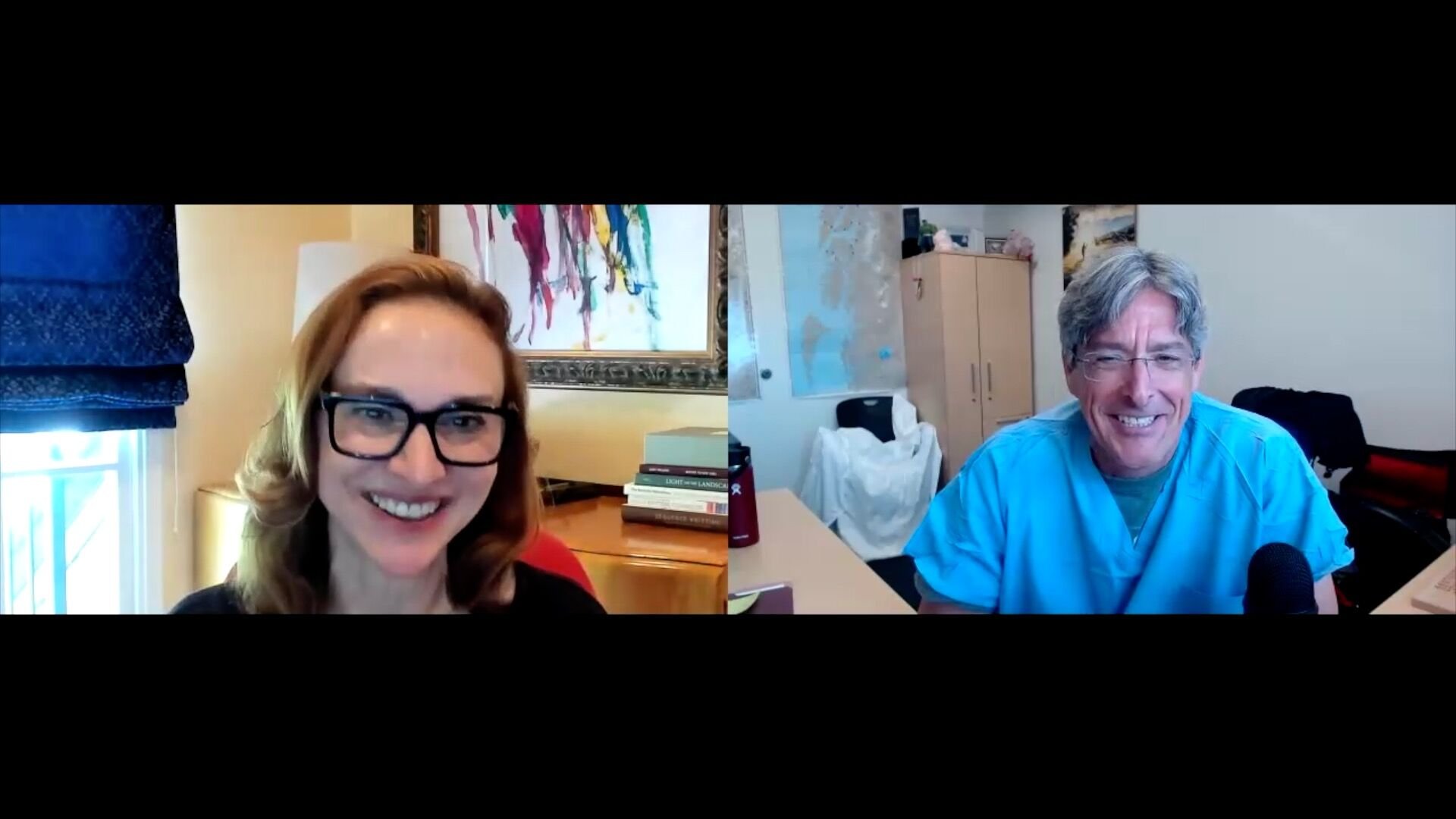
I recently spoke with Livia Robic of Withings about the BeamO device for the TechLink Health podcast. BeamO is designed to help physicians take better care of their patients remotely, and was named one of Time magazine's "Best Inventions of 2024". This was such an interesting and engaging episode, and I can imagine a number of scenarios where this device could make a difference for patients with chronic disease or those recovering from surgery. I’m excited to see what the future holds for BeamO!
I recently spoke with Livia Robic of Withings about the BeamO device for the TechLink Health podcast. This handheld consumer device includes a pulse oximeter, a thermometer, a mini-ECG and an electronic stethoscope.
BeamO is designed to help physicians take better care of their patients remotely, and was named one of Time magazine's "Best Inventions of 2024". This was such an interesting and engaging episode, and I can imagine a number of scenarios where this device could make a difference for patients with chronic disease or those recovering from surgery. I’m excited to see what the future holds for BeamO!
You can find our conversation anywhere you listen to podcasts, or through the Spotify link below.

My Podcast Interview with Peter Adams for Vielight Inc.
As a podcast host for TechLink Health, I had the opportunity to interview Peter Adams with Vielight Inc. This is a fascinating new technology integrating photobiomodulation for brain health. The device is already being used by athletes, including former NFL players, for brain recovery protocols. Leading medical centers including UCSF and Harvard, have published research on Vielight, as has the Veterans Administration. I thoroughly enjoyed our conversation, which you can find anywhere you listen to podcasts.
As a podcast host for TechLink Health, I had the opportunity to interview Peter Adams with Vielight Inc. This is a fascinating new technology integrating photobiomodulation for brain health.
The device is already being used by athletes, including former NFL players, for brain recovery protocols. Leading medical centers including UCSF and Harvard, have published research on Vielight, as has the Veterans Administration.
I thoroughly enjoyed our conversation, which you can find anywhere you listen to podcasts, or through the Spotify link below.

Coaching for Healthcare Leaders
As a member of the American College of Cardiology’s Physician Well-Being Working Group, I am fortunate to be part of the change that’s happening within cardiology and healthcare in general.
Coaching is increasingly recognized as a way to support and retain physicians, an aid for reducing burnout, and a tool that can improve the healthcare environment for physicians, staff, and the patients that we serve.
The first in a series of webinars put on through the ACC was presented in early 2024. You can watch it here, or maybe take it along with you and listen during your commute to work.
As a member of the American College of Cardiology’s Physician Well-Being Working Group, I am fortunate to be part of the change that’s happening within cardiology and healthcare in general.
Coaching is increasingly recognized as a way to support and retain physicians, an aid for reducing burnout, and a tool that can improve the healthcare environment for physicians, staff, and the patients that we serve.
The first in a series of webinars put on through the ACC was presented in early 2024. You can watch it here, or maybe take it along with you and listen during your commute to work.

My Podcast Interview with Cyber-Security Expert Anand Naik
We all know that cybersecurity is crucial in healthcare to protect sensitive patient data, ensure the integrity of medical devices, and maintain the overall trust in healthcare systems. Whether in the role of physician or patient, we depend on the people and systems working behind the scenes to keep us safe.
As a host of the recent episode of Techlink Health Podcast, I learned a lot from Anand Naik, including how advancements in IoHT/IoMT security and AI-driven protection are being harnessed to safeguard the future of connected health.
We all know that cybersecurity is crucial in healthcare to protect sensitive patient data, ensure the integrity of medical devices, and maintain the overall trust in healthcare systems. Whether in the role of physician or patient, we depend on the people and systems working behind the scenes to keep us safe.
As a host of the recent episode of Techlink Health Podcast, I learned a lot from Anand Naik, including how advancements in IoHT/IoMT security and AI-driven protection are being harnessed to safeguard the future of connected health.
For tech-savvy physicians looking for alternatives to clinical medicine, or side gigs in the healthcare sphere, cybersecurity might be an area that could use your expertise and insight.

My Podcast Interview with Dr. Kevin Smith
This was such an interesting conversation with facial plastic surgeon and ENT Dr. Kevin Smith for TechLink Health! I was fascinated to learn about the link between migraines and nasal health. Dr. Smith’s journey from college athlete to cutting edge surgeon gives him a unique perspective, which he shares on the podcast.
This was such an interesting conversation with facial plastic surgeon and ENT Dr. Kevin Smith for TechLink Health! I was fascinated to learn about the link between migraines and nasal health. Dr. Smith’s journey from college athlete to cutting edge surgeon gives him a unique perspective, which he shares on the podcast.
Dr. Smith's story shows how the combination of clinical excellence, curiosity, and persistence can impact patients' lives in meaningful ways and spark new innovations.

My Podcast Interview with Mastek’s Ritwik Batabyal
My podcast interview with Mastek’s Ritwik Batabyal was a great reminder of how integral sophisticated behind-the-scenes technology is to providing optimal health care.
Rightfully, there is a lot of trepidation around the use of AI in healthcare and health technology, but the truth is that it’s already here. By understanding and optimizing the ways that we as physicians use AI, we will ensure that we have a say in the way it changes our landscape and the ways that care is delivered.
I enjoyed this conversation with Mastek's Ritwik Batabyal and David Sanchez, RN. It was a great reminder of how integral sophisticated behind-the-scenes technology is to providing optimal health care.
Rightfully, there is a lot of trepidation around the use of AI in healthcare and health technology, but the truth is that it’s already here. By understanding and optimizing the ways that we as physicians use AI, we will ensure that we have a say in the way it changes our landscape and the ways that care is delivered.

TechLink Health Podcast on Heart Smart Mindfulness
It was an honor to be featured as a guest on the TechLink Health podcast. I shared my insights on maintaining heart health with a busy lifestyle, the role of mindfulness on outcomes in healthcare, and the importance of addressing issues that lead to burnout in physicians and others.
I often host the TechLink Health podcast, a show devoted to exploring the gamut of new technologies and innovations in health care. I began this journey as a guest on the podcast in 2022. The interview went so well that I was subsequently invited to host.
It’s been a lot of fun, and I always learn so much from our guests. My experience is a great example of what can happen when you take chances and say yes to opportunities that align with your purpose, even when you don’t know exactly what will happen next.
This week I’m re-sharing my first episode. The conversation ranges from insights on maintaining heart health with a busy lifestyle to the role of mindfulness on outcomes in healthcare, and the importance of addressing issues that lead to burnout in physicians and others. We also discussed the ways a creative practice can help physicians and others in healthcare.
If you’re interested in accessing some of the resources we discussed, I’ve linked to them below.
A version of this article originally appeared on this website in November, 2022
DISCLAIMER: As an Amazon Associate I may earn from qualifying purchases, which means that if you click on one of the product links, I’ll receive a small commission. This helps support the website, for which I am grateful! Please do your own research before making any important decisions.
If you’ve enjoyed this article and would like to stay in the loop for more insights on creating a sustainable, fulfilling, and happy life as a physician, sign up for my newsletter or reach out on my website. I’d love to hear from you.
And if you’d like to schedule a complimentary introductory meeting with me, click the link below.

My Podcast Interview with Digital Diagnostic’s John Bertrand
Artificial intelligence is making its way into healthcare at a rapid pace. By harnessing its benefits while at the same time recognizing its limitations, we have an opportunity to improve and expand access to care for a wide range of people.
This was a thought-provoking podcast conversation with John Bertrand of Digital Diagnostics about the practical and potentially life-changing uses of AI for early detection of diabetic retinopathy. The beauty of the process is the fact that it can be used virtually anywhere, and does not require a highly skilled technician to acquire the data.
Artificial intelligence is making its way into healthcare at a rapid pace. By harnessing its benefits while at the same time recognizing its limitations, we have an opportunity to improve and expand access to care for a wide range of people.
This was a thought-provoking podcast conversation with John Bertrand of Digital Diagnostics about the practical and potentially life-changing uses of AI for early detection of diabetic retinopathy. The beauty of the process is the fact that it can be used virtually anywhere, and does not require a highly skilled technician to acquire the data.

My Podcast Interview with AI Pioneer Dennis Cogan of Caresyntax
As a TechLink Insights podcast host, I enjoyed this very forward-thinking and inspiring conversation with Dennis Kogan of Caresyntax about the role of AI in surgical practice.
The future looks bright for innovations in care when AI is applied thoughtfully and collaboratively.
It’s no secret that artificial intelligence (AI) is rapidly becoming a powerful tool in healthcare and medical science.
As a TechLink Insights podcast host, I enjoyed this very forward-thinking and inspiring conversation with Dennis Kogan of Caresyntax, a company pioneering the use of AI in surgical practice.
It’s normal to feel uneasy about these new technologies. But AI is already here, and it’s up to physicians and others in healthcare to guide its implementation and develop reasonable safety rails to protect our patients. Having met with a number of pioneers in this space through the podcast, I believe that the future looks bright for innovations in care when AI is applied thoughtfully and collaboratively.

My Podcast Interview with Tax Expert Alexis Gallati, MBA
I really enjoyed my conversation with tax expert Alexis Gallati, EA, MBA, MS Tax, CTS for TechLink Health. This was such a practical and well explained deep dive into tax strategies for physicians.
I really enjoyed my conversation with Alexis Gallati, EA, MBA, MS Tax, CTS for TechLink Health. This was such a practical and well explained deep dive into tax strategies for physicians.
Alexis is married to a surgeon, so she has seen firsthand how little education most of us have in financial strategies, and how this lack of knowledge can hurt us and leave us vulnerable to bad advice.
This podcast addressed financial strategies related to side gigs, managing independent practices and more. Alexis is an engaging speaker and shares a wealth of practical insight.

My Podcast Interview with Health Tech Expert Shanil Ebrahim
Shanil Ebrahim is on the cutting edge of healthcare technology, with expertise not only as a scientist but also with meaningful experience in the fields of AI and health equity. His insights are timely and thought provoking.
Shanil Ebrahim is on the cutting edge of healthcare technology, with expertise not only as a scientist but also with meaningful experience in the fields of AI and health equity. His insights are timely and thought provoking.
As a frequent host of the TechLink Health podcast, it's always such a pleasure and a privilege to meet with leading innovators in the health and tech space. The industry is moving at warp speed, and it's great to have a front row seat!
You can listen to the podcast at TechLink Health as well as Spotify and Apple Podcasts.

My Podcast Interview with Grenville Thynne of Neuroflex
I recently had a fascinating conversation with Grenville Thynne for the Techlink Health Podcast. We discussed his work with the trailblazing Neuroflex company. Neuroflex’s portable technology can quickly detect evidence of concussion on site, which makes it especially valuable to athletes of all types. The technology is also being studied in aging, and has the ability to provide objective measurements of brain function that can be tracked over time.
I recently had a fascinating conversation with Grenville Thynne for the Techlink Health Podcast. We discussed his work with the trailblazing Neuroflex company. Neuroflex’s portable technology can quickly detect evidence of concussion on site, which makes it especially valuable to athletes of all types.
The technology is also being studied in aging and neurodevelopmental disorders, and has the ability to provide objective measurements of brain function that can be tracked over time.
This was one of my favorite podcasts of the year. I hope you enjoy it.

My Podcast Interview with Phage Therapy Research Scientist Dr. Jennifer Sacher
It was such a pleasure to interview Dr. Jessica Sacher for the Techlink Health Podcast. We discussed her fascinating work using phage therapy to defeat superbugs, and how she got started in the field. We also had a great conversation about the personal aspects of this work, and how she has adapted her laboratory process to meet the growing need for phage therapy.
It was such a pleasure to interview Dr. Jessica Sacher for the Techlink Health Podcast.
We discussed her fascinating work using phage therapy to defeat superbugs, and how she got started in the field.
We also had a great conversation about the personal aspects of this work, and how she has adapted her laboratory process to meet the growing need for phage therapy.
This interview is a great reminder of all the people whose work contributes to saving lives and furthering the progress of medical science.
Jessica’s passion for her work shines through in this interview. I hope you enjoy it!

My Podcast Interview with Dr. Keith Matheny, Medical Entrepreneur
It was a real treat to have the opportunity to interview Keith Matheny for the TechLink Health podcast. As a colleague and fellow Vanderbilt alumni, I was especially interested to hear his story and discover how he designed an innovative and physician-driven approach to challenges in the Ear Nose and Throat specialty.
It was a real treat to have the opportunity to interview Dr. Keith Matheny for the TechLink Health podcast. As a colleague and fellow Vanderbilt alumni, I was especially interested to hear his story and discover how he designed an innovative and physician-driven approach to challenges in the Ear Nose and Throat specialty.
Keith is a fantastic clinician and an inspiring entrepreneur, and I think you’ll enjoy our conversation.
Check out the podcast here, or you can listen on Apple Podcast, Spotify, or on the TechLink Health website or app.

Navigating Burnout: My Podcast Appearance on KevinMD
Burnout is a symptom of a system that is not working for you. In many ways it’s a form of grief. It’s not your fault. But that doesn’t mean there’s no way out. In my interview with Kevin MD, I discussed the factors that contribute to burnout as well as some actionable steps you can take to improve your life as a physician and to combat the effects of today’s stressful environment.
If you’re a physician, or anyone active in healthcare today, you have probably heard of Dr. Kevin Pho and his KevinMD podcast and website.
Kevin posts interviews and articles daily, and I was thrilled to be a recent guest. In the episode, we discussed the burnout epidemic, and why it’s not the same as compassion fatigue.
Burnout is a symptom of a system that is not working for you. In many ways, it’s a form of grief. It’s not your fault. But that doesn’t mean there’s no way out. In the interview, I went over actionable steps you can take to improve your life as a physician and to combat the effects of today’s stressful environment.