Focus on Physicians:
Insights, Ideas, and Strategies




















Overcoming Disrespect in Medicine: Protecting Physician Dignity
Treating patients with dignity is a fundamental tenet of our profession. Most of us aspire to create a sense of safety and respect for those in our care. Yet the flip side of this equation is rarely mentioned. And the truth is that physicians are often not treated with dignity by their systems or their patients.
In this article, I’ll go over the fundamental changes that have contributed to disrespect for physicians, and give you five strategies you can use to combat the disrespect and reclaim your dignity.
An earlier version of this article appeared on the KevinMD website in August, 2023.
Treating patients with dignity is one of the cornerstones of our profession. While we’ve all had moments when we—or our colleagues—didn’t quite measure up, most of us genuinely aim to make our patients feel safe and respected. But what about the flip side of this dynamic? It’s not talked about nearly enough: physicians are often not treated with the same dignity by their systems or even their patients.
In this article, I’ll dive into the major shifts that have led to this reality and share five practical strategies to help you push back against the disrespect and reclaim your sense of dignity.
The Roots of the Problem: Disrespect and Breakdown in Advocacy
We’ve been conditioned to expect, and even accept, that patients in distress might lash out, but the toll this has taken on physicians in recent years has been enormous. As recently as five years ago there was still a general expectation of respect for the expertise and sacrifices that a physician’s work entails.
But disrespect from patients is currently at an all-time high, sometimes even escalating to physical violence from patients. A recent study found that more than one third of public health workers in the US experience some form of workplace violence. Examples included stigma or discrimination, job-related threats, and bullying or harassment.

Adding fuel to the fire is the rise of administrative oversight of physicians and their practices by people who may have little experience in direct patient care. Their reach extends not only to metrics and billing, but into personal and professional decisions that once would have been completely off limits.
What’s more, employed physicians may have little say into whether threatening patients can be dismissed from their practices.
And at the intersection of patient and administrative stress are the widely published patient satisfaction scores. While these scores often have no relevance to patient outcomes, they’ve become yet another pressure point, pushing physicians to prioritize arbitrary expectations over doing their best work.
Although physicians are tasked with regular training in sensitivity and respect for patients and employees, they get little instruction in how to protect their own dignity. Often physicians are advised to just let it go.
It’s not unusual for doctors, especially women, to attempt to deal with these situations with passivity and even self-deprecation, in a misguided attempt to get along. Younger physicians who lack strong mentorship may be especially vulnerable to these situations.
Unfortunately, these well-meaning attempts to smooth things over often have the opposite effect. They can actually embolden the bully and do nothing to improve the situation.
The status quo is not sustainable, and it is incumbent on healthcare systems to work to create safe and respectful environments. As a physician, you have more power than you may realize. Here are five ideas that you can implement right now:
How to Reclaim Your Dignity
1. Establish Boundaries
Boundaries are essential for maintaining professional relationships and protecting your sense of self. Being a compassionate and caring physician doesn’t mean being a friend to your patients or colleagues.
Keep a clear line between work and personal life—avoid interacting with patients or administrators on social media, and be intentional about separating the two spheres. Setting clear expectations for respectful behavior can help prevent issues before they arise.
2. Advocate for a Respectful Work Environment
If you don’t stand up for yourself, who will? Open discussions about mutual respect—at meetings or through anonymous feedback systems—can pave the way for change.
Remember, you’re not asking for anything unreasonable. Advocating for policies that address disrespect and burnout can help create a healthier, more supportive workplace for everyone.
3. Strengthen Doctor-Patient Communication
Good communication is at the heart of the physician-patient relationship. By being empathetic and respectful in your interactions, you can set the tone for civility with both patients and staff.
Stay calm during difficult conversations—pause, take a deep breath, and step away if needed. Active listening, showing genuine interest in patients' concerns, and involving them in decision-making can help build trust and respect.
And although the EHR is great tool for communication, keeping EHR messages brief and focused can help to maintain your professional boundaries while addressing patient concerns.
4. Don’t Accept Disrespect
Firmly but politely calling out an incident of disrespect can be a first step towards creating a solution. When an issue persists or escalates, document what’s happening—it’s often more effective than just voicing complaints.
But if you feel that your safety or that of your staff is at risk, don’t allow yourself to be talked into accepting a dangerous situation. If you’re employed, your healthcare system bears responsibility. If your concerns are not addressed, sometimes engaging with and reporting to security or even law enforcement personnel is the best course of action to protect everyone.
5. Take Care of Yourself
Prioritize your own well-being. Make time for self-care, whether it’s through exercise, meditation, or hobbies to help you recharge emotionally and mentally. Mindfulness practices can give you tools that help you to stay present, focused, and composed during difficult encounters, preventing potential escalation.
Don’t overlook the importance of making time for your family, friends and loved ones. By nurturing these ties, you will stay connected to the world outside of your practice.
Reclaiming your dignity as a physician will require commitment and fortitude. While it’s crucial to acknowledge the culpability of our healthcare systems, real change will depend on strong advocacy from physicians like you. By starting with the steps above, you can begin to build a workplace that’s not only more respectful but also more sustainable. And ultimately everyone, including the patients you care for, will benefit.
If you’ve enjoyed this article and would like to stay in the loop for more insights on creating a sustainable, fulfilling, and happy life as a physician, sign up for my newsletter or reach out on my website. I’d love to hear from you.
And if you’d like to schedule a complimentary coaching discovery session, click the button below.
References

Burnout is an Expression of Grief, Not a Lack of Compassion
“The wound is the place where the light enters you.”- Rumi
With over 60% of physicians surveyed reporting burnout in 2021, it’s an epidemic in our profession.
Burnout is not a personal failing or a psychological illness. Rather, burnout is a response to chronic workplace-related stress.
But burnout is not a failure of compassion. In fact, burnout may be a natural reaction to the recognition that you are unable to provide the compassionate care that your patients need.
An earlier version of this article appeared on the KevinMD website in June, 2023
Over the last 5 years, the word “burnout” has become nearly synonymous with the state of healthcare. With nearly 50 percent of physicians surveyed reporting burnout in 2023, it’s an epidemic in our profession.
Physicians are often made to feel responsible for their symptoms of burnout, but by definition, burnout is not a personal failing or a psychological illness. Rather, burnout is defined as an occupational phenomenon that happens in response to chronic workplace-related stress.
Burnout is not a failure of compassion.
If you’re feeling burned out, it doesn’t mean that you don’t care. In fact, burnout may be a natural reaction to the recognition that you are unable to provide the compassionate care that your patients need.
The experience of burnout may mirror in some ways the experience of grief. Both are a response to loss. And like burnout, grief is often experienced as exhaustion and difficulty thinking clearly.
Compassion fatigue on the other hand is defined as a sense of indifference to the suffering of others. It’s an emotional withdrawal often caused by exposure to traumatic events. For physicians, it may be a response to relentless illness and death. The COVID-19 pandemic is a classic example of a driver of compassion fatigue, especially for those who worked in the ER and ICU in the early days of this disaster.

It’s not uncommon for physicians to experience compassion fatigue from time to time. It doesn’t mean that they are not compassionate people, but rather that they are suffering and in need of relief.
We might consider burnout as a type of disenfranchised grief. But it is not compassion fatigue. In fact, equating burnout with a lack of compassion may be a heavy-handed way of placing the blame on physicians while deflecting it from the systems that created the problem.
As a coach, I have found that many physicians with burnout are in fact grieving the lack of connection to their patients. Often this is due to system-wide emphasis on RVUs combined with excessive clerical work that undermines their ability to spend meaningful time with patients.
National organizations and many health care systems are beginning to take note, and as supportive processes are put in place, rates of burnout do seem to be slowly improving. But there is much work to be done.
If you’re experiencing burnout, it’s important to recognize it for the wound that it is, have compassion for yourself, and create a plan to move forward.
In the words of the poet Rumi, “the wound is the place where the light enters you.” What does this light illuminate for you?
If you’ve enjoyed this article and would like to stay in the loop for more insights on creating a sustainable, fulfilling, and happy life as a physician, sign up for my newsletter or reach out on my website. I’d love to hear from you.
As a physician coach, I will work with you to explore what’s possible and create a plan that aligns with your personal values and aspirations. Schedule your exploratory conversation with me by clicking the button below.

Mindfulness: A Surprisingly Practical Tool for Time Management
When you’re busy and feeling time-pressured, mindfulness may seem to be an uneasy, even unwelcome, construct. Who has time for it? Yet it turns out that simple mindfulness practices can help you to reframe and de-escalate the struggles of the day. In this article I will show you how using mindfulness can create the mental space you need to confidently and calmly manage patient care while protecting your precious time.
As a doctor you’ve studied, trained, and practiced for years, probably decades, to provide the best care for your patients. But as our world has become increasingly tech-driven and connected, the pressures from both within and outside of the healthcare workspace for your time and attention have multiplied.
Whether it’s pings from the EHR, text messages from the hospital, urgent calls from colleagues or families, or the never-ending torrent of emails, your attention has become more fragmented than ever before.
When you’re busy and feeling time-pressured, mindfulness may seem to be an uneasy, even unwelcome, construct. Who has time for it? Yet it turns out that simple mindfulness practices can help you to reframe and de-escalate the struggles of the day.
Mindfulness won’t cure the ills that physicians face in the current healthcare environment, but it can mitigate their impact. In this article I will show you how using mindfulness can create the mental space you need to confidently and calmly manage patient care while protecting your precious time.

Start with Mindful Mornings
Mornings can often feel a little frantic, but finding room for a simple 5-minute mindfulness practice can help to set the tone for your day. Here are some ideas to get you started:
Sit quietly with your morning coffee, allowing time for it to cool while you check in with your breath. Take a slow deep breath in through the nose, pause for a moment, and then breathe out through the mouth. You can use the box breathing technique, or simply find a rhythm that feels comfortable.
Use a mindfulness app like Insight Timer or Headspace. You can enter the time you have available and you’ll find a wide range of guided meditations.
Set a 5-minute timer and journal about anything that comes to mind.
Practice Mindful Transitions
Mindful task transitions can help you maintain your focus and prevent mental fatigue. Before moving on to a new task, appointment, or procedure, take a moment to pause, breathe deeply, and clear your mind.
You’ll be more present for your patient, which can build trust and connection. And this mindful pause can enhance your efficiency by helping to prevent the accumulation of mental clutter, or what is known as attention residue.
Embrace Single-Tasking
Multitasking used to be considered a prerequisite superpower for productivity. Doing two or more things at once--what could possibly go wrong? A lot, it turns out.
Emergency Department physicians may be the most pressed to multitask, with a recent Scandinavian study finding that almost 20 percent of their time is engaged this way. Not surprisingly, this study found that the more a physician multitasked, the more stressed they became. And other studies have found that multitasking can increase the risk for errors.
While you may not always have control over who or what interrupts you, it can help to remain mindful of the things that are pulling on your attention. When you are able to tune out distractions and put non-pressing matters on hold, you’re likely to be more productive and efficient with your time.
To tune up your ability to focus, regular meditation can help. That’s because mindfulness meditation is, at its foundation, a practice of returning your attention to the present moment.
Cultivate Presence
What exactly is presence? Actress Anna Deavere Smith, in her book Letters to a Young Artist, counsels that “Presence means you hold your own space, control the space around you, and sometimes welcome others into it.” Here she is describing the persona of an artist, but as a physician, you too are tasked with holding space, while simultaneously creating a place of safety for your patients to enter.
In being present, you are listening mindfully, without jumping to conclusions or judgments. You’re paying attention not only to the words but to the body language and, sometimes, to the unspoken fears beneath the words.
This might sound like it could add time to the encounter, but the truth is that when you lead with mindfulness, your patient is more likely to feel heard and safe. You are more apt to integrate information that might otherwise slip beneath your radar, so your differential may be more accurate.
And as you build trust, your treatment plan may be more readily accepted, and you’re likely to get fewer in-box messages or worried phone calls after the encounter.
End with Mindful Reflection
As you close out the day, take five to ten minutes to reflect on your “wins”, your “dones”, and your “to-dos”. Acknowledge both your successes and areas for improvement, without falling into self-criticism.
By creating a to-do list for the next day, you can set aside your lingering worries and unchecked boxes, knowing that you’ve made a plan to tackle them tomorrow.
Your closing-down practice could even include stopping at a coffee shop on your way home to enjoy a cup of decaf and take a few minutes to journal and debrief before entering into your home life.
This time between work and home can also give you a safe space to decompress from your work day so that you’re able to be present for your loved ones, making the most of the time remaining in the day.
Conclusion
Mindfulness is not going to solve all that is troubling healthcare. It doesn’t mean pretending that the troublesome systemic problems facing physicians don’t exist. But by cultivating a mindful approach to the day, it’s likely that your time will be spent more meaningfully. And as a result, your focus and productivity will improve, and you’ll have more bandwidth to be present for your patients and your loved ones.
DISCLAIMER: As an Amazon Associate I may earn from qualifying purchases, which means that if you click on one of the product links, I’ll receive a small commission. This helps support the website, for which I am grateful! Please do your own research before making any important decisions.
If you’ve enjoyed this article and would like to stay in the loop for more insights on creating a sustainable, fulfilling, and happy life as a physician, sign up for my newsletter or reach out on my website. I’d love to hear from you.
And if you’d like to schedule a complimentary introductory meeting with me, click the link below.

My Podcast Interview with Livia Robic of Withings for BeamO
I recently spoke with Livia Robic of Withings about the BeamO device for the TechLink Health podcast. BeamO is designed to help physicians take better care of their patients remotely, and was named one of Time magazine's "Best Inventions of 2024". This was such an interesting and engaging episode, and I can imagine a number of scenarios where this device could make a difference for patients with chronic disease or those recovering from surgery. I’m excited to see what the future holds for BeamO!
I recently spoke with Livia Robic of Withings about the BeamO device for the TechLink Health podcast. This handheld consumer device includes a pulse oximeter, a thermometer, a mini-ECG and an electronic stethoscope.
BeamO is designed to help physicians take better care of their patients remotely, and was named one of Time magazine's "Best Inventions of 2024". This was such an interesting and engaging episode, and I can imagine a number of scenarios where this device could make a difference for patients with chronic disease or those recovering from surgery. I’m excited to see what the future holds for BeamO!
You can find our conversation anywhere you listen to podcasts, or through the Spotify link below.

My Podcast Interview with Peter Adams for Vielight Inc.
As a podcast host for TechLink Health, I had the opportunity to interview Peter Adams with Vielight Inc. This is a fascinating new technology integrating photobiomodulation for brain health. The device is already being used by athletes, including former NFL players, for brain recovery protocols. Leading medical centers including UCSF and Harvard, have published research on Vielight, as has the Veterans Administration. I thoroughly enjoyed our conversation, which you can find anywhere you listen to podcasts.
As a podcast host for TechLink Health, I had the opportunity to interview Peter Adams with Vielight Inc. This is a fascinating new technology integrating photobiomodulation for brain health.
The device is already being used by athletes, including former NFL players, for brain recovery protocols. Leading medical centers including UCSF and Harvard, have published research on Vielight, as has the Veterans Administration.
I thoroughly enjoyed our conversation, which you can find anywhere you listen to podcasts, or through the Spotify link below.

Coaching for Healthcare Leaders
As a member of the American College of Cardiology’s Physician Well-Being Working Group, I am fortunate to be part of the change that’s happening within cardiology and healthcare in general.
Coaching is increasingly recognized as a way to support and retain physicians, an aid for reducing burnout, and a tool that can improve the healthcare environment for physicians, staff, and the patients that we serve.
The first in a series of webinars put on through the ACC was presented in early 2024. You can watch it here, or maybe take it along with you and listen during your commute to work.
As a member of the American College of Cardiology’s Physician Well-Being Working Group, I am fortunate to be part of the change that’s happening within cardiology and healthcare in general.
Coaching is increasingly recognized as a way to support and retain physicians, an aid for reducing burnout, and a tool that can improve the healthcare environment for physicians, staff, and the patients that we serve.
The first in a series of webinars put on through the ACC was presented in early 2024. You can watch it here, or maybe take it along with you and listen during your commute to work.

My Podcast Interview with Cyber-Security Expert Anand Naik
We all know that cybersecurity is crucial in healthcare to protect sensitive patient data, ensure the integrity of medical devices, and maintain the overall trust in healthcare systems. Whether in the role of physician or patient, we depend on the people and systems working behind the scenes to keep us safe.
As a host of the recent episode of Techlink Health Podcast, I learned a lot from Anand Naik, including how advancements in IoHT/IoMT security and AI-driven protection are being harnessed to safeguard the future of connected health.
We all know that cybersecurity is crucial in healthcare to protect sensitive patient data, ensure the integrity of medical devices, and maintain the overall trust in healthcare systems. Whether in the role of physician or patient, we depend on the people and systems working behind the scenes to keep us safe.
As a host of the recent episode of Techlink Health Podcast, I learned a lot from Anand Naik, including how advancements in IoHT/IoMT security and AI-driven protection are being harnessed to safeguard the future of connected health.
For tech-savvy physicians looking for alternatives to clinical medicine, or side gigs in the healthcare sphere, cybersecurity might be an area that could use your expertise and insight.

My Podcast Interview with Dr. Kevin Smith
This was such an interesting conversation with facial plastic surgeon and ENT Dr. Kevin Smith for TechLink Health! I was fascinated to learn about the link between migraines and nasal health. Dr. Smith’s journey from college athlete to cutting edge surgeon gives him a unique perspective, which he shares on the podcast.
This was such an interesting conversation with facial plastic surgeon and ENT Dr. Kevin Smith for TechLink Health! I was fascinated to learn about the link between migraines and nasal health. Dr. Smith’s journey from college athlete to cutting edge surgeon gives him a unique perspective, which he shares on the podcast.
Dr. Smith's story shows how the combination of clinical excellence, curiosity, and persistence can impact patients' lives in meaningful ways and spark new innovations.

My Podcast Interview with Mastek’s Ritwik Batabyal
My podcast interview with Mastek’s Ritwik Batabyal was a great reminder of how integral sophisticated behind-the-scenes technology is to providing optimal health care.
Rightfully, there is a lot of trepidation around the use of AI in healthcare and health technology, but the truth is that it’s already here. By understanding and optimizing the ways that we as physicians use AI, we will ensure that we have a say in the way it changes our landscape and the ways that care is delivered.
I enjoyed this conversation with Mastek's Ritwik Batabyal and David Sanchez, RN. It was a great reminder of how integral sophisticated behind-the-scenes technology is to providing optimal health care.
Rightfully, there is a lot of trepidation around the use of AI in healthcare and health technology, but the truth is that it’s already here. By understanding and optimizing the ways that we as physicians use AI, we will ensure that we have a say in the way it changes our landscape and the ways that care is delivered.

TechLink Health Podcast on Heart Smart Mindfulness
It was an honor to be featured as a guest on the TechLink Health podcast. I shared my insights on maintaining heart health with a busy lifestyle, the role of mindfulness on outcomes in healthcare, and the importance of addressing issues that lead to burnout in physicians and others.
I often host the TechLink Health podcast, a show devoted to exploring the gamut of new technologies and innovations in health care. I began this journey as a guest on the podcast in 2022. The interview went so well that I was subsequently invited to host.
It’s been a lot of fun, and I always learn so much from our guests. My experience is a great example of what can happen when you take chances and say yes to opportunities that align with your purpose, even when you don’t know exactly what will happen next.
This week I’m re-sharing my first episode. The conversation ranges from insights on maintaining heart health with a busy lifestyle to the role of mindfulness on outcomes in healthcare, and the importance of addressing issues that lead to burnout in physicians and others. We also discussed the ways a creative practice can help physicians and others in healthcare.
If you’re interested in accessing some of the resources we discussed, I’ve linked to them below.
A version of this article originally appeared on this website in November, 2022
DISCLAIMER: As an Amazon Associate I may earn from qualifying purchases, which means that if you click on one of the product links, I’ll receive a small commission. This helps support the website, for which I am grateful! Please do your own research before making any important decisions.
If you’ve enjoyed this article and would like to stay in the loop for more insights on creating a sustainable, fulfilling, and happy life as a physician, sign up for my newsletter or reach out on my website. I’d love to hear from you.
And if you’d like to schedule a complimentary introductory meeting with me, click the link below.

My Podcast Interview with Digital Diagnostic’s John Bertrand
Artificial intelligence is making its way into healthcare at a rapid pace. By harnessing its benefits while at the same time recognizing its limitations, we have an opportunity to improve and expand access to care for a wide range of people.
This was a thought-provoking podcast conversation with John Bertrand of Digital Diagnostics about the practical and potentially life-changing uses of AI for early detection of diabetic retinopathy. The beauty of the process is the fact that it can be used virtually anywhere, and does not require a highly skilled technician to acquire the data.
Artificial intelligence is making its way into healthcare at a rapid pace. By harnessing its benefits while at the same time recognizing its limitations, we have an opportunity to improve and expand access to care for a wide range of people.
This was a thought-provoking podcast conversation with John Bertrand of Digital Diagnostics about the practical and potentially life-changing uses of AI for early detection of diabetic retinopathy. The beauty of the process is the fact that it can be used virtually anywhere, and does not require a highly skilled technician to acquire the data.
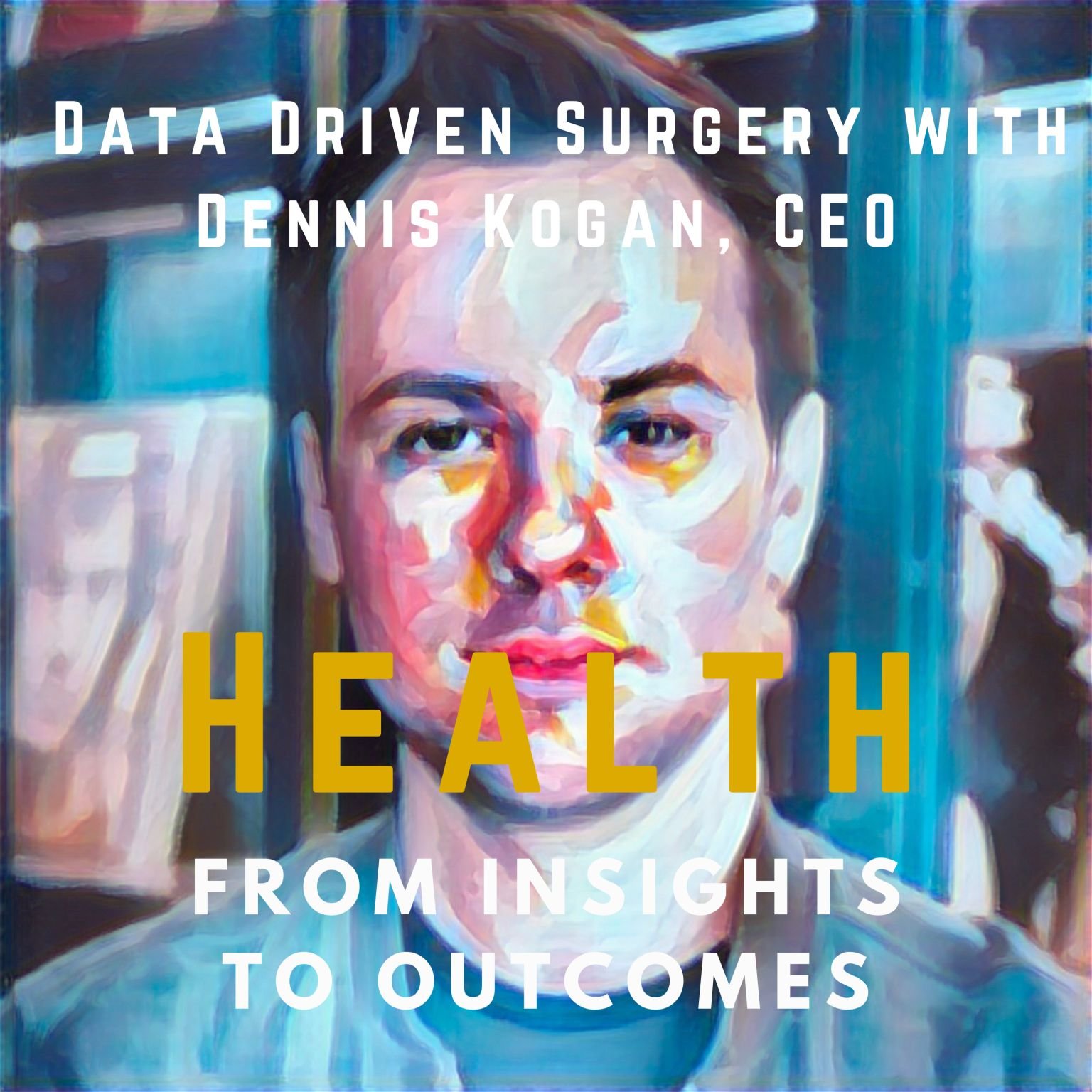
My Podcast Interview with AI Pioneer Dennis Cogan of Caresyntax
As a TechLink Insights podcast host, I enjoyed this very forward-thinking and inspiring conversation with Dennis Kogan of Caresyntax about the role of AI in surgical practice.
The future looks bright for innovations in care when AI is applied thoughtfully and collaboratively.
It’s no secret that artificial intelligence (AI) is rapidly becoming a powerful tool in healthcare and medical science.
As a TechLink Insights podcast host, I enjoyed this very forward-thinking and inspiring conversation with Dennis Kogan of Caresyntax, a company pioneering the use of AI in surgical practice.
It’s normal to feel uneasy about these new technologies. But AI is already here, and it’s up to physicians and others in healthcare to guide its implementation and develop reasonable safety rails to protect our patients. Having met with a number of pioneers in this space through the podcast, I believe that the future looks bright for innovations in care when AI is applied thoughtfully and collaboratively.

My Podcast Interview with Tax Expert Alexis Gallati, MBA
I really enjoyed my conversation with tax expert Alexis Gallati, EA, MBA, MS Tax, CTS for TechLink Health. This was such a practical and well explained deep dive into tax strategies for physicians.
I really enjoyed my conversation with Alexis Gallati, EA, MBA, MS Tax, CTS for TechLink Health. This was such a practical and well explained deep dive into tax strategies for physicians.
Alexis is married to a surgeon, so she has seen firsthand how little education most of us have in financial strategies, and how this lack of knowledge can hurt us and leave us vulnerable to bad advice.
This podcast addressed financial strategies related to side gigs, managing independent practices and more. Alexis is an engaging speaker and shares a wealth of practical insight.

My Podcast Interview with Health Tech Expert Shanil Ebrahim
Shanil Ebrahim is on the cutting edge of healthcare technology, with expertise not only as a scientist but also with meaningful experience in the fields of AI and health equity. His insights are timely and thought provoking.
Shanil Ebrahim is on the cutting edge of healthcare technology, with expertise not only as a scientist but also with meaningful experience in the fields of AI and health equity. His insights are timely and thought provoking.
As a frequent host of the TechLink Health podcast, it's always such a pleasure and a privilege to meet with leading innovators in the health and tech space. The industry is moving at warp speed, and it's great to have a front row seat!
You can listen to the podcast at TechLink Health as well as Spotify and Apple Podcasts.

My Podcast Interview with Grenville Thynne of Neuroflex
I recently had a fascinating conversation with Grenville Thynne for the Techlink Health Podcast. We discussed his work with the trailblazing Neuroflex company. Neuroflex’s portable technology can quickly detect evidence of concussion on site, which makes it especially valuable to athletes of all types. The technology is also being studied in aging, and has the ability to provide objective measurements of brain function that can be tracked over time.
I recently had a fascinating conversation with Grenville Thynne for the Techlink Health Podcast. We discussed his work with the trailblazing Neuroflex company. Neuroflex’s portable technology can quickly detect evidence of concussion on site, which makes it especially valuable to athletes of all types.
The technology is also being studied in aging and neurodevelopmental disorders, and has the ability to provide objective measurements of brain function that can be tracked over time.
This was one of my favorite podcasts of the year. I hope you enjoy it.

My Podcast Interview with Phage Therapy Research Scientist Dr. Jennifer Sacher
It was such a pleasure to interview Dr. Jessica Sacher for the Techlink Health Podcast. We discussed her fascinating work using phage therapy to defeat superbugs, and how she got started in the field. We also had a great conversation about the personal aspects of this work, and how she has adapted her laboratory process to meet the growing need for phage therapy.
It was such a pleasure to interview Dr. Jessica Sacher for the Techlink Health Podcast.
We discussed her fascinating work using phage therapy to defeat superbugs, and how she got started in the field.
We also had a great conversation about the personal aspects of this work, and how she has adapted her laboratory process to meet the growing need for phage therapy.
This interview is a great reminder of all the people whose work contributes to saving lives and furthering the progress of medical science.
Jessica’s passion for her work shines through in this interview. I hope you enjoy it!

My Podcast Interview with Dr. Keith Matheny, Medical Entrepreneur
It was a real treat to have the opportunity to interview Keith Matheny for the TechLink Health podcast. As a colleague and fellow Vanderbilt alumni, I was especially interested to hear his story and discover how he designed an innovative and physician-driven approach to challenges in the Ear Nose and Throat specialty.
It was a real treat to have the opportunity to interview Dr. Keith Matheny for the TechLink Health podcast. As a colleague and fellow Vanderbilt alumni, I was especially interested to hear his story and discover how he designed an innovative and physician-driven approach to challenges in the Ear Nose and Throat specialty.
Keith is a fantastic clinician and an inspiring entrepreneur, and I think you’ll enjoy our conversation.
Check out the podcast here, or you can listen on Apple Podcast, Spotify, or on the TechLink Health website or app.

Navigating Burnout: My Podcast Appearance on KevinMD
Burnout is a symptom of a system that is not working for you. In many ways it’s a form of grief. It’s not your fault. But that doesn’t mean there’s no way out. In my interview with Kevin MD, I discussed the factors that contribute to burnout as well as some actionable steps you can take to improve your life as a physician and to combat the effects of today’s stressful environment.
If you’re a physician, or anyone active in healthcare today, you have probably heard of Dr. Kevin Pho and his KevinMD podcast and website.
Kevin posts interviews and articles daily, and I was thrilled to be a recent guest. In the episode, we discussed the burnout epidemic, and why it’s not the same as compassion fatigue.
Burnout is a symptom of a system that is not working for you. In many ways, it’s a form of grief. It’s not your fault. But that doesn’t mean there’s no way out. In the interview, I went over actionable steps you can take to improve your life as a physician and to combat the effects of today’s stressful environment.

My Podcast Interview With Dr. Cliff Han of AllerPops
I recently had the opportunity to interview Dr. Cliff Shunsheng Han for the Techlink Health podcast. Dr. Han is a physician, a medical researcher with the Human Genome Project, and the creator of AllerPops, an innovative product designed to help fight the seasonal allergies that plague so many of us.
Dr. Han is a wonderful example of a physician who followed a nontraditional pathway. In the podcast he shares his story and what led him to research and create the AllerPops products.
I recently had the opportunity to interview Dr. Cliff Shunsheng Han for the Techlink Health podcast. Dr. Han is a physician, a medical researcher with the Human Genome Project, and the creator of AllerPops, an innovative product designed to help fight the seasonal allergies that plague so many of us.
An allergy sufferer himself, when medications failed to get his problem under control, Dr. Han decided to look beyond the traditional factors that contribute to allergies. he was also motivated by the allergies suffered by his young son. That led him to explore the idea of prebiotics and the importance of a healthy oral microbiome.
Dr. Han is a wonderful example of a physician who followed a nontraditional pathway. Although he trained and practiced as a doctor in China, he has worked as a research scientist since coming to the US over 20 years ago. He shares more about his story on the podcast and in his book, Nothing to Sneeze At.
But once a physician, always a physician. Through his curiosity and resilience, Dr. Han has created something completely new with AllerPops. The science is still in the early stages, but the testimonials on his website are inspiring.
As a disclosure, I will note that Dr. Han has kindly offered to supply me with a sample kit of Allerpops. As a nearly year-round allergy sufferer, I am really looking forward to giving them a try.
If you’ve enjoyed this article and would like to stay in the loop for more insights on creating a sustainable, fulfilling, and happy life as a physician, sign up for my newsletter or reach out on my website. I’d love to hear from you.
This post contains Amazon affiliate links. I may earn a small commission when you click on the links, at no additional cost to you. These commissions help to support the website.
As a physician coach, I can work with you to explore what’s possible and create a plan that aligns with your personal values and aspirations. Schedule your exploratory conversation with me by clicking the button below.

My Podcast Interview with Dr. Vicki Rackner: Surgeon, Entrepreneur, and Financial Coach
I thoroughly enjoyed meeting Vicki Rackner MD on the TechLink Health podcast and learning about her work in the field of physician financial well-being. It was a fascinating conversation, and her story is inspiring! Take a listen on Spotify or wherever you listen to podcasts.
I thoroughly enjoyed meeting Vicki Rackner MD on the TechLink Health podcast and learning about her work in the field of physician financial well-being.
It was a fascinating conversation, and her story is inspiring! Through personal adversity and challenge, Dr. Rackner created a business helping physicians discover financial freedom.
While she is not a financial advisor, Dr. Rackner works with physicians to help them leverage their medical expertise, generate multiple income streams, and develop critical business and marketing skills. She has authored three books on the subject, with another one on the way.
Take a listen on Spotify or wherever you listen to podcasts.