
Focus on Physicians:
Insights, Ideas, and Strategies





















How Physician Coaching Turns Insight Into Action
If you’re a physician, chances are that you are a highly reflective individual. Your work probably focuses around thinking carefully, solving complex problems, and making decisions that impact lives.
You may recognize that you are delaying a difficult conversation, taking on thankless work that offers no personal satisfaction, or saying yes too quickly. You may realize that your work doesn’t align with your professional or personal goals. You may understand that your calendar does not reflect your values.
And yet the same patterns repeat.
This is where coaching can make a difference.
If you’re a physician, chances are good that you are a highly reflective individual. You know how to think carefully, solving complex problems by integrating data, observation, and skills, and you make decisions that impact other people’s lives every day. But when it comes to your own life, things may sometimes feel more murky.
Perhaps you realize that your work doesn’t align with your professional or personal goals. Maybe you are delaying a difficult conversation, taking on thankless work that offers no personal satisfaction, or saying yes too quickly.
Put more simply, it could be that your calendar does not reflect your values. And yet the same patterns repeat. This is where coaching can make a difference.
At its best, coaching will help to bring valuable insight to the surface and translate it into clearer choices, intentional action, and practical systems that work for you.

Why clear thinking matters
Physicians often try to solve unsustainable work patterns with more effort, more discipline, or more self-criticism.
But a sustainable professional life usually requires more than willpower. It requires naming the priorities that will make your next steps clearer and easier to act on.
Sometimes this means putting systems in place that will be simple enough to use when you are busy, tired, or under pressure.
In coaching, we might build systems for:
✅ Work-life boundaries
✅ Career projects
✅ Calendar use
✅ Difficult conversations
✅ Follow-through and accountability
Your coach will not prescribe a system or a process. Instead, a coach will partner with you to design your own way forward, creating enough structure so that your values and long-term goals do not disappear under the pressure of daily clinical work.
Career projects need structure, too
Many physicians have ideas they care about but struggle to move forward because those ideas feel too broad.
“I want to get more involved in medical education.”
“I might want to move into leadership.”
“I want to write.”
“I want to explore a different career direction.”
“I want to build something outside my clinical role.”
These are meaningful goals, but they are not yet actionable.
In coaching, we can translate a broad aspiration into a visible project with simple and actionable steps. In essence, we may create a series of SMART goals. That might include defining the project, identifying the first useful output, and creating a 30- to 90-day plan.
For example, if your goal is to build career leverage through medical education, weekly actions might include:
✅ Reaching out to one person involved in a teaching program
✅ Drafting a one-paragraph teaching idea
✅ Updating your CV to highlight education-related experience
✅ Identifying one committee, elective, workshop, or curriculum opportunity
✅ Creating a short proposal
✅ Blocking one hour per week for project development
The purpose is to make the project real enough to engage with. Small outputs create momentum. Momentum creates information. And information helps clarify whether the path is worth pursuing further.
A coach will help you follow through
Many high-achieving physicians are excellent at following through on obligations to others. But they may struggle to follow through on commitments to themselves.
If this is you, that does not mean that you lack discipline.
Often, it means the goal is too vague, the next step is too large, an unnamed obstacle is in the way, or you’re trying to make a change without enough support.
In coaching, each session should end with a clear commitment. That commitment may be small, but it should be specific enough to act on.
At the next session, we review what happened.
If the action was completed, we look at what worked and how to build on it.
If it was not completed, we do not use that as a reason for self-criticism. We get curious.
❓Was the step too big?
❓Was the goal still meaningful?
❓Was there an unspoken obstacle?
❓Did procrastination show up?
❓Did perfectionism get in the way?
❓Did urgent work displace important work?
❓Does the system you’re using need to change?
The missed step often contains useful information. Coaching helps turn that information into a better plan.
Coaching is where insight becomes practice
It is valuable to understand your patterns. It is even more valuable to begin changing how those patterns play out in real life.
Coaching can help you move from:
“I know I need better boundaries”
To
“Here is the conversation I need to have.”
From:
“I want to develop my career”
To
“Here is the project I am advancing this month.”
From:
“I need better work-life balance”
To
“Here is how I am protecting time, energy, and attention this week.”
Insight opens the door. A good coach can help you walk through it.
If you have questions about coaching and how it might work for you, please contact me through the website, or schedule your complimentary 30 minute discovery session.
If you’ve enjoyed this article and would like to stay in the loop for more insights on creating a sustainable, fulfilling, and happy life as a physician, sign up for my newsletter or reach out on my website. I’d love to hear from you.

What Should You Expect From Physician Coaching?
If you’re considering investing in physician coaching, you probably want to know what you will actually have to show for it when your coaching arc is complete.
Will there be a written plan? Goals? Metrics? Accountability? Practical strategies? Or will coaching mainly consist of talking through problems and reflecting on what comes up?
These are reasonable questions, and they’re the questions that prospective clients often ask me.
If you’re considering investing in physician coaching, you probably want to know what you will actually have to show for it when your coaching arc is complete.
Will there be a written plan? Goals? Metrics? Accountability? Practical strategies? Or will coaching mainly consist of talking through problems and reflecting on what comes up?
These are reasonable questions, and they’re the questions that prospective clients often ask me.
Here’s what you should know: Good coaching creates space for reflection. Sometimes that’s exactly what’s needed to get unstuck. But coaching can also help you set goals, develop an action plan, or navigate difficult circumstances and conversations.
Having a safe place to think out loud with a compassionate, objective coach can lead to important breakthroughs and meaningful change. Coaching may help you recognize and reframe habitual patterns involving perfectionism, imposter syndrome, procrastination, or over-responsibility. That shift in perspective can change how you approach both your work and your life.
And when you are looking for something more concrete, coaching can help you translate your insight and vision into clearer decisions, more intentional actions, and purposeful changes in the way you work and live.
What might a successful three-month coaching arc look like?
There is no single definition of success because each physician brings different goals and circumstances.
One physician may want to establish clearer limits around an expanding workload. Another may be exploring leadership opportunities. Someone else may be considering a career transition, developing a medical education project, or trying to protect more time and energy for life outside medicine.
The first step is to clarify the personal values that matter most to you. The next is to imagine what success would look like in concrete terms, while recognizing that the destination is not set in stone. Goals and circumstances may change over time, while your core values can serve as important guideposts.

What happens during the first month of coaching?
As with most aspects of coaching, this looks different for each person. But the first several sessions usually focus on clarifying three things:
⭐ What is creating the most pressure right now?
⭐ What broader patterns may be contributing to the problem?
⭐ What would make coaching feel worthwhile?
Using my Focus-Shift-Balance-Fly framework, this is where we begin with Focus.
We work toward clarity before rushing into solutions. And we begin to notice the patterns, assumptions, and habits that may be contributing to the challenge.
As clarity develops, we begin the early stages of Shift—moving from reacting to circumstances toward making intentional choices about how to respond, and what else to explore.
An immediate challenge can then become an opportunity to develop skills and perspectives that apply far beyond a single workplace issue.
What should happen after each coaching session?
A coaching session does not need to generate pages of homework to be useful. Sometimes a worksheet, journal prompt, or other strategic exercise can help create momentum. But more paperwork is not always the best answer for an already overloaded physician.
No matter what form it takes, each session should lead to discovery and a defined next step that takes place outside of the coaching conversation.
Depending on the topic, that might include:
✅ A brief action plan
✅ A script or outline for a difficult conversation
✅ A decision-making framework
✅ A calendar or weekly planning experiment
✅ A boundary statement
✅ A list of information to gather
✅ A measurable step on a career project
✅ A reflection question designed to uncover a recurring pattern
There’s no one-size-fits-all action plan. That’s what makes coaching such a human-centered and personalized process.
What should be different after three months of coaching?
Three months is not enough time to redesign an entire career. But it is enough time to create meaningful momentum that extends into the future.
Depending on the focus of the coaching, a physician may have:
🔺Greater clarity about priorities
🔺A more functional calendar or planning system
🔺Better-defined work boundaries
🔺More confidence approaching difficult conversations
🔺A repeatable process for making values-based decisions
🔺Visible progress on a career project
🔺Greater awareness of patterns such as over-responsibility, perfectionism, or avoidance
🔺A clearer understanding of what a sustainable medical career would require
At this stage, you have begun experimenting with what is possible, making intentional adjustments, and designing your life in a way that better honors your values.
Rather than simply reacting to demands, you are beginning to create systems, habits, and choices that support the future you want to build.
Most importantly, you have more than insight. You are moving forward with greater confidence, intention, and alignment.
Coaching is structured, but not rigid
Coaching is not a standardized productivity program. It’s designed to support you as an individual, with all of the complexity that implies.
A strategy that works well for one physician may be unrealistic for another, even when the problems seem similar. That could be due to professional responsibilities, family needs, personal values, or organizational culture.
As a coach, my role is to create a space where you are empowered to clarify your own goals, uncover the obstacles, examine patterns, develop practical strategies, and receive the support and accountability that serve you best.
You remain the expert on your own life, values, and circumstances. And through coaching, you will renew and refine your own vision, creating your own future.
If you have questions about coaching and how it might work for you, please contact me through the website, or schedule your complimentary 30 minute discovery session.

Coaching for Physicians: A Guided Journey to Goal Setting, Overcoming Obstacles, and Finding Fulfillment
If you’re curious about physician coaching, and want to know more, this article is for you. As someone who loves getting outdoors, I like to use the metaphor of a hike or journey when describing my coaching process. In this coaching journey, I serve as your experienced companion, providing support, insight, and encouragement, helping you navigate both familiar and new terrain, and celebrating with you as you discover your destination.
An earlier version of this article appeared on this website in January, 2024.
Are you curious about physician coaching? You might have heard a colleague share how working with a coach helped them navigate a tough decision. Or you may have encountered an article or podcast and found yourself wondering: What is physician coaching, exactly—and could it help me too?
In this article, I’ll explain what physician coaching is, and how it might help, using the metaphor of a hike to bring the journey to life. If you’re seeking clarity, support, or a new direction in your medical career, coaching might be exactly what you need to take the next step.
A Personalized Process Grounded in Experience
Each coach brings their own approach, though most certified coaches share a common foundation of skills and frameworks. As someone who loves being outdoors, I often describe coaching as a journey. Not a sprint. Not a race. But a purposeful hike. Sometimes it’s a steady climb. Sometimes it’s a scramble over rocky terrain. And sometimes, it’s about pausing to take in the view before deciding which trail to follow next.
In this journey, I’m your experienced companion. I walk beside you, not ahead of you—with a map, some hard-earned wisdom, and a deep respect for your unique path. Together, we’ll explore what’s working, what’s not, and what’s possible.
The Trailhead: Orientation and Goal Setting
Just like preparing for a hike, we’ll begin by understanding where you are and where you want to go.
And don’t worry if you’re not sure where to begin—the trail often emerges once you take the first step. As each step builds upon the last, you may find yourself surprised at the ways your strength and endurance will naturally grow along the way.
Packing Your Gear: Equipping for the Journey
Every hiker needs the right gear. In coaching, this means equipping you with practical, personalized tools—like time management strategies, communication skills, mindfulness practices, or boundary-setting techniques. Together we’ll figure out what supports you best, so you're ready for whatever terrain lies ahead.

Hitting the Trail: Taking Action
With goals set and tools in hand, we’ll move ahead with purpose. Session by session, we’ll check in, reassess, and keep the forward momentum. Some weeks may feel steady and smooth. Others might bring steep climbs or unexpected but welcome detours. That’s all part of it. Coaching helps you stay grounded, supported, and focused—even when the path feels uncertain.
Navigating the Tough Spots
Hard climbs are inevitable—whether it’s a challenging colleague, overwhelming workload, or inner doubts. Together, we’ll tackle those moments with curiosity and compassion. Coaching gives you the support you need to discover your own innate strength and flexibility. Equipped with a deep sense of your own personal values and goals, you’ll find that you can navigate difficulty without losing your direction.
Rest Stops and Scenic Views: Celebrating Your Wins
Progress isn’t only about pushing forward. It’s also about pausing to recognize how far you’ve come. We’ll recognize and celebrate your wins, however big or small. And we’ll reflect on what’s fueling your growth. Honoring your progress keeps you energized and inspired to move boldly into your future.
New Trails and Changing Seasons
The journey doesn’t end at the first summit. Like a trail that changes with the seasons, your life will continue to evolve. Coaching can help you navigate transitions, reimagine your path, and stay resilient in the face of change. Like a good hike, there’s always more to discover.
The Lookout Point: Reflection and Renewal
As your coaching journey comes to a close, we’ll take a long look at what’s behind you, and we’ll consider the journey forward. From this higher vantage point, you’ll see the terrain you’ve covered, the shifts you’ve made, and the path that’s opened up ahead. You’ll leave with tools, confidence, and a renewed sense of possibility.
Ready to Take the First Step?
You don’t need to have it all figured out. You just need to decide when to begin.
Whether you’re standing at the edge of burnout, craving change, or simply wondering what else is possible, coaching can offer you a powerful space to pause, reflect, and move forward on your own terms.
If you’ve enjoyed this article and would like to stay in the loop for more insights on creating a sustainable, fulfilling, and happy life as a physician, sign up for my newsletter or reach out on my website. I’d love to hear from you.
And if you’d like to schedule a complimentary introductory meeting with me, click the link below.

Coaching for Healthcare Leaders
As a member of the American College of Cardiology’s Physician Well-Being Working Group, I am fortunate to be part of the change that’s happening within cardiology and healthcare in general.
Coaching is increasingly recognized as a way to support and retain physicians, an aid for reducing burnout, and a tool that can improve the healthcare environment for physicians, staff, and the patients that we serve.
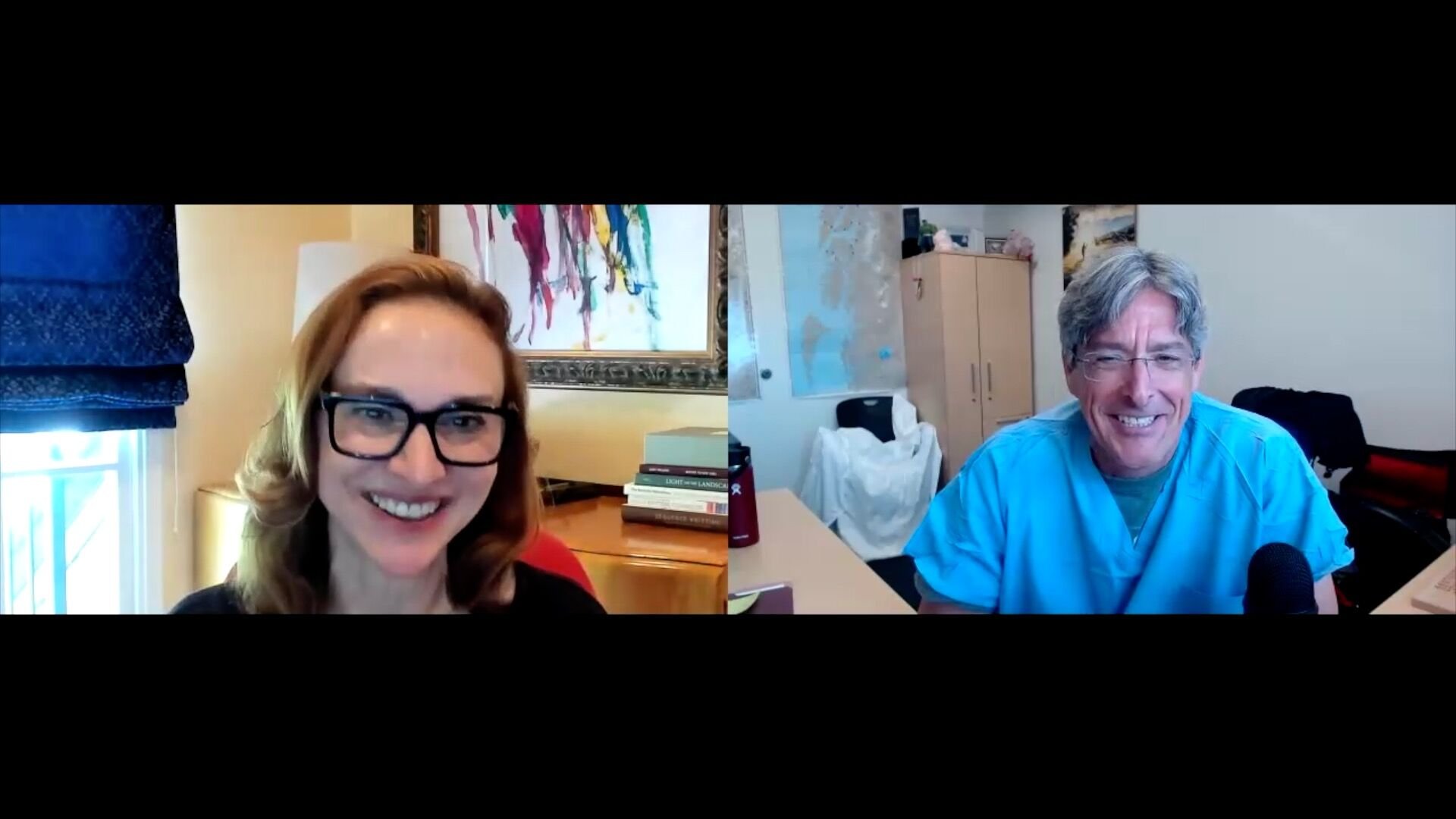
The first in a series of webinars put on through the ACC was presented in early 2024. You can watch it here, or maybe take it along with you and listen during your commute to work.
As a member of the American College of Cardiology’s Physician Well-Being Working Group, I am fortunate to be part of the change that’s happening within cardiology and healthcare in general.
Coaching is increasingly recognized as a way to support and retain physicians, an aid for reducing burnout, and a tool that can improve the healthcare environment for physicians, staff, and the patients that we serve.
The first in a series of webinars put on through the ACC was presented in early 2024. You can watch it here, or maybe take it along with you and listen during your commute to work.