Focus on Physicians:
Insights, Ideas, and Strategies

For many physicians, work-life balance (WLB) is the elephant in the room. In 2022, 85% of physicians finishing residency cited work-life balance as their number one consideration when choosing a job.
Dissatisfaction with WLB is strongly correlated with burnout, and is a common reason that many physicians choose to leave their current practice. Although women physicians tend to rate WLB as somewhat more important than men, among millennials it is a top priority for both genders. Yet physicians often avoid raising this crucial issue with potential employers and even colleagues for fear of being judged.
In this article I’ll give you nine ways to create your own version of work-life balance.

Visual Thinking Strategies (VTS) is a dynamic, evidence-based approach that uses art as a springboard for exploration and collaboration. By engaging with visual art, healthcare professionals can unlock critical thinking and communication skills—cornerstones of effective medical teamwork. These skills not only enhance team cohesion but also translate into improved patient care and outcomes.

If you’re a physician, chances are that you are a highly reflective individual. Your work probably focuses around thinking carefully, solving complex problems, and making decisions that impact lives.
You may recognize that you are delaying a difficult conversation, taking on thankless work that offers no personal satisfaction, or saying yes too quickly. You may realize that your work doesn’t align with your professional or personal goals. You may understand that your calendar does not reflect your values.
And yet the same patterns repeat.
This is where coaching can make a difference.

When you’re busy and feeling time-pressured, mindfulness may seem to be an uneasy, even unwelcome, construct. Who has time for it? Yet it turns out that simple mindfulness practices can help you to reframe and de-escalate the struggles of the day. In this article I will show you how using mindfulness can create the mental space you need to confidently and calmly manage patient care while protecting your precious time.

Delegating can be a challenging skill for many physicians to master. The need to maintain control over every detail—especially when you bear ultimate responsibility—can make letting go feel risky.
In this article, we’ll explore which tasks are most suitable for delegation, how this practice can strengthen teamwork, and strategies to make the process efficient and effective. Plus, I’ll share a practical template to help you overcome common barriers, enabling you to maximize your team’s potential.

Coaching is a meaningful investment of your time, attention, energy, and money. Sometimes the cost is covered or subsidized by your organization, but for many physicians, coaching is a personal financial investment.
I believe physicians should be able to understand the cost of coaching before scheduling a consultation. I also think it’s important to know what coaching asks of you beyond the financial transaction. In this article, I’ll cover what physician coaching may include, what can affect the cost, and what questions to ask before signing up.

Treating patients with dignity is one of the cornerstones of the medical profession. Most physicians genuinely want their patients to feel safe, heard, and respected. But what happens when physicians are not treated with the same dignity by their colleagues, their healthcare systems or even their patients? It’s a growing problem, and one that often goes unacknowledged.
In this article, I’ll dive into the major shifts that have led to this reality and I’ll share five practical strategies to help you push back against disrespect and reclaim your sense of dignity.

The Five Whys is often described as a root cause reflection tool, but in coaching, I think of it less as digging for a cause and more as peeling back the layers.
By asking “why” five times, each “why” gently opens another layer of the decision, creating insight and dimension that often goes way beyond the first question.

This is a difficult story for me to tell. It is about facing our humanity and our mortality as physicians. And it’s about the truth that despite our desire to view ourselves as insiders with the keys to the hospital doors, the pact that we have made is one-sided. There is no covenant with the universe, no deal with the devil that if you save others, you yourself will be saved. I saw my physician father fall victim to this implicit belief after he became ill. I witnessed with sorrow his misplaced trust that he would be treated differently, and his difficulty in disengaging from his identity as a physician.with an idea.

“The wound is the place where the light enters you.”- Rumi
With over 60% of physicians surveyed reporting burnout in 2021, it’s an epidemic in our profession.
Burnout is not a personal failing or a psychological illness. Rather, burnout is a response to chronic workplace-related stress.
But burnout is not a failure of compassion. In fact, burnout may be a natural reaction to the recognition that you are unable to provide the compassionate care that your patients need.

No matter where you are in your professional arc, the “future self” exercise is a powerful tool for envisioning and then creating a meaningful retirement. In this article, we’ll explore how you can use this exercise to develop and align your retirement plans with your personal values, dreams, and aspirations.

When you’re a physician, it can sometimes feel as if the weight of the world is on your shoulders. Despite years of training and experience, dealing with the unexpected is part of the job.
Complex decisions with no easy solution, challenging interactions with patients and family, and outcomes that don’t always turn out as planned: these are unavoidable facts of life for most physicians.
Although you may thrive on the challenge of the unexpected, seemingly lost opportunities or unanticipated consequences may lead to feelings of regret that can haunt you when you least expect it.
This is completely normal, but coming to terms with regret can be difficult. What can make it especially painful is the fact that this aspect of professional life is rarely discussed out in the open.
In this article, we’ll talk about regret, what it can teach you, and how it might help you to become an even more effective physician.

If you’re considering investing in physician coaching, you probably want to know what you will actually have to show for it when your coaching arc is complete.
Will there be a written plan? Goals? Metrics? Accountability? Practical strategies? Or will coaching mainly consist of talking through problems and reflecting on what comes up?
These are reasonable questions, and they’re the questions that prospective clients often ask me.

As a photographer, a physician, and a Visual Thinking Strategies facilitator, I believe that visual art is a portal through which we may discover find powerful connections with people from all walks of life.
For physicians and others in healthcare, art provides a framework to build understanding and create greater trust, even when we have no background in the artistic process or history. When we spend time with a work of art, we’re offered a chance to explore what the world might mean to somebody from a different time, place, or culture.
In this article, I’ll explore Wu Zhen’s The Fisherman, and the lessons it offers for medical practice.
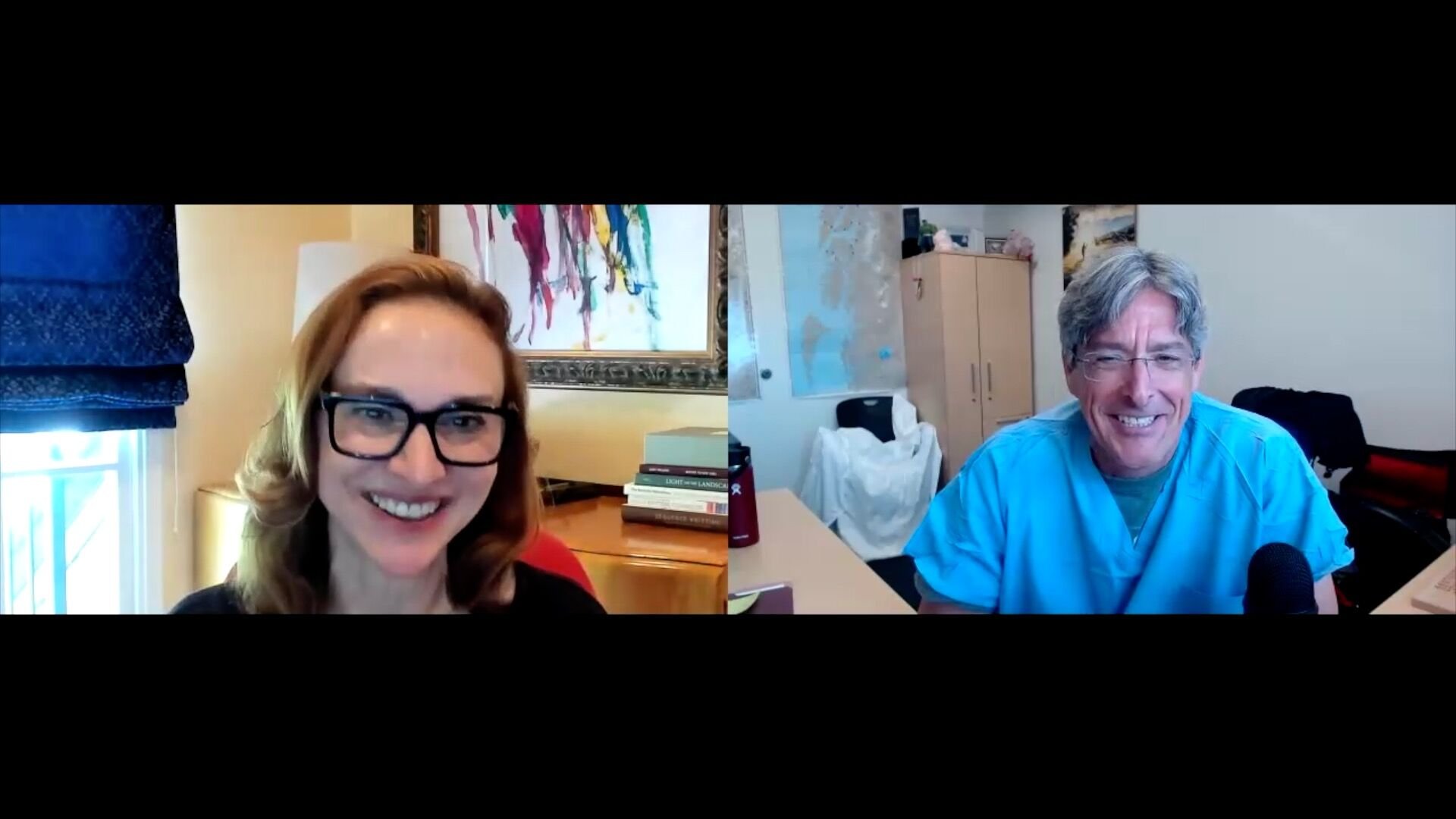
It was a thrill to appear on the legendary cardiologist Dr. Bill Lombardi’s podcast The Journey to Better. I was honored to be invited onto the show to discuss mindfulness, goal setting, and combating burnout.

As a physician coach, I am often asked to explain the difference between coaching and mentoring.
The main difference is this: A mentor generally acts as an advisor. A coach does not give you the answers, but will collaborate with you to help you find and follow your own path.

Meditation is a hot topic with deep roots, but sometimes it feels like it’s being pushed as a modern-day cure-all for what ails the spirit.
The practice is often touted as an antidote to burnout, when in truth most of us know that a meditation app won’t solve the systemic issues that plague healthcare today.
That’s why it’s exciting that academic researchers have been taking this ancient practice seriously. And they are discovering that meditation can often have powerful and measurable benefits for your mental well-being, your memory, and even your physical health.

For many physicians, the electronic health record (EHR) inbox is treated as “light work.”
A message from a worried patient. A lab result. A radiology report to review. Something you’re expected to squeeze in between patients, or finish at the end of the day.
But if you’ve ever sat down to thoughtfully review a complex lab trend, interpret an imaging report in context, or respond to a nuanced patient message, you know this is not light work.
In many cases, it’s exactly what productivity expert Cal Newport would call deep work.

If you’re just getting started in practice, or beginning a new role, it’s important to set yourself up for success from the very beginning. Whether your career path is in academic medicine, a large healthcare system, or a private practice, the habits and systems you develop early on can shape both your professional trajectory and your personal well-being for years to come
In this article, we’ll focus on five key areas that will help you provide the best care while managing the demands of a busy practice. Developing these strategies early on can improve both patient outcomes and your own well-being.

I was honored to be featured recently in a Medscape article discussing one of the greatest challenges facing physicians today: constant interruption and fragmented attention.
Physicians are expected to manage complex cognitive work while navigating inboxes, notifications, documentation demands, and frequent disruptions. But fragmented attention can have serious consequences, not only for physician well-being, but also for patient care.

In my recent conversation with Kevin Pho, M.D we discussed how mindfulness can have far-reaching effects not only for physicians, but for those you we care for. We also discussed the best times for meditation, when you might want to avoid it, and how a brief meditation can impact your sense of well-being.
As a physician coach, I love sharing this story, because it encapsulates how such a simple and brief practice can have a meaningful impact.

When I learned about the concept of “sunk cost”, I felt as if a giant lightbulb had clicked on in my head. The term, borrowed from economics, refers to our tendency to keep doing something that is not in our best interest due to expenses that have already been paid and are not recoverable. These compounded investments of time, energy, and capital can influence your decision making for years to come, leading to choices, both professional and personal, that are increasingly disconnected from your goals and values.

Meditation has numerous benefits for physicians, but there are also a few drawbacks that are not often discussed. With widespread recommendations for meditation and meditation apps, it’s important to keep in mind that meditation is not for everyone. Potential downsides include worsening of anxiety, insomnia, rumination, and physical discomfort. . By starting with shorter sessions, being mindful of any arising emotions or negative feelings, and ensuring a comfortable posture, you can minimize risks.

What a pleasure it was to meet with Matt Huey of the Enlightened Anatomy Podcast! Matt and his partner, Andrew McGonigle, have created a community that is focused on evidence-based yoga teaching. As a yoga teacher myself, and a yoga practitioner for nearly 30 years, this is a topic that is near and dear to my heart.
We talked about the ways that yoga, mindfulness, and heart health connect, and how you can put this into practice.
We also touched on the importance of knowing where health information comes from, and how misinformation, often from social media, can lead to mistrust of physicians and fuel physician burnout.

With the rise of EHRs and telemedicine, the term "work-life integration" rapidly has become an administrative buzzword. However, for physicians who are expected to be always on duty, this approach can paradoxically increase stress and decrease balance.
In this article, I’ll explore why work-life integration might not be the promised panacea for getting it all done.

It’s no surprise that nationwide, levels of burnout reached record highs during the pandemic. But now that we are back to a semblance of normal, the percentage of physicians experiencing burnout symptoms still hovers a little under 50 percent-- far above the “baseline” of 38 percent in 2020. In this article, you'll learn how to know if you are burned out. And we'll go over the costs of burnout in both dollars and patient care.

There comes a point for many physicians when troublesome questions begins to surface:
Can I continue practicing in this way?
What needs to change to make my practice more sustainable?
Is it time to move on?
Is there another way to use my skills, knowledge, and gifts that I haven’t yet imagined?
These are not questions that yield easily to analysis. In fact, thinking harder often makes them more painful. Instead of finding clarity, you may begin to feel more uneasy, more torn, caught in a whirlwind and afraid of making the wrong choice.
This is a good time to tap into your inner wisdom, and this is where journaling can help.

The "have, do, be" concept is a way of thinking about how we relate to the world around us. According to this framework, it’s easy to build our lives around the belief that our possessions, actions, or achievements will make us happy or fulfilled.
But in truth this way of thinking can actually hold physicians back from achieving their dreams.
Instead, you can flip the switch by reflecting on who you want to be right now.

Creating a realistic and actionable To-Do list can feel like a daunting task for a busy physician. But your To-Do list can free up hours of your valuable time, create structure out of chaos, and help you to reach goals that will bring you closer to your ideal life.
In this article, I share twelve actionable and realistic tips that will help you to develop your own sustainable To-Do List practice.
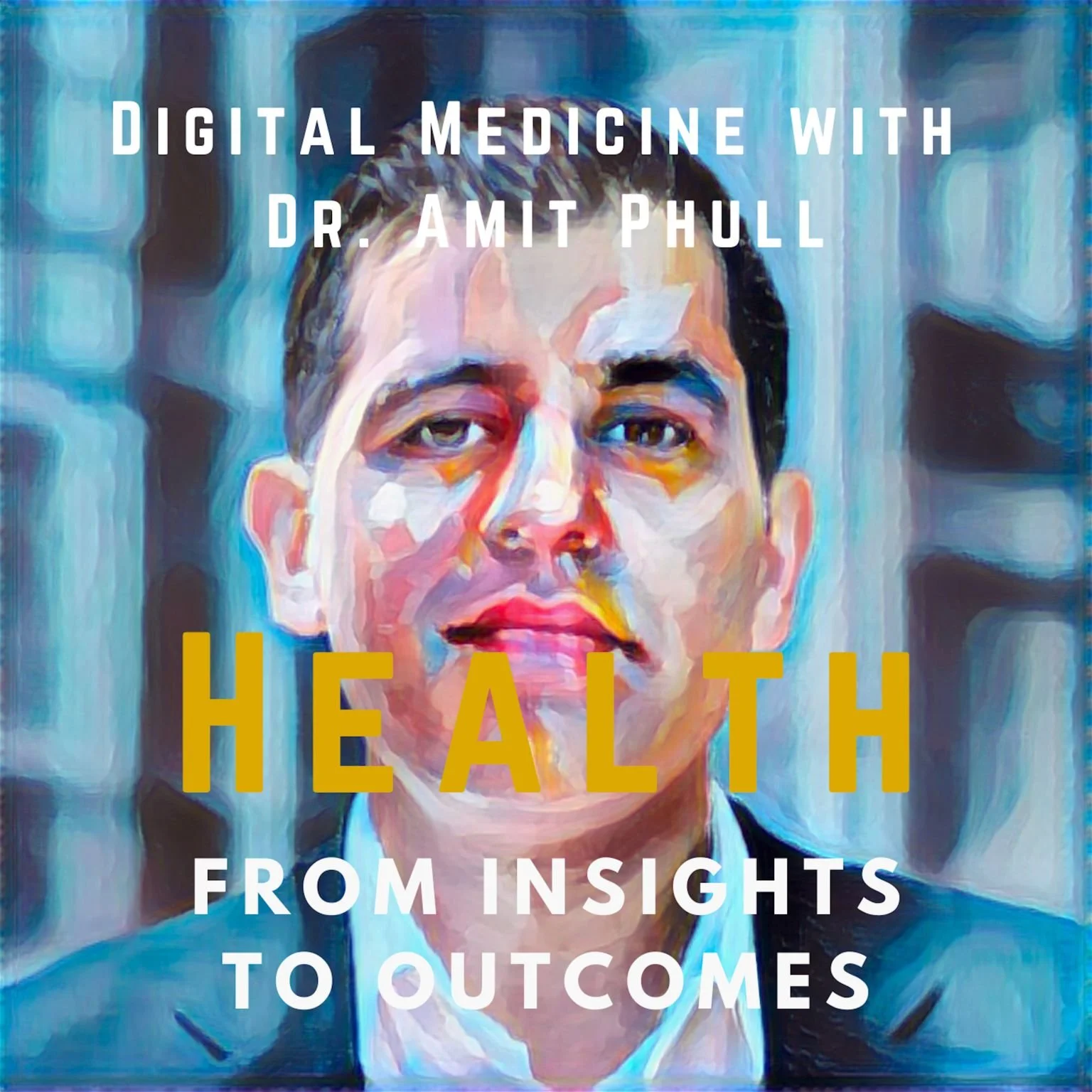
It was a thrill to interview Amit Phull of Doximity for the latest TechLink Health podcast! I’ve been using Doximity since its early days, and have seen it evolve from a must-have resource into a trusted ally in healthcare.
Lately, Doximity has ventured into AI with the integrity and transparency that physicians have come to expect from this trail-blazing company. I hope you enjoy our conversation!

My Podcast Interview on Burnout and Misalignment with James Nutter on A Life Well Lived
I had another fascinating conversation with James Nutter of IM Wealth on his podcast A Life Well Lived: A Physician's Guide to Wealth. We talked about the ways that living out of alignment with your personal values can lead to burnout, disappointment, and disengagement.
Giving name to your values breathes life into them. It helps you to develop goals and plans that are realistic, purposeful, and personally fulfilling. And naming values that you share with your spouse or loved ones can also help to connect you more deeply to the life you are living now and the future you are dreaming of.
I had another fascinating conversation with James Nutter of IM Wealth on his podcast A Life Well Lived: A Physician's Guide to Wealth. In this episode, we focused on the ways that living out of alignment with your personal values can lead to burnout, disappointment, and disengagement.
Giving name to your values is powerful, because it breathes life into them. This acknowledgement of who you are and what you stand for can give you the insight you need to create a life that feels purposeful and personally fulfilling. And naming values that you share with your spouse or loved ones can also help to connect you more deeply to the life you are living together now and the shared future you are dreaming of.
In this episode we discuss:
🔥 Why burnout is not a personal failure
🔥 How chronic misalignment shows up as anxiety, fatigue, cynicism, or numbness
🔥 Why achieving impressive goals can still feel empty
🔥 The importance of clarifying personal values before setting career goals
🔥 How a personal mission statement can act as a decision-making filter during hard seasons
🔥 Practical ways physicians can advocate for healthier systems without burning bridges
Rather than beginning with a run for the exit from clinical practice when your values don’t line up with your organization, we discuss how you can start with building alignment, optionality, and agency. We explore how small but intentional systems — both personal and organizational — can reduce burnout at its source and restore a sense of meaning and coherence to your life. And we look at ways that you can design calculated shifts that over time will help you to create a sustainable and joyful life.
If you are feeling trapped, exhausted, or uncertain about your next step, this episode offers both validation and direction. Burnout is not proof that you are broken. Often, it is information which, when understood clearly, can become a catalyst for wiser, more aligned change.
Besides being an inspiring podcast host, James specializes in holistic financial guidance for physicians. I don’t formally endorse specific services or financial advisors, but I value his empathetic perspective and his insight into the unique challenges that physicians face.
You can find our conversation anywhere you listen to podcasts, or through the Spotify link below.