Focus on Physicians:
Insights, Ideas, and Strategies
























Connecting With Your Inner Wisdom: A Journaling Guide for Physicians
If you’re a physician, journaling is a wonderful way to access your own thoughts and values, getting in touch with what matters most to you. It’s a form of mindfulness that doesn’t require any skills or knowledge. All you need is a pen and paper and as few as five minutes.
This article is the first in a three-part series. In each one, I’ll share a different collection of journaling prompts designed to help you to connect your own dots and rediscover what truly matters to you. Whether you’re exploring a new professional path, planning for retirement, or seeking greater happiness and satisfaction in your life, these prompts will guide you towards clarity and self-awareness.
An earlier version of this article appeared on this website in January, 2025
With countless demands on your time and attention, it’s easy to ignore your own well-being as you slingshot from one task to the next. After a few months, years, or maybe even decades of living this way, it can be difficult to find your way back to your true self.
I recognize that feeling. During my years in cardiology, I had hobbies, friends, and an active life, but much of it still felt frantic. As I began considering what might come next, I realized how rarely I gave myself time to reflect. Journaling offered a place to begin.
I had tried journaling before, but the habit never stuck for long. The empty pages felt daunting, and I didn’t want another task on my list. So this time, I kept it simple: just 10 minutes a day to sit with my thoughts and put them on paper.
The Power of Journaling: A Path Back to Your True Self
Every evening I would pose questions to myself, trying to unravel the knots that I had tied over the years, until I rediscovered the threads that could lead me to my next steps. And remarkably, the process worked! Through introspection and time, I developed a set of goals and a sequence of tiny little steps that got me farther than I ever could have imagined.
This article is the first in a three-part series. In each one, I’ll share a different collection of journaling prompts designed to help you to connect your own dots and rediscover what truly matters to you. Whether you’re exploring a new professional path, planning for retirement, or seeking greater happiness and satisfaction in your life, I hope these prompts will guide you towards clarity and self-awareness.
Getting Started with Journaling
Journaling is a wonderful way to access your own thoughts and values, getting in touch with what matters most to you. It’s a form of mindfulness that doesn’t require any skills or knowledge. All you need is a pen and paper and as few as five minutes.
Why do I say pen and paper, and not a keyboard? Because research has convincingly shown that writing by hand is far more activating for the brain than typing. Newer devices that save and transcribe handwriting, like the reMarkable, may help to bridge the gap between analogue and tech. If writing doesn’t come easily, you could also experiment with dictation. Most important is that you find something that works for you and feels comfortable and natural.
Journaling to Uncover Your Next Steps
This series of prompts will help you to reflect on your values and your sense of purpose, realigning the trajectory your life into something that feels resonant and clear.
For a kick start, if you haven’t already completed the Values Workbook, this is a great time to begin that exercise. You can get your free copy through my website.
You don’t need to respond to every prompt. There’s a lot to ponder here! Perhaps choose one or two for the week and see where it takes you.

Exploring Your Values
What do I value most about my role as a physician? Are these values reflected in my daily work and life? If not, what changes would need to happen in order for my values to be aligned with my work?
If I could describe the legacy I want to leave in one sentence, what would it be? How do I want people to remember me?
When have I felt most fulfilled in my career? What about those moments made them meaningful?
Clarifying Your Purpose
Why did I choose to become a physician? Does that "why" still resonate with me today? If it has changed, does it still feel true? And if not, what is missing?
What parts of my work energize me the most? How can I focus more on these aspects?
How does my work align with my personal definition of success? Where am I now in relation to that definition?
Evaluating Your Current Path
If my current career trajectory continued for the next 10 years, would I feel proud and content with my life?
What sacrifices am I making to sustain my current career path, and are they worth it?
Are there aspects of my personal life or passions that I’ve neglected? How can I reintegrate them?
Imagining the Future
If I could design my ideal work-life balance, what would it look like? What small steps could I take to get closer to that vision? What could I do today that would start to change things?
Imagine a day in your dream life. What are you doing, who are you with, and how do you feel?
What skills or interests do I have that I’m not currently using in my career? How might I incorporate them? And what skills do I wish I had? Are they important enough that I want to explore how to acquire them?
Confronting Barriers
What fears or doubts are holding me back from making a change I know I need? Are these fears grounded in reality? If so, is there something within my power to change?
Who or what am I afraid of disappointing if I follow my heart? How might I address that fear?
What is the worst that could happen if I pursued a career change or took on a new role? What strategies could I take to mitigate that? Are there other opportunities that outcome might open up for me?
Building Resilience and Courage
When have I faced significant challenges and grown from them? What strengths did I discover?
What does courage look like for me right now? How can I embody it in my decisions?
Who in my life inspires me to live authentically? What lessons can I learn from them?
Finding Alignment
Are there moments in my work when I feel disconnected from my authentic self? How can I realign?
How do I want to feel at the end of each day? What changes would help me experience that feeling more often?
What small, actionable steps can I take this week to bring more meaning into my work and life?
Cultivating Gratitude and Joy
What aspects of my career am I most grateful for? How can I focus more on these positives?
When was the last time I felt joy in my personal or professional life? What contributed to that moment?
What can I do today to make space for more joy and connection in my life?
In the next article in this series, I’ll share prompts to guide your exploration of personal projects, family connections, and meaningful relationships. The final article of the series explores journaling to envision your future.
If these prompts have been useful, or if you have some of your own that you’d like to share, drop me a line! I’d love to hear from you.
This post contains Amazon affiliate links. I may earn a small commission when you click on the links, at no additional cost to you. These commissions help to support the website.
If you’ve enjoyed this article and would like to stay in the loop for more insights on creating a sustainable, fulfilling, and happy life as a physician, sign up for my newsletter or reach out on my website. I’d love to hear from you.
And if you’d like to schedule a complimentary coaching discovery session, click the button below.

Retirement Planning for Physicians: Meet Your Future Self
No matter where you are in your professional arc, the “future self” exercise is a powerful tool for envisioning and then creating a meaningful retirement. In this article, we’ll explore how you can use this exercise to develop and align your retirement plans with your personal values, dreams, and aspirations.
An earlier version of this article appeared on this website in December 2024
For many physicians, the idea of retirement may feel distant, daunting, or even unattainable. Although physicians on average are exiting the profession nearly a decade earlier than in years past, it’s not surprising that the thought of leaving may still seem frankly overwhelming.
After so many years of dedicating your life to others’ health and well-being, what does a fulfilling retirement look like for you?
The truth is that retirement is different for each of us. Some people happily move out of the profession and take a new path, never looking back. Others repurpose some of the skills they’ve acquired and dedicate that to teaching, mentoring, volunteering, or creative work.
Yet many physicians mourn the life they’ve given up, struggling deeply with the loss of identity, structure, and purpose that can come with leaving clinical life behind.
No matter where you are in your professional arc, the “future self” exercise is a powerful tool for envisioning and creating a meaningful retirement. In this article, we’ll explore how you can use this exercise to develop and align your retirement plans with your personal values, dreams, and aspirations.

Planning for Retirement with the Future Self Exercise
It can be difficult to imagine yourself many years into the future. Instead, a one-to-five-year time line might feel more tangible. That’s partly because needs, priorities, and dreams often change over time. If you think back to the person you were ten years ago, it’s possible that version of you feels very different from your current self.
Research on the “future self” confirms that we often perceive this unknown version as an “other.” And yet, thinking about your future self as someone you care about can foster a sense of compassion, responsibility, and intentionality.
If you’re contemplating retirement, the future you may already feel a bit more knowable. And in this context, the future self exercise can be especially useful and actionable.
This exercise can help you design your goals both by creating self-awareness and clarity, but also through aligning your current actions with your long-term hopes and dreams. You can’t control the future, but you can take ownership of your direction during this major life transition.
Your Step-by-Step Guide to the Future Self Exercise
Step 1: Set the Stage
Choose a quiet, comfortable space where you can reflect without interruption.
Have a journal or notepad ready so you can capture your thoughts as they arise.
Step 2: Imagine your ideal retirement.
Close your eyes and picture yourself 1-5 years into retirement.
Questions to consider:
What does your day look like?
Where are you living?
Who are you spending time with?
What activities bring you joy, energy, or fulfillment?
Step 3: Consider your impact
Staying with the image of your future self, ask:
What am I proud of accomplishing since retiring?
How am I continuing to make a difference or live meaningfully?
What feels most satisfying about this phase of life?
Step 4: Identify values and priorities
Still holding the future in your mind’s eye, reflect on:
What matters most to me in this phase of life?
What are the values I hope to embody?
How do I want to feel in my daily life?
What do I want more of—and what am I ready to release?
Step 5: Nurture relationships and connections
Sitting with your future self, consider:
Who are the friends, family members, colleagues, or communities I care about?
What relationships do I want to develop or deepen?
How am I creating a life that keeps me connected and supported?
Step 6: Carry your strengths forward
Ask yourself:
What strengths and skills from my life as a physician do I use in this next phase of life?
How might I use those strengths in new or meaningful ways?
Howwill I continue to learn, grow, and stay engaged?
Step 7: Write a letter to your future self
It can be helpful to write a letter to your future self, describing your hopes, goals, and dreams for this next chapter.
Seal it and set a date to read it in the future. Create a reminder on your phone or calendar so you don’t forget. This simple act can help you stay connected to the life you are beginning to imagine and create.
Translating Your Vision into Action
Once you’ve completed the process, take a look at what you’ve written. Highlight any recurring themes, patterns, or ideas that stand out. Then begin to identify actionable goals that can help you move toward the retirement you want to live. Here are some ideas to get you started:
🎯 Financial goals: You may want to enlist a trusted advisor to help you clarify and refine your financial goals. Having a thoughtful plan can help you enjoy retirement with less worry about money, savings, or long-term security.
🎯 Lifestyle goals: Begin to define your ideal balance between relaxation, hobbies, health, creativity, and productivity. Physicians often overlook their own well-being when life gets busy, but the pre-retirement years are an important time to make your health a priority so you can fully enjoy the next phase when it arrives.
🎯 Relationship goals: Consider who you want to share your time with, and in what ways. It’s never too soon to strengthen relationships and cultivate friendships, even if that starts with a brief text, phone call, coffee invitation, or email to keep the lines of communication open.
🎯 Legacy goals: Explore ways to contribute to your community or profession. This might include teaching, mentoring, volunteering, writing, advocacy, creative work, or something entirely different. You don’t need to make a commitment before you’re ready, but this can be a good time to explore areas of interest you may not have had time for during your working life.
It’s Never Too Soon to Start
Although your goals and plans may change over time, the Future Self exercise can be a powerful way to strengthen your vision and jump-start your planning. It’s never too early to begin taking small steps now to integrate elements of your future self into your current life.
When your life and identity have been shaped by your profession, it’s natural to feel overwhelmed and unmoored by the decision to retire. But retirement can also be an opportunity to redesign your life in a way that aligns with your values, passions, relationships, and aspirations. The Future Self exercise offers a practical and meaningful way to gain clarity and begin shaping this next chapter with intention.
If you’ve enjoyed this article and would like to stay in the loop for more insights on creating a sustainable, fulfilling, and happy life as a physician, sign up for my newsletter or reach out on my website. I’d love to hear from you.
And if you’d like to schedule a complimentary introductory meeting with me, click the link below.

Pursuing Your Passions in Retirement: My Second Podcast Appearance on Michael T. Swartz’s “Health and Wealthness”
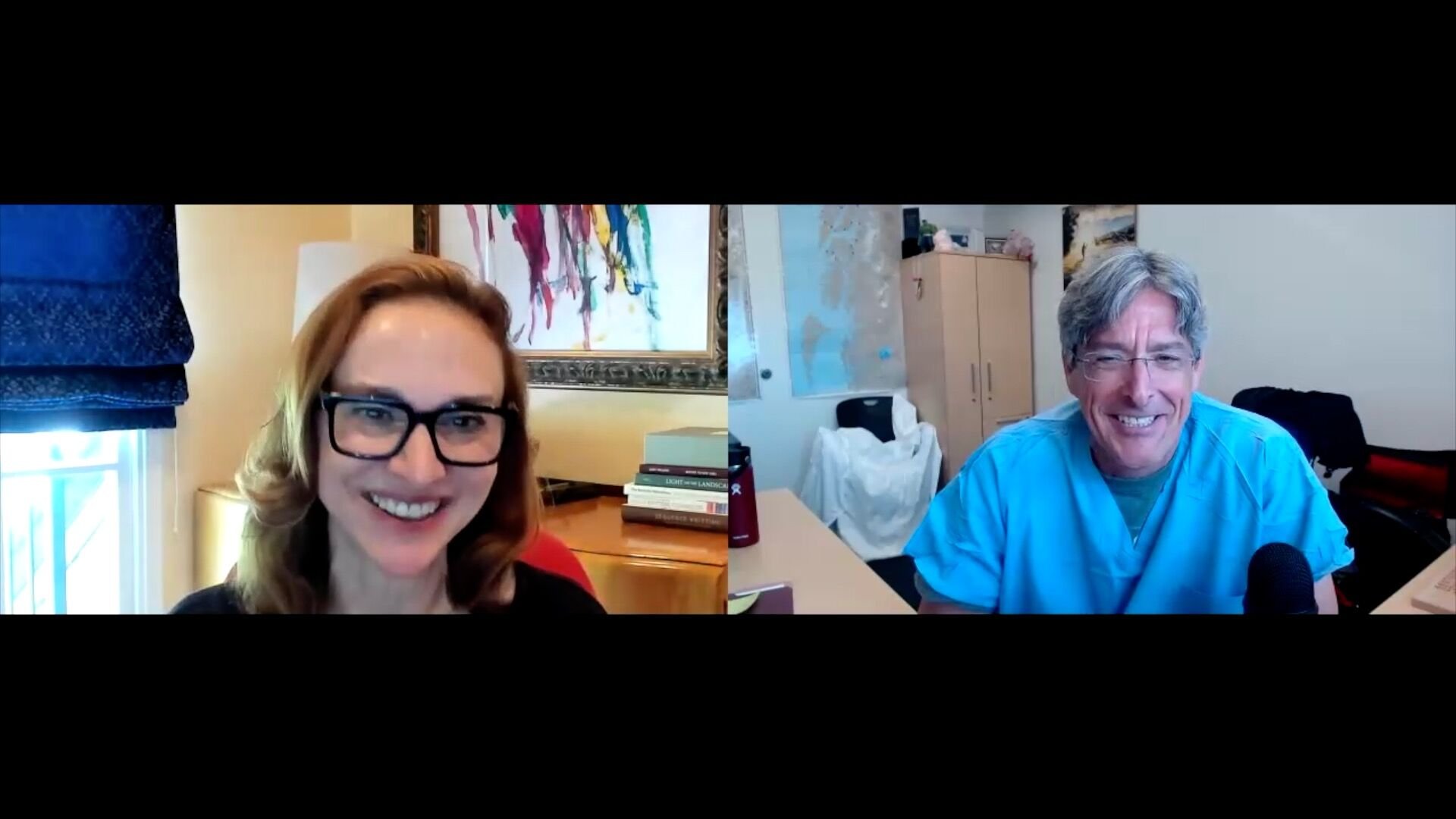
It was a pleasure to be invited back for a second conversation on Michael T. Swartz, CFP®, PDC's Health and Wealthness podcast.
As an invited guest, I shared my ideas and strategies for physicians who are seeking more joy and fulfillment in the years after a life spent in medical or surgical practice.
If you think of retirement as a kaleidoscope, this is how you can combine all of your passions into a new and evolving way of life. You can grow into the things that are most meaningful to you, contribute to causes that matter, and live a life that aligns with your own values, on your own terms.
It was a pleasure to be invited back for a second conversation on Michael T. Swartz, CFP®, PDC's Health and Wealthness podcast.
Michael has created a fantastic series for physicians called The Physician’s Guide to Retirement. Retirement is different for all of us. I retired after nearly 30 years in practice in order to pursue other passions and interests. Others may practice decades longer, and some may make the choice to retire earlier. No matter how retirement looks for you, you’re likely to find this series valuable and inspiring.
As an invited guest, I shared my ideas and strategies for physicians who are seeking more joy and fulfillment in the years after a life spent in medical or surgical practice. If you think of retirement as a kaleidoscope, this is how you can combine all of your passions into a new and evolving way of life. You can grow into the things that are most meaningful to you, contribute to causes that matter, and live a life that aligns with your own values, on your own terms.
Michael is not only a Certified Financial Planner, but he is also a Certified Physician Development Coach, so he understands the particular needs of physicians who are looking towards retirement. As we discussed in our conversation, it’s never too soon to start thinking about your future. Setting aside even a little money regularly beginning in your 30s will provide you with so many more opportunities as you begin to contemplate retirement in your 50s or 60s.
Making Early Decisions for a Successful Retirement: My Podcast Appearance on Michael T. Swartz’s “Health and Wealthness”
I thoroughly enjoyed my conversation on Michael T. Swartz, CFP®, PDC's Health and Wealthness podcast.
Michael has created a fantastic series for physicians called The Physician’s Guide to Retirement. Retirement is different for all of us. I retired after nearly 30 years in practice in order to pursue other passions and interests. Others may practice decades longer, and some may make the choice to retire earlier. No matter how retirement looks for you, you’re likely to find this series valuable and inspiring.
I thoroughly enjoyed my conversation on Michael T. Swartz, CFP®, PDC's Health and Wealthness podcast.
Michael has created a fantastic series for physicians called The Physician’s Guide to Retirement. Retirement is different for all of us. I retired after nearly 30 years in practice in order to pursue other passions and interests. Others may practice decades longer, and some may make the choice to retire earlier. No matter how retirement looks for you, you’re likely to find this series valuable and inspiring.
As an invited guest, I shared my personal experience and my ideas around ways that physicians can create a sustaining and exciting life after retirement from medical practice. This is the first of two episodes. If you're curious about what life might look like on the other side, take a listen!
Michael is not only a Certified Financial Planner, but he is also a Certified Physician Development Coach, so he understands the particular needs of physicians who are looking towards retirement. As we discussed in our conversation, it’s never too soon to start thinking about your future. Setting aside even a little money regularly beginning in your 30s will provide you with so many more opportunities as you begin to contemplate retirement in your 50s or 60s.