Focus on Physicians:
Insights, Ideas, and Strategies























Dealing with Regret: Discovering Growth and Self Compassion
When you’re a physician, it can sometimes feel as if the weight of the world is on your shoulders. Despite years of training and experience, dealing with the unexpected is part of the job.
Complex decisions with no easy solution, challenging interactions with patients and family, and outcomes that don’t always turn out as planned: these are unavoidable facts of life for most physicians.
Although you may thrive on the challenge of the unexpected, seemingly lost opportunities or unanticipated consequences may lead to feelings of regret that can haunt you when you least expect it.
This is completely normal, but coming to terms with regret can be difficult. What can make it especially painful is the fact that this aspect of professional life is rarely discussed out in the open.
In this article, we’ll talk about regret, what it can teach you, and how it might help you to become an even more effective physician.
An earlier version of this article appeared on this website in October 2024.
When you’re a physician, it can sometimes feel as if the weight of the world is on your shoulders. Despite years of training and experience, you can’t always predict a complication or an outcome. And you can never be certain how an individual or family is going to react, even when you believe you are offering good news. Dealing with the unpredictable is part of the job.
Although you may thrive on the challenge of difficult decisions and complex interactions, the shadow of lost opportunities or unanticipated consequences can sometimes lead to feelings of regret. These painful reminders may haunt you when you least expect them.
This is all completely normal, but coming to terms with regret can be difficult. What can make it especially distressing is the fact that this aspect of professional life is rarely discussed out in the open.
In this article, we’ll talk about regret, what it can teach you, and how it might help you to become an even more effective physician.
Regret is normal, and it’s a sign of compassion
Although it can feel crushing in the moment, regret is not a weakness or a marker of failure. Instead, it can be helpful to reframe regret as evidence that you are compassionate and invested in the outcome of your decisions. Whether that’s the well-being of your patients, the strength of your relationships, or the integrity of your work, you wouldn't feel regret if your work didn’t matter.
Learning from regret
When you recognize regret in this way, you can break the cycle of rumination and open yourself up to the multitude of lessons it holds, including opportunities for reflection and discovery.
Perhaps the lesson is learning to slow down, to listen more closely to your patient or their family, to take an extra breath before responding to a difficult conversation. Maybe it’s resolving to take a more active role, or advocating more effectively when faced with challenging situations. Or it could be a recommitment to ongoing learning and professional development.
It’s important to acknowledge that although the past cannot be changed, it can inform the future. If you can reframe a complication or a poor interaction as a catalyst for growth, it can help you to build strengths that will offer a way forward.
Here are some questions to ask yourself that might help to create mental space for new ideas:
Are there ways that you can mitigate the consequences, even now?
What would have needed to happen for things to have turned out differently?
What actions are within your control?
What resources might you need that were not available to you then?
How might you respond next time you’re faced with this situation?

The importance of self-compassion
As a physician, perfectionism is probably one of your driving forces. But at the same time, you may hold yourself to impossibly high standards.
Although you may never have been taught this in training, at some point in your career, you will very likely make a decision that, in hindsight, turns out to be wrong. Other times, some outcomes or reactions will simply be beyond your control.
Self-compassion means treating yourself with the same kindness and understanding that you would offer a colleague or friend. And at the same time, caring for yourself helps you to stay present and capable of providing the best care for your patients.
Of course, regret can sometimes feel overwhelming, despite your best efforts to overcome it. When this happens, professional help in the form of a counselor or a coach can be sustaining.
Turning regret into action
It’s important not only to acknowledge regret, but to turn your reflections into action. Use your hard-earned awareness to make adjustments, both big and small, that will help you navigate future challenges with more confidence and clarity. Depending on the source of your regret, it might mean
Taking a course
Learning or perfecting a skill
Seeking feedback or support from a trusted colleague, coach, or mentor
Implementing measurable changes in a process or procedure
Practicing mindful communication
Setting clearer boundaries
Reaching out to a mental health professional
Moving forward from regret is about progress, not perfection. It's about using each experience to inform your next steps without getting stuck in the past.
Discovering resilience and growth
Learning from regret will strengthen your resilience and shape your compassion for colleagues who may find themselves mired in similar situations. By being intentional rather than dwelling on self-blame, you will build a toolbox of strategies that will support you through the inevitable challenges that arise in the future.
Regret is a seldom-acknowledged part of the life of a physician. With time and practice, it can become a guide, pointing you towards opportunities for personal growth and a deeper connection with the values that first led you to find your place in the medical profession.
If you’ve enjoyed this article and would like to stay in the loop for more insights on creating a sustainable, fulfilling, and happy life as a physician, sign up for my newsletter or reach out on my website. I’d love to hear from you.
And if you’d like to schedule a complimentary introductory meeting with me, click the link below.

Coaching is Analog: Slowing Down to Move Forward
We live in a world where everything moves fast. Running from patient to patient, inbox to EHR, meeting to conference. Time can feel increasingly compressed, and maybe you do, too.
You’re getting things done, clicking the boxes, pushing through. But when it comes to personal clarity, well-being, or even career growth, speed is not the answer.
That’s because being human takes time. And real growth rarely follows a script.
Coaching is analog.
We live in a world where everything moves fast. Running from patient to patient, inbox to EHR, meeting to conference. Time can feel increasingly compressed, and maybe you do, too.
You’re getting things done, clicking the boxes, pushing through. But when it comes to personal clarity, well-being, or even career growth, speed is not the answer.
That’s because being human takes time.
AI Offers Fast Answers, But Coaching Gives You Time
With AI becoming the go-to solution for just about anything you can name, it can be tempting to turn to a chatbot when you’re feeling stuck. The answers come fast. They’re nearly packaged, logical, and often persuasive. It can make your next steps seem deceptively easy.
But real growth rarely follows a script.
Coaching is analog.
The process invites you to slow down, step away from the chatter, and explore the questions that matter to you, in your own time, and at your own pace.

When the Pace of Practice Leaves You Running On Empty
Physicians are trained, and expected, to solve problems quickly, to triage efficiently, and to push through the fatigue. The most efficient doctors are often the most rewarded.
But what happens when the questions you’re facing can’t be solved in a 15 minute slot?
Coaching can help. It’s not another system or process to optimize. Instead, it’s a thinking partnership that honors your unique human complexity.
What Does “Analog” Mean in Coaching?
Coaching offers presence, depth, and accountability when you need it.
In a coaching space, you can
🔷 Slow down the conversation
🔷 Listen beyond the word
🔷 Explore nuance and contradiction
🔷 Sit with the discomfort until insight emerges
🔷 Explore options without rushing to solutions
Being Human Takes Time
You’re not a machine. You’re a complex, ever-evolving person with your own personal values, goals, and dreams. You may be so busy that you haven’t had the time or bandwidth to explore what this means.
In coaching, the clarity unfolds in dialogue, stillness, and presence.
For Physicians, Coaching isn’t a Luxury—It’s a Purposeful Pause
If you're:
🔷 Feeling professionally exhausted
🔷 Facing a career crossroads
🔷 Longing to reconnect with your purpose
🔷 Wondering how to be both a physician and a human again
then coaching can help.
Coaching offers the headspace to discover what matters most for you, at this moment and for the future.
What Happens When You Slow Down?
You’ll begin to:
🔷 Hear your own voice again
🔷 Make decisions from clarity, not fatigue
🔷 Align your time with your values
🔷 Lead with presence instead of pressure
This is what creates forward motion. And this is what analog coaching makes possible.
Next Steps Start Here
If you’re a physician navigating a demanding world, I invite you to consider what it might feel like to slow down just enough so that you could move forward with intention?
Being human takes time. Coaching offers the space to explore what’s next.
🔷🔷🔷
If you’ve enjoyed this article and would like to stay in the loop for more insights on creating a sustainable, fulfilling, and happy life as a physician, sign up for my newsletter or reach out on my website. I’d love to hear from you.
And if you’d like to schedule a complimentary introductory meeting with me, click the link below.

Creating Boundaries and Reclaiming Values: My Podcast Appearance on Dr. Bill Lombardi’s Journey to Better
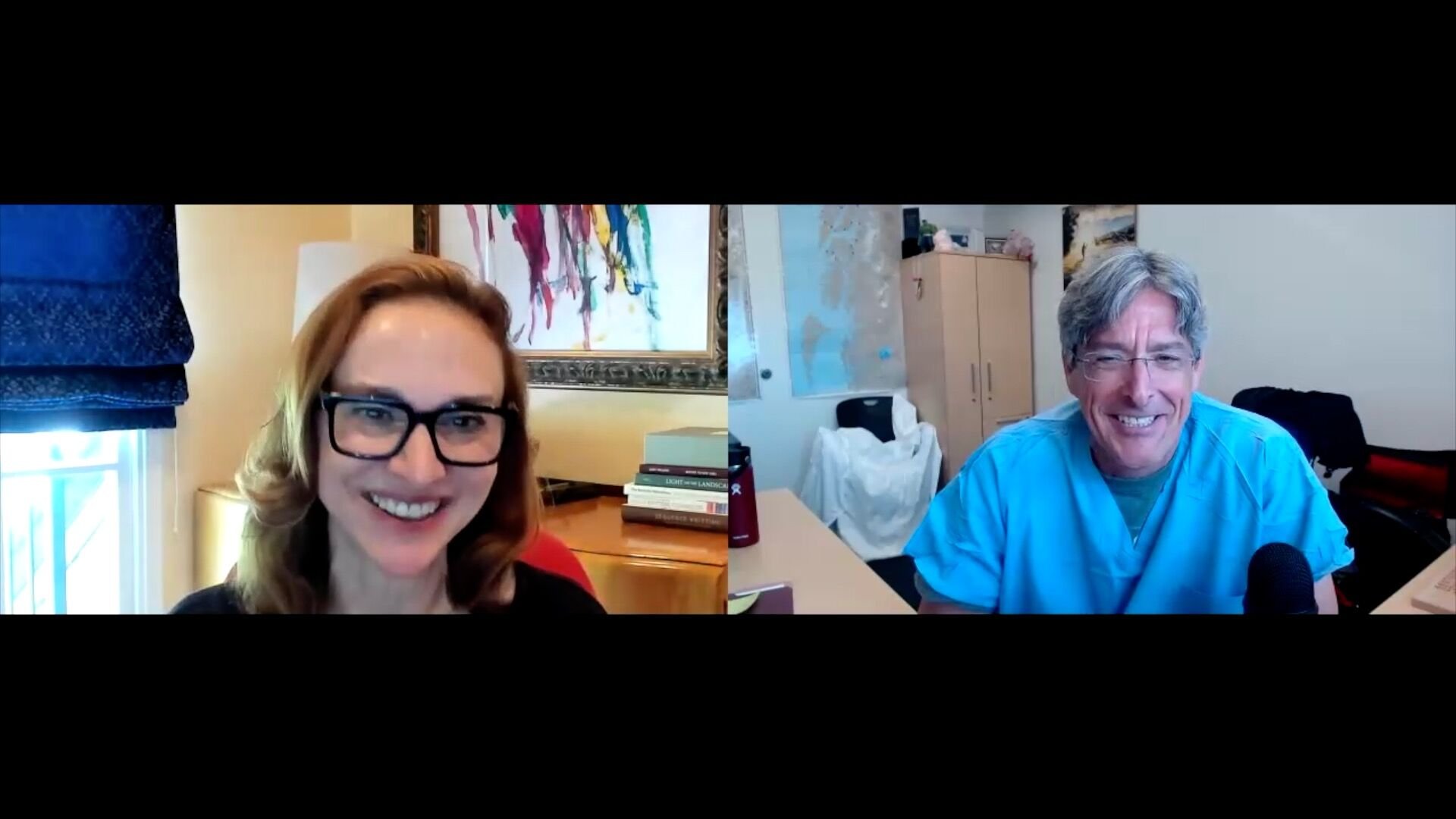
I recently had the great privilege to be invited back to trail-blazing cardiologist Dr. Bill Lombardi's Journey to Better podcast. This is truly one of the best physician-focused podcasts out there.
Bill is a fantastic and thought-provoking interviewer! We discussed a wide range of issues facing physicians today, including the importance of setting boundaries, the crucial role of effective and engaged leadership, and how coaching can work for physicians dealing with challenges of transitions, time management, and leadership opportunities.
I recently had the great privilege to be invited back to trail-blazing cardiologist Dr. Bill Lombardi's Journey to Better podcast. This is truly one of the best physician-focused podcasts out there.
Bill is a fantastic and thought-provoking interviewer! We discussed a wide range of issues facing physicians today, including
⚕️The importance of setting boundaries
⚕️How to integrate the experience of the arts into medical practice
⚕️The crucial role of effective and engaged leadership
⚕️Why defining your personal values can help you to make better decisions for yourself and your practice
⚕️How coaching can work for physicians dealing with challenges of transitions, time management, and leadership opportunities.
You can find our conversation wherever you get your podcasts, including Spotify and Apple Podcasts, or take a listen below. And if you want to listen to my first podcast appearance on the show, you can find it here.

Coaching for Healthcare Leaders
As a member of the American College of Cardiology’s Physician Well-Being Working Group, I am fortunate to be part of the change that’s happening within cardiology and healthcare in general.
Coaching is increasingly recognized as a way to support and retain physicians, an aid for reducing burnout, and a tool that can improve the healthcare environment for physicians, staff, and the patients that we serve.
The first in a series of webinars put on through the ACC was presented in early 2024. You can watch it here, or maybe take it along with you and listen during your commute to work.
As a member of the American College of Cardiology’s Physician Well-Being Working Group, I am fortunate to be part of the change that’s happening within cardiology and healthcare in general.
Coaching is increasingly recognized as a way to support and retain physicians, an aid for reducing burnout, and a tool that can improve the healthcare environment for physicians, staff, and the patients that we serve.
The first in a series of webinars put on through the ACC was presented in early 2024. You can watch it here, or maybe take it along with you and listen during your commute to work.