Focus on Physicians:
Insights, Ideas, and Strategies
























Burnout is an Expression of Grief, Not a Lack of Compassion
“The wound is the place where the light enters you.”- Rumi
With over 60% of physicians surveyed reporting burnout in 2021, it’s an epidemic in our profession.
Burnout is not a personal failing or a psychological illness. Rather, burnout is a response to chronic workplace-related stress.
But burnout is not a failure of compassion. In fact, burnout may be a natural reaction to the recognition that you are unable to provide the compassionate care that your patients need.
An earlier version of this article appeared on the KevinMD website in June, 2023
In 2025, more than 40 percent of physicians surveyed reported at least one symptom of burnout. As bad as this sounds, it was an improvement over the pandemic era, when over 60 percent of physicians experienced one or more manifestations of burnout. Yet despite this meaningful improvement, the problem remains substantial. It’s no wonder that the word “burnout” has become nearly synonymous with the state of health care.
Before we go any further, it’s important to understand that burnout is not a personal failing, and it doesn’t mean that you lack compassion or empathy. The World Health Organization (WHO) defines burnout as an occupational phenomenon that develops in response to chronic workplace-related stress.
Despite the systems that create the conditions for burnout, physicians are often made to feel responsible for the problem. You may be encouraged to be more resilient, more efficient, more mindful, more adaptable. Those things may help at the individual level, but by definition, burnout is not a weakness or a psychological illness.
Burnout can affect your life in many different ways, but the WHO makes clear that burnout “should not be applied to describe experiences in other areas of life.” This is an important distinction, because it shifts the responsibility for burnout to the workplace.
Burnout is not a failure of compassion
If you’re feeling burned out, it doesn’t mean that you don’t care. In many cases, it can mean the opposite. Burnout may arise from the painful recognition that you are no longer able to provide the kind of thoughtful, connected, compassionate care your patients need, or the kind of care you entered medicine to provide.
This is why, in a very real sense, burnout may mirror grief.
Both burnout and grief are responses to loss. Grief is not only about death. You may grieve the loss of time, purpose, identity, autonomy, connection, or the way you once imagined your work would be. And like burnout, grief can show up as exhaustion, irritability, numbness, difficulty concentrating, and a sense of disconnection from life as it once felt.
For physicians, burnout may represent grief for the doctor-patient relationship you thought you would have. Grief for the time you no longer have with patients. Grief for the ability to think deeply, listen fully, and practice medicine in a way that feels whole.
The role of moral distress
Moral distress is closely related to burnout, but is a different condition. It describes the anguish that arises when you know what your patients need, but are constrained by systems, policies, staffing shortages, financial pressures, or administrative demands that prevent you from acting in alignment with that knowledge.
Over time, that repeated gap between what you believe is right and what you are able to do can become profoundly demoralizing.
The added pain of mistrust
It’s impossible to discuss burnout and moral distress without acknowledging the role of mistrust. Social media, misinformation, political polarization, and other societal forces have changed the way many patients encounter medical expertise.
For doctors who entered medicine with a deep commitment to service, science, and the healing relationship, it can be profoundly painful to face unfounded suspicion and doubt, or to be treated as part of a system that patients no longer believe has their best interests at heart.
Burnout versus compassion fatigue
Burnout and moral distress are different from compassion fatigue.
Compassion fatigue is often described as emotional withdrawal or a reduced capacity to respond to the suffering of others, often after repeated exposure to trauma, illness, or death.
High-acuity environments often trigger situational compassion fatigue in physicians. The early days of the COVID-19 pandemic were a powerful example, particularly for clinicians working in emergency departments, ICUs, and other settings where suffering and loss were relentless.

Compassion fatigue does not mean a physician is uncaring. It means they are overwhelmed and in need of relief.
We might consider burnout and moral distress as forms of disenfranchised grief. But they are not compassion fatigue. In fact, equating burnout with a lack of compassion may be another heavy-handed way of placing the blame on physicians while deflecting it from the systems that created the problem.
As a coach, I have found that many physicians experiencing burnout are not at all indifferent to their patients. Instead, they are grieving the loss of connection with them. They are grieving the intrusion of RVU pressure, excessive clerical work, inbox burden, staffing shortages, and the constant demand to do more with less. They are grieving the gap between the care they want to give and the care the system allows them to provide.
A call to action
National organizations and many health care systems are beginning to take note, and as supportive processes are put in place, rates of burnout are gradually improving. But there is much work to be done.
In the words of the poet Rumi, “the wound is the place where the light enters you.”
If you’re experiencing burnout or moral distress, it’s important to recognize it for the wound that it is, have compassion for yourself, and create a plan to move forward.
DISCLAIMER: As an Amazon Associate I may earn from qualifying purchases, which means that if you click on one of the product links, I’ll receive a small commission. This helps support the website, for which I am grateful! Please do your own research before making any important decisions.
If you’ve enjoyed this article and would like to stay in the loop for more insights on creating a sustainable, fulfilling, and happy life as a physician, sign up for my newsletter or reach out on my website. I’d love to hear from you.
As a physician coach, I will work with you to explore what’s possible and create a plan that aligns with your personal values and aspirations. Schedule your exploratory conversation with me by clicking the button below.

Compassion Without Burnout: How Physicians Can Balance Empathy and Sustainable Practice
Balancing deep compassion with professional distance in the face of suffering and death can be challenging for newer physicians. Learning to care deeply while maintaining emotional boundaries is a skill that takes time to develop. Intense suffering, tragedy, and death are circumstances that most people only experience a handful of times in their lives. When your job is to make strategic decisions and take decisive action, the ability to harden yourself against another’s anguish is not a flaw; it is a necessary adaptation.
Balancing deep compassion with professional distance in the face of suffering and death can be challenging for newer physicians. Learning to care deeply while maintaining emotional boundaries is a skill that takes time to develop. This is the practice of equanimity. For many seasoned physicians, sustaining this balance is a lifelong point of tension.
Whether you work in a high-intensity surgical or critical care specialty or an outpatient practice in which you nurture long-term relationships with your patients, you are likely to face this challenge many times through your professional life.
Detachment as a Survival Mechanism
Intense suffering, tragedy, and death are circumstances that most people only experience a handful of times in their lives. For many physicians, this is the reality of a normal day at work.
When your job is to make strategic decisions and take decisive action, creating separation from another’s anguish is not a flaw; it is a necessary adaptation. It allows you to effectively care for your patients, alleviating the source of their distress without taking on the burden of every painful story. And it protects your patients, because it means that your decisions come from a place of wisdom and expertise.
At the same time, maintaining an emotional distance can often come across as distant and unfeeling. When it becomes habitual, you may even begin to believe that you’ve lost your ability to experience compassion. It’s a fine line to walk, and it’s something that is rarely taught.
If taken too far, suppressing your inherent pull of empathy can erode patient trust and increase your risk of professional burnout. It may also spill over into your personal life, impacting your ability to connect with those you love and risking your present and future well-being.

One Doctor’s Struggle: When Emotional Armor Becomes a Burden
A highly skilled interventional cardiologist I know recently reflected on the ways that his years of exposure to suffering created a powerful emotional detachment that threatened his health and his marriage.
Early in his career, the heavy weight of each patient’s experience felt overwhelming, as if every tragedy could pull him underwater. He often cared for people who sought him out knowing that their advanced heart disease left them with few remaining options. Many times, the procedures he could offer carried great risk. And while most patients benefited, some did not. There was a high risk of complications, and he knew that a few would die despite his best efforts.
Attempting to protect himself, he grew a thick, protective, rational shell which numbed him emotionally and created an aura of impassiveness that was often perceived as indifference and even coldness. Over time, this self-protection extended into his personal life, putting his marriage and family at risk.
His case-hardened persona was at odds with his personal values and created a feeling of disunity and distress. He was often tempted to numb himself to exhaustion with extreme exercise before going home, even when it was very late in the evening. He eventually realized that change was necessary—not only to sustain his career in interventional cardiology but also to repair and preserve his relationships with his wife and family.
When it became clear that he was about to lose the people who mattered most to him, he reached out for help. Over time, through a practice of mindfulness and self-care, he became able to extend compassion to his patients without becoming emotionally engulfed in each case. As a result, he could nurture his personal relationships without fear that this vulnerability would bleed into his professional role.
Finding a Sustainable Path Forward
How can you begin to find the balance between maintaining compassion and protecting yourself? It can be helpful to remember that detachment doesn’t mean not caring—it means setting boundaries to ensure longevity in a profession that demands so much of you.
Your emotional capacity is rarely infinite. It may help to think of it as an energy bank account that requires careful management. When you worry endlessly about outcomes beyond your control, you’re spending your energy recklessly, draining your account without benefiting yourself or your patients.
Just like a bank account, emotional capacity is not only about withdrawals, but also about strategic savings and interest. This comes through self-care. This might mean practicing mindfulness, connecting with colleagues who understand the emotional toll and have found healthy ways to manage the distress, or engaging in fulfilling activities outside of medicine.
Studies of surgeons engaging in a surgeon-focused mindfulness-based stress reduction program known as Enhanced Resilience Stress Training have shown important benefits. Similar programs are likely to help others who deal with high-stakes situations on a daily basis.
Coaching can also be a meaningful tool, providing a supportive space to reflect, gain clarity, and develop your own path forward. If the weight of it all feels too heavy, working with a therapist who understands the unique challenges physicians face can provide valuable support.
Compassionate Boundaries
If you’ve ever felt guilty for not feeling deeply every time you witness a patient suffering, you are not alone. This is not a failure of empathy; it is a recalibration that allows you to keep showing up, day after day, for the people who need you. Compassion and detachment are not mutually exclusive, and compassion is not measured by how much suffering you absorb,
By setting boundaries, recognizing your own limits of emotional energy, and applying mindful detachment with care, you will find your way to practice compassionately while protecting your own well-being. You’ll create a meaningful separation between work and home. And you’ll be present and effective for your patients in their time of need.
If you’ve enjoyed this article and would like to stay in the loop for more insights on creating a sustainable, fulfilling, and happy life as a physician, sign up for my newsletter or reach out on my website. I’d love to hear from you.
And if you’d like to schedule a complimentary coaching discovery meeting, click the button below.

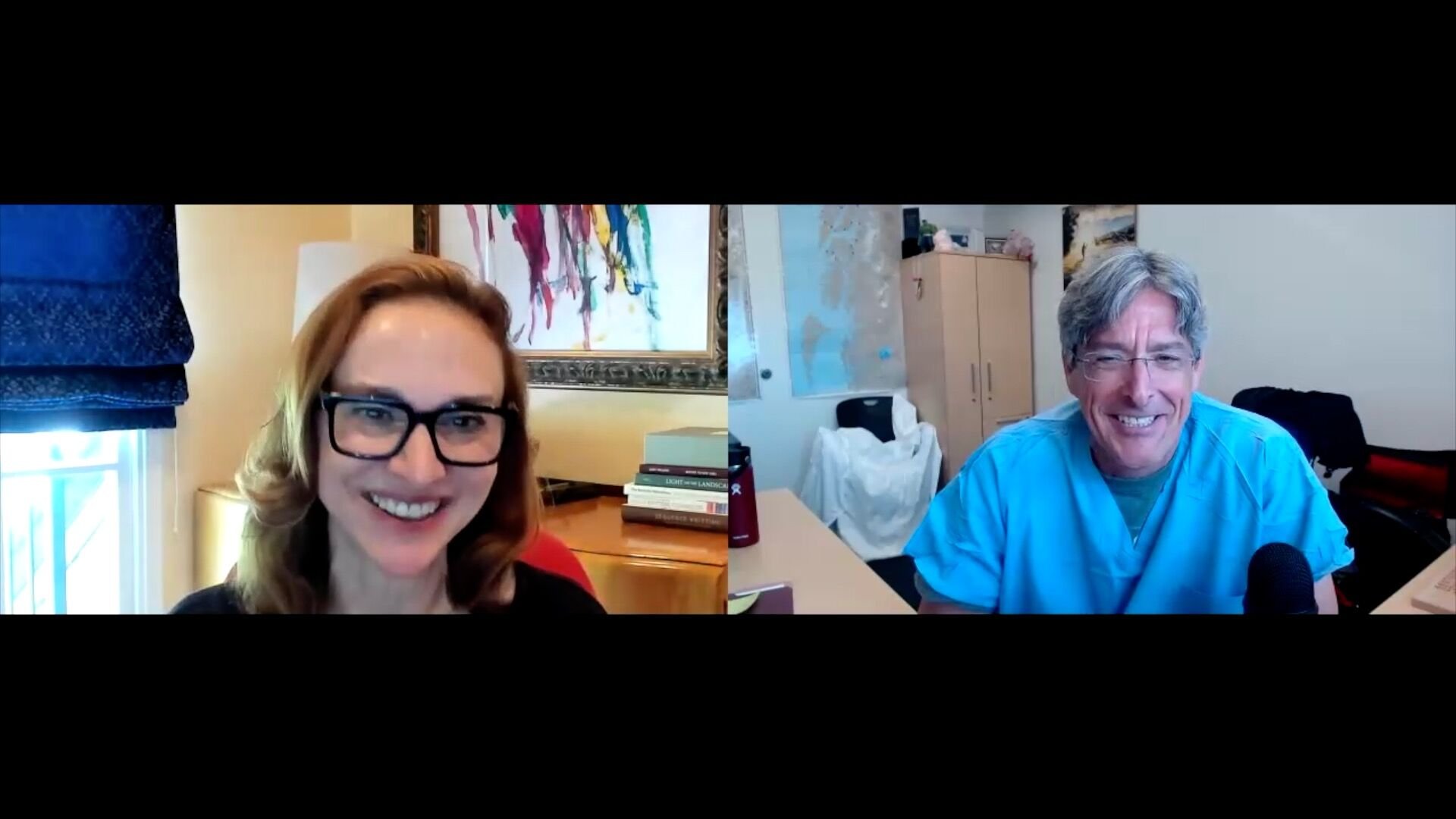
Navigating Burnout: My Podcast Appearance on KevinMD
Burnout is a symptom of a system that is not working for you. In many ways it’s a form of grief. It’s not your fault. But that doesn’t mean there’s no way out. In my interview with Kevin MD, I discussed the factors that contribute to burnout as well as some actionable steps you can take to improve your life as a physician and to combat the effects of today’s stressful environment.
If you’re a physician, or anyone active in healthcare today, you have probably heard of Dr. Kevin Pho and his KevinMD podcast and website.
Kevin posts interviews and articles daily, and I was thrilled to be a recent guest. In the episode, we discussed the burnout epidemic, and why it’s not the same as compassion fatigue.
Burnout is a symptom of a system that is not working for you. In many ways, it’s a form of grief. It’s not your fault. But that doesn’t mean there’s no way out. In the interview, I went over actionable steps you can take to improve your life as a physician and to combat the effects of today’s stressful environment.