Focus on Physicians:
Insights, Ideas, and Strategies





















How to Get Started as a Medical Writer
Medical writing is a fantastic way to clarify your position, share information, and get in front of a larger audience than you might otherwise find. It’s also a terrific way to deepen your own knowledge base. Writing can open doors to other opportunities that you may never have considered. In this article, I’ll tell you about not only the professional benefits of medical writing, but also the nuts and bolts of the process. If you've ever wondered how to become a medical writer, what to expect, and how to get published, you'll find useful information here.
An earlier version of this article originally appeared on Doximity.com, where I was an Op-Med Fellow from 2022-2023.
Side gigs are a hot topic for physicians. Some people do it for the extra cash, others want to stretch and learn something new. Some doctors are looking to pivot from clinical medicine entirely and may use a side gig like writing to test the waters.
As a medical writer since 2009 and an author of four books aimed at a lay audience, I have learned a lot about the process, including how to make connections and what it takes to get published in the popular press. But before going any further, let me be clear: Unless you are a celebrity with a powerful platform, you probably aren’t going to get rich off of medical writing. Not even a little.
That’s not meant to discourage you. Writing is a fantastic way to clarify your position, share information, and get in front of a larger audience than you might otherwise find. It’s also a terrific way to deepen your own knowledge base.
Writing can open doors to other opportunities that you may never have considered. And it will introduce you to a world of people, including publishers and other writers, that can expand and challenge your point of view.
In this article, I’ll share my own journey as a medical writer, including my pitfalls and successes. I also offer suggestions that may make your own process easier and more rewarding.
One caveat: When I talk about medical writing here, I am referring to my experience of writing health-focused books and articles for the general public. There are other forms of medical writing, including working within the pharmaceutical industry, working on continuing education, and creating regulatory documents for governmental organizations, that follow a very different set of rules and standards. In some cases, these companies may offer full-time employment.
Like many physicians, I have written for medical journals and presented at innumerable conferences and grand rounds. As a woman in cardiology since the early 1990s, I was enough of an oddity that I was often tapped to give talks and presentations to both professional and lay groups on women and heart disease.
Being comfortable with putting words on paper, and learning to present information in a cohesive, conversational way was an important foundation for my first book, The Smart Woman’s Guide to Heart Health, published in 2009. I’ll be honest. This was not a quick or easy process. It took me several years, carving out 30 minutes here and there to work on my project, but the knowledge I accumulated made me a better physician and communicator.
My book began as a way to address my patients’ questions about diet, supplements, exercise, stress, and other issues that impact cardiovascular health. I realized that fellowship prepared me very well to take care of critically ill patients, and to competently manage preventive care, but I had a very shallow understanding of the impact of diet and lifestyle, and I knew virtually nothing about supplements. These were the questions that my patients kept bringing to me, and I wasn’t comfortable simply addressing their concerns superficially. At the time, the Adkins diet (a precursor to the Paleo and Keto diets) was resurging, so writing critically was a great way to delve into the medical research.

Like most physicians, I depend strongly on evidence-based care. Writing the book was a fantastic way to educate myself, and to become an expert in an area that was crucial not only to cardiovascular health, but to health and well-being in general.
However, it was not a money-making enterprise. The book was published by an independent publisher that required that I pay up front for the services, which included an editor. The publisher also offered marketing services, which I naively bought into. Though I was happy with the book and reviews, and my patients and practice loved it, I never made back the money that I put into it.
Two years later, I decided to take a shot at getting a contract with a traditional publishing house. This time, I received an advance, and the book, Best Practices for a Healthy Heart: How to Stop Heart Disease Before or After it Starts, was published in 2011. That was also the time that my practice was acquired by a large healthcare organization.
I learned belatedly that due to the strict bylaws of the organization, I could not effectively publicize or promote my work. That was important because most publishers rely on (and may even contractually require) their authors to market their books through multiple platforms.
Nevertheless, having now created a body of work as a medical writer, in 2014 I was asked to co-author The DASH Diet for Dummies with two well-known dietitians who were happy to do promotional work. That book is now in its second edition and sells dozens of copies per week.
Had I never sat down and started writing, my financial bottom line would probably not be much different, but writing has given me so many other interesting opportunities.
Writing made me a better educator for patients and trainees, teaching me to communicate more concisely and clearly. It brought many people into my practice, which benefited me, my partners, and my organization.
I’ve written and presented for a number of organizations and websites, receiving modest but still meaningful compensation for my work. I am recognized as an expert in my field. And writing has given me a platform and a way to connect with people from all over the world.
So, how can you get started as a medical writer?
I recommend starting small, testing the waters, to discover if writing is something that feels right to you. From there, you can always move up. Here are some practical ideas to spark your imagination:
Create a brief series of handouts for your patients.
For example, perhaps you’re frustrated with the lack of educational resources that you can offer your patients. You have an idea of creating a handout, but you don’t know where to start or how to get it done. Maybe you think someone else would do a better job, and you don’t want to look amateurish, so you just let it slide. Meanwhile, you’re spending extra time trying to get your ideas across to patients in the limited minutes you have in the office schedule.
It’s easy to feel a bit overwhelmed when tackling a writing project for the first time. Keep in mind that it doesn’t have to be complicated or detailed. A few salient bullet points may be all you need. Start by setting aside a little time to make a simple outline and work from there. You’ll provide something of real value to your patients, and you’ll ultimately create more time to focus on patient care.
Start a blog.
You don’t have to write a book to get your ideas out there. Simply choose a topic you’re interested in, tell a brief story around it, and provide information that you know your patients, family, or friends want to know. Write as if you’re having a conversation, and then stop after a few hundred words.
There are all sorts of options for free or low-cost websites on the internet. It’s great to be consistent, but don’t beat yourself up if you can’t do this regularly. Once a month is a good way to start.
Reach out to a wider audience.
Once you’ve written a few pieces and have your bearings, consider reaching out to your local newspaper to share one of your posts or offer your services. You can also offer your expertise to services like Connectively, where journalists are often looking for quotes.
Consider writing brief pieces to post on LinkedIn under your own account. This can be especially useful if you are able to discuss new research or health conditions that appeal to a broad audience.
Consumer health magazines or online resources may also be interested in your work. Check their websites for submission details. I found my current writing gig with GoodRx.com on a physician job board, and have been writing for them consistently since 2021. I love working with the editors and improving my work. And it’s great to be able to share my knowledge and insight with a wide public audience.
Consider an e-book.
Self-publishing is a much bigger industry than it was just a few years ago. The downside is that you will need to pay for an editor to review and help you refine your work. Or you can enlist a colleague or trusted friend to proof-read and make suggestions.
Find a publisher.
Writing a book is not for the faint of heart. The hours you put into it may never be compensated. But there is nothing like the feeling of your own book in your hands. If you are really intent on working with a traditional publisher, you will need a literary agent. Resources such as Publisher’s Marketplace and Writer’s Digest can help you drill down your options.
Conclusion
You probably won’t get rich as a medical writer, and you may not even make minimum wage when all is said and done. But you will enrich your experience as a physician, become a better communicator, and create opportunities you may not have even considered. Writing can be a path to lifelong learning, and patients and other physicians will appreciate your expertise. Not to mention, you’ll meet a wide range of people whose paths you may not ever have crossed otherwise.
DISCLAIMER: As an Amazon Associate I may earn from qualifying purchases, which means that if you click on one of the product links, I’ll receive a small commission. This helps support the website, for which I am grateful! Please do your own research before making any important decisions.
If you’ve enjoyed this article and would like to stay in the loop for more insights on creating a sustainable, fulfilling, and happy life as a physician, sign up for my newsletter or reach out on my website. I’d love to hear from you. And if you’re interested in learning more about my coaching program, you can schedule an introductory meeting by clicking the link below.

My Podcast Interview with Dr. Kevin Smith
This was such an interesting conversation with facial plastic surgeon and ENT Dr. Kevin Smith for TechLink Health! I was fascinated to learn about the link between migraines and nasal health. Dr. Smith’s journey from college athlete to cutting edge surgeon gives him a unique perspective, which he shares on the podcast.
This was such an interesting conversation with facial plastic surgeon and ENT Dr. Kevin Smith for TechLink Health! I was fascinated to learn about the link between migraines and nasal health. Dr. Smith’s journey from college athlete to cutting edge surgeon gives him a unique perspective, which he shares on the podcast.
Dr. Smith's story shows how the combination of clinical excellence, curiosity, and persistence can impact patients' lives in meaningful ways and spark new innovations.
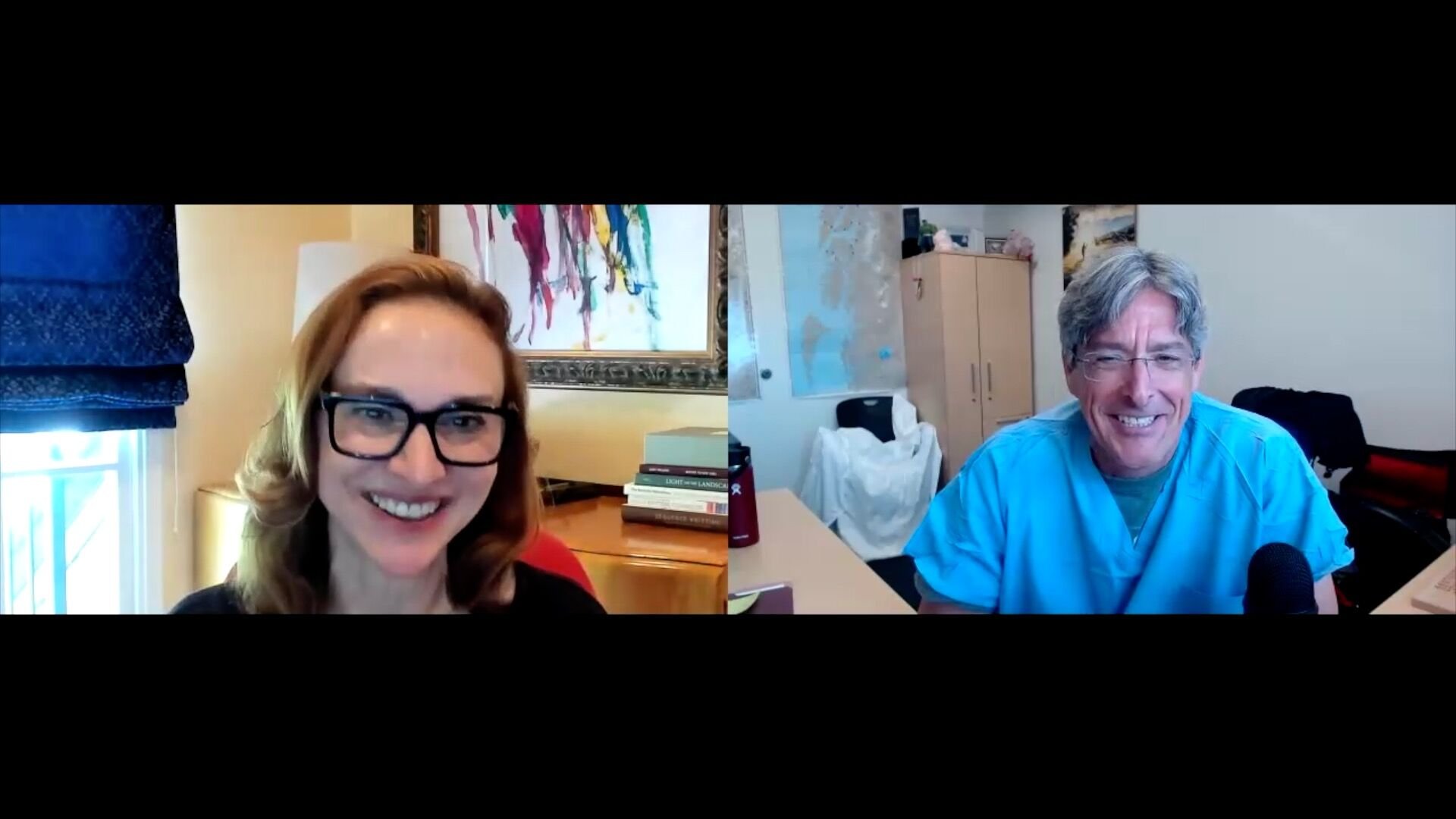
My Podcast Appearance on Dr. Bill Lombardi’s Journey to Better
It was a thrill to appear on the legendary cardiologist Dr. Bill Lombardi’s podcast The Journey to Better. I was honored to be invited onto the show to discuss mindfulness, goal setting, and combating burnout.
It was a thrill to appear on legendary cardiologist Dr. Bill Lombardi’s podcast The Journey to Better. I was honored to be invited onto the show to discuss mindfulness, goal setting, and combating burnout.
Dr. Lombardi is one of the highest-volume operators for complex PCI and chronic total occlusions in the world. He has been open about his own struggles with well-being in this high stakes and intense field of cardiology. His episodes will resonate for cardiologists, but also for any physician who has experienced the struggles, highs, and lows of caring for patients in today’s world.

My Podcast Interview with Mastek’s Ritwik Batabyal
My podcast interview with Mastek’s Ritwik Batabyal was a great reminder of how integral sophisticated behind-the-scenes technology is to providing optimal health care.
Rightfully, there is a lot of trepidation around the use of AI in healthcare and health technology, but the truth is that it’s already here. By understanding and optimizing the ways that we as physicians use AI, we will ensure that we have a say in the way it changes our landscape and the ways that care is delivered.
I enjoyed this conversation with Mastek's Ritwik Batabyal and David Sanchez, RN. It was a great reminder of how integral sophisticated behind-the-scenes technology is to providing optimal health care.
Rightfully, there is a lot of trepidation around the use of AI in healthcare and health technology, but the truth is that it’s already here. By understanding and optimizing the ways that we as physicians use AI, we will ensure that we have a say in the way it changes our landscape and the ways that care is delivered.

TechLink Health Podcast on Heart Smart Mindfulness
It was an honor to be featured as a guest on the TechLink Health podcast. I shared my insights on maintaining heart health with a busy lifestyle, the role of mindfulness on outcomes in healthcare, and the importance of addressing issues that lead to burnout in physicians and others.
I often host the TechLink Health podcast, a show devoted to exploring the gamut of new technologies and innovations in health care. I began this journey as a guest on the podcast in 2022. The interview went so well that I was subsequently invited to host.
It’s been a lot of fun, and I always learn so much from our guests. My experience is a great example of what can happen when you take chances and say yes to opportunities that align with your purpose, even when you don’t know exactly what will happen next.
This week I’m re-sharing my first episode. The conversation ranges from insights on maintaining heart health with a busy lifestyle to the role of mindfulness on outcomes in healthcare, and the importance of addressing issues that lead to burnout in physicians and others. We also discussed the ways a creative practice can help physicians and others in healthcare.
If you’re interested in accessing some of the resources we discussed, I’ve linked to them below.
A version of this article originally appeared on this website in November, 2022
DISCLAIMER: As an Amazon Associate I may earn from qualifying purchases, which means that if you click on one of the product links, I’ll receive a small commission. This helps support the website, for which I am grateful! Please do your own research before making any important decisions.
If you’ve enjoyed this article and would like to stay in the loop for more insights on creating a sustainable, fulfilling, and happy life as a physician, sign up for my newsletter or reach out on my website. I’d love to hear from you.
And if you’d like to schedule a complimentary introductory meeting with me, click the link below.

My Podcast Interview with Digital Diagnostic’s John Bertrand
Artificial intelligence is making its way into healthcare at a rapid pace. By harnessing its benefits while at the same time recognizing its limitations, we have an opportunity to improve and expand access to care for a wide range of people.
This was a thought-provoking podcast conversation with John Bertrand of Digital Diagnostics about the practical and potentially life-changing uses of AI for early detection of diabetic retinopathy. The beauty of the process is the fact that it can be used virtually anywhere, and does not require a highly skilled technician to acquire the data.
Artificial intelligence is making its way into healthcare at a rapid pace. By harnessing its benefits while at the same time recognizing its limitations, we have an opportunity to improve and expand access to care for a wide range of people.
This was a thought-provoking podcast conversation with John Bertrand of Digital Diagnostics about the practical and potentially life-changing uses of AI for early detection of diabetic retinopathy. The beauty of the process is the fact that it can be used virtually anywhere, and does not require a highly skilled technician to acquire the data.
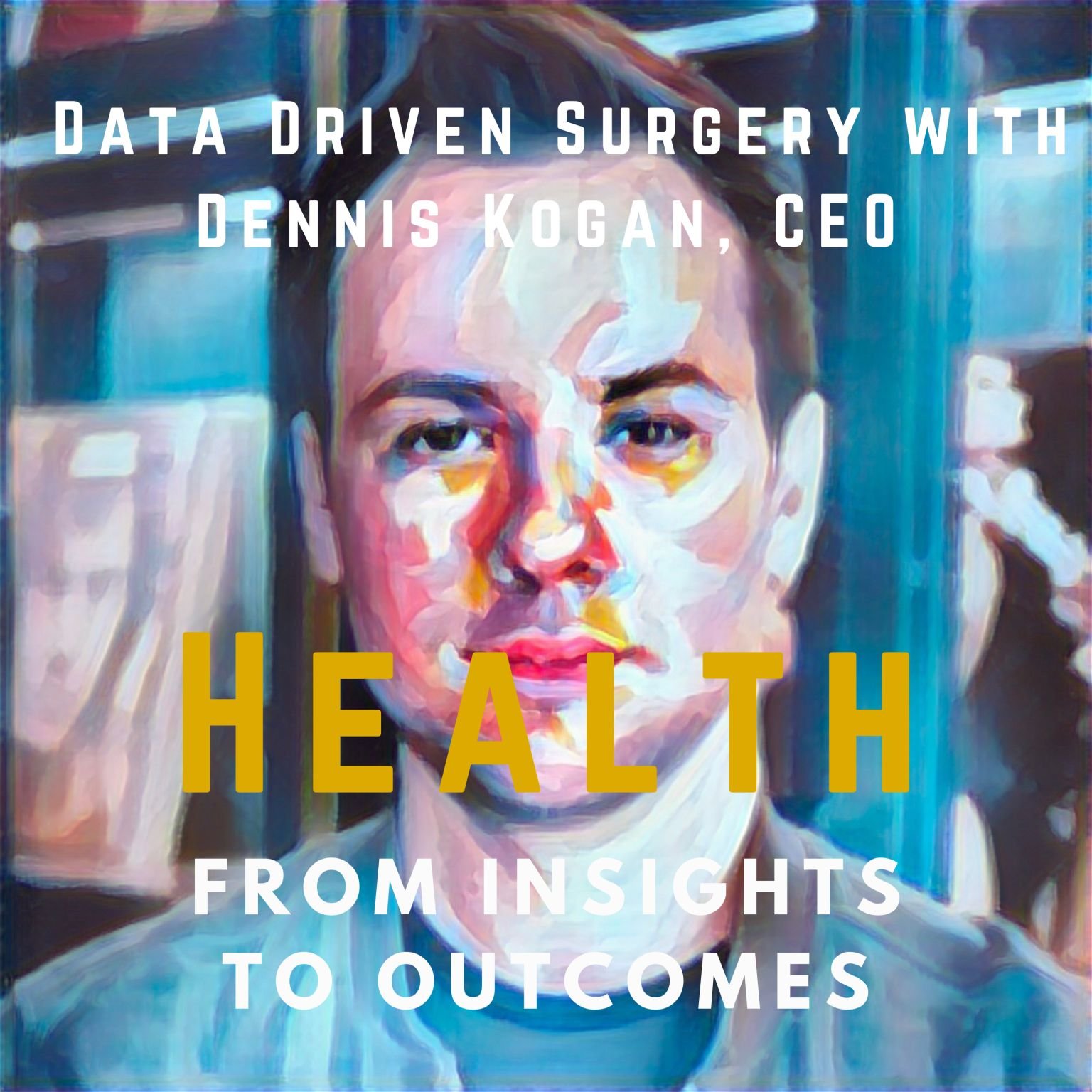
My Podcast Interview with AI Pioneer Dennis Cogan of Caresyntax
As a TechLink Insights podcast host, I enjoyed this very forward-thinking and inspiring conversation with Dennis Kogan of Caresyntax about the role of AI in surgical practice.
The future looks bright for innovations in care when AI is applied thoughtfully and collaboratively.
It’s no secret that artificial intelligence (AI) is rapidly becoming a powerful tool in healthcare and medical science.
As a TechLink Insights podcast host, I enjoyed this very forward-thinking and inspiring conversation with Dennis Kogan of Caresyntax, a company pioneering the use of AI in surgical practice.
It’s normal to feel uneasy about these new technologies. But AI is already here, and it’s up to physicians and others in healthcare to guide its implementation and develop reasonable safety rails to protect our patients. Having met with a number of pioneers in this space through the podcast, I believe that the future looks bright for innovations in care when AI is applied thoughtfully and collaboratively.
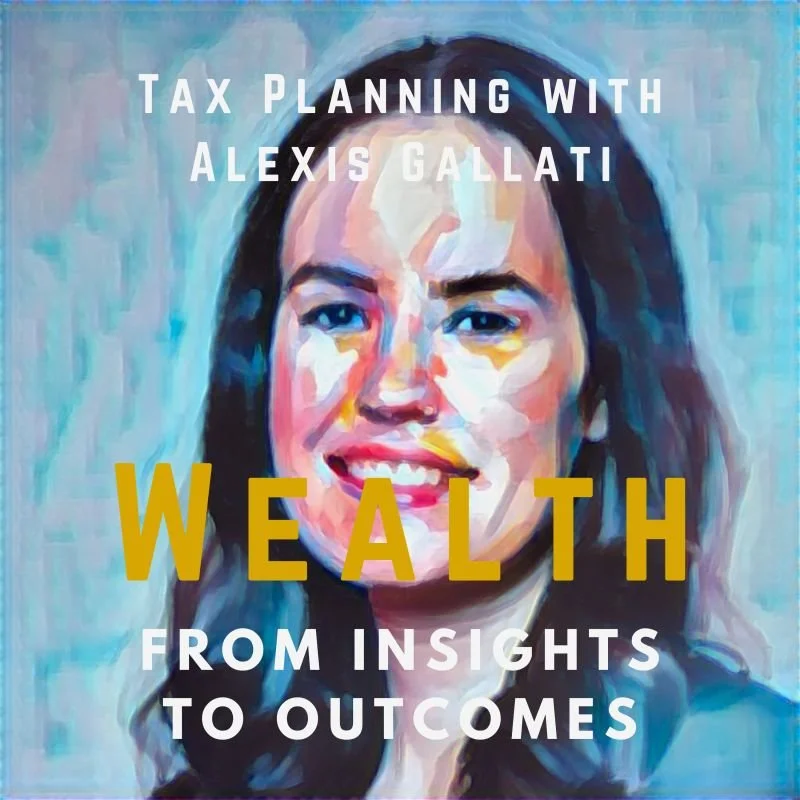
My Podcast Interview with Tax Expert Alexis Gallati, MBA
I really enjoyed my conversation with tax expert Alexis Gallati, EA, MBA, MS Tax, CTS for TechLink Health. This was such a practical and well explained deep dive into tax strategies for physicians.
I really enjoyed my conversation with Alexis Gallati, EA, MBA, MS Tax, CTS for TechLink Health. This was such a practical and well explained deep dive into tax strategies for physicians.
Alexis is married to a surgeon, so she has seen firsthand how little education most of us have in financial strategies, and how this lack of knowledge can hurt us and leave us vulnerable to bad advice.
This podcast addressed financial strategies related to side gigs, managing independent practices and more. Alexis is an engaging speaker and shares a wealth of practical insight.

My Podcast Interview with Health Tech Expert Shanil Ebrahim
Shanil Ebrahim is on the cutting edge of healthcare technology, with expertise not only as a scientist but also with meaningful experience in the fields of AI and health equity. His insights are timely and thought provoking.
Shanil Ebrahim is on the cutting edge of healthcare technology, with expertise not only as a scientist but also with meaningful experience in the fields of AI and health equity. His insights are timely and thought provoking.
As a frequent host of the TechLink Health podcast, it's always such a pleasure and a privilege to meet with leading innovators in the health and tech space. The industry is moving at warp speed, and it's great to have a front row seat!
You can listen to the podcast at TechLink Health as well as Spotify and Apple Podcasts.

My Podcast Appearance with Kevin MD on Meditation and Mindfulness
In my recent conversation with Kevin Pho, M.D we discussed how mindfulness can have far-reaching effects not only for physicians, but for those you we care for. We also discussed the best times for meditation, when you might want to avoid it, and how a brief meditation can impact your sense of well-being.
As a physician coach, I love sharing this story, because it encapsulates how such a simple and brief practice can have a meaningful impact.
Despite often heavy-handed corporate efforts to the contrary, mindfulness is not a bandaid to fix all that is wrong with healthcare. And it’s not a substitute for the meaningful change that is so desperately needed. Instead, it’s a reminder to be present and engage with what is happening right now, without judgement or reactivity.
I enjoyed my recent conversation with Kevin Pho, M.D. We discussed how mindfulness can have far-reaching effects not only for yourself, but for those you care for. We also discussed the best times for meditation, when you might want to avoid it, and how a brief meditation can impact your sense of well-being.
As a physician coach, I love sharing this story, because it encapsulates how such a simple and brief practice can have a meaningful impact.
Despite often heavy-handed corporate efforts to the contrary, mindfulness is not a bandaid to fix all that is wrong with healthcare. And it’s not a substitute for the meaningful change that is so desperately needed. Instead, it’s a reminder to be present and engage with what is happening right now, without judgement or reactivity.
Through mindfulness, you are can find a way to take a moment in the middle of the daily storm to re-center and reset. And for physicians, that can go a long way towards building stronger relationships with patients and staff based on trust and respect.

My Podcast Interview with Grenville Thynne of Neuroflex
I recently had a fascinating conversation with Grenville Thynne for the Techlink Health Podcast. We discussed his work with the trailblazing Neuroflex company. Neuroflex’s portable technology can quickly detect evidence of concussion on site, which makes it especially valuable to athletes of all types. The technology is also being studied in aging, and has the ability to provide objective measurements of brain function that can be tracked over time.
I recently had a fascinating conversation with Grenville Thynne for the Techlink Health Podcast. We discussed his work with the trailblazing Neuroflex company. Neuroflex’s portable technology can quickly detect evidence of concussion on site, which makes it especially valuable to athletes of all types.
The technology is also being studied in aging and neurodevelopmental disorders, and has the ability to provide objective measurements of brain function that can be tracked over time.
This was one of my favorite podcasts of the year. I hope you enjoy it.

My Podcast Interview with Phage Therapy Research Scientist Dr. Jennifer Sacher
It was such a pleasure to interview Dr. Jessica Sacher for the Techlink Health Podcast. We discussed her fascinating work using phage therapy to defeat superbugs, and how she got started in the field. We also had a great conversation about the personal aspects of this work, and how she has adapted her laboratory process to meet the growing need for phage therapy.
It was such a pleasure to interview Dr. Jessica Sacher for the Techlink Health Podcast.
We discussed her fascinating work using phage therapy to defeat superbugs, and how she got started in the field.
We also had a great conversation about the personal aspects of this work, and how she has adapted her laboratory process to meet the growing need for phage therapy.
This interview is a great reminder of all the people whose work contributes to saving lives and furthering the progress of medical science.
Jessica’s passion for her work shines through in this interview. I hope you enjoy it!

My Podcast Interview with Dr. Keith Matheny, Medical Entrepreneur
It was a real treat to have the opportunity to interview Keith Matheny for the TechLink Health podcast. As a colleague and fellow Vanderbilt alumni, I was especially interested to hear his story and discover how he designed an innovative and physician-driven approach to challenges in the Ear Nose and Throat specialty.
It was a real treat to have the opportunity to interview Dr. Keith Matheny for the TechLink Health podcast. As a colleague and fellow Vanderbilt alumni, I was especially interested to hear his story and discover how he designed an innovative and physician-driven approach to challenges in the Ear Nose and Throat specialty.
Keith is a fantastic clinician and an inspiring entrepreneur, and I think you’ll enjoy our conversation.
Check out the podcast here, or you can listen on Apple Podcast, Spotify, or on the TechLink Health website or app.

Navigating Burnout: My Podcast Appearance on KevinMD
Burnout is a symptom of a system that is not working for you. In many ways it’s a form of grief. It’s not your fault. But that doesn’t mean there’s no way out. In my interview with Kevin MD, I discussed the factors that contribute to burnout as well as some actionable steps you can take to improve your life as a physician and to combat the effects of today’s stressful environment.
If you’re a physician, or anyone active in healthcare today, you have probably heard of Dr. Kevin Pho and his KevinMD podcast and website.
Kevin posts interviews and articles daily, and I was thrilled to be a recent guest. In the episode, we discussed the burnout epidemic, and why it’s not the same as compassion fatigue.
Burnout is a symptom of a system that is not working for you. In many ways, it’s a form of grief. It’s not your fault. But that doesn’t mean there’s no way out. In the interview, I went over actionable steps you can take to improve your life as a physician and to combat the effects of today’s stressful environment.

My Podcast Interview With Dr. Cliff Han of AllerPops
I recently had the opportunity to interview Dr. Cliff Shunsheng Han for the Techlink Health podcast. Dr. Han is a physician, a medical researcher with the Human Genome Project, and the creator of AllerPops, an innovative product designed to help fight the seasonal allergies that plague so many of us.
Dr. Han is a wonderful example of a physician who followed a nontraditional pathway. In the podcast he shares his story and what led him to research and create the AllerPops products.
I recently had the opportunity to interview Dr. Cliff Shunsheng Han for the Techlink Health podcast. Dr. Han is a physician, a medical researcher with the Human Genome Project, and the creator of AllerPops, an innovative product designed to help fight the seasonal allergies that plague so many of us.
An allergy sufferer himself, when medications failed to get his problem under control, Dr. Han decided to look beyond the traditional factors that contribute to allergies. he was also motivated by the allergies suffered by his young son. That led him to explore the idea of prebiotics and the importance of a healthy oral microbiome.
Dr. Han is a wonderful example of a physician who followed a nontraditional pathway. Although he trained and practiced as a doctor in China, he has worked as a research scientist since coming to the US over 20 years ago. He shares more about his story on the podcast and in his book, Nothing to Sneeze At.
But once a physician, always a physician. Through his curiosity and resilience, Dr. Han has created something completely new with AllerPops. The science is still in the early stages, but the testimonials on his website are inspiring.
As a disclosure, I will note that Dr. Han has kindly offered to supply me with a sample kit of Allerpops. As a nearly year-round allergy sufferer, I am really looking forward to giving them a try.
If you’ve enjoyed this article and would like to stay in the loop for more insights on creating a sustainable, fulfilling, and happy life as a physician, sign up for my newsletter or reach out on my website. I’d love to hear from you.
This post contains Amazon affiliate links. I may earn a small commission when you click on the links, at no additional cost to you. These commissions help to support the website.
As a physician coach, I can work with you to explore what’s possible and create a plan that aligns with your personal values and aspirations. Schedule your exploratory conversation with me by clicking the button below.

My Podcast Interview with Dr. Vicki Rackner: Surgeon, Entrepreneur, and Financial Coach
I thoroughly enjoyed meeting Vicki Rackner MD on the TechLink Health podcast and learning about her work in the field of physician financial well-being. It was a fascinating conversation, and her story is inspiring! Take a listen on Spotify or wherever you listen to podcasts.
I thoroughly enjoyed meeting Vicki Rackner MD on the TechLink Health podcast and learning about her work in the field of physician financial well-being.
It was a fascinating conversation, and her story is inspiring! Through personal adversity and challenge, Dr. Rackner created a business helping physicians discover financial freedom.
While she is not a financial advisor, Dr. Rackner works with physicians to help them leverage their medical expertise, generate multiple income streams, and develop critical business and marketing skills. She has authored three books on the subject, with another one on the way.
Take a listen on Spotify or wherever you listen to podcasts.

Combating Neurophobia: My Podcast Interview with Dr. Michael Kentris
I recently co-hosted an episode of the TechLink Health podcast featuring neurologist Michael Kentris, D.O.
As a podcaster himself, Dr. Kentris combats "neurophobia" by breaking down complicated topics in neurology for clinicians across a broad range of specialties.
I recently co-hosted an episode of the TechLink Health podcast featuring neurologist Michael Kentris, D.O.
In a wide-ranging discussion, my co-host David Sanchez, RN and I learned about Dr. Kentris' cutting edge work as a neurologist and as a physician educator. As a podcaster himself, Dr. Kentris combats "neurophobia" by breaking down complicated topics in neurology for clinicians across a broad range of specialties. Look for his entertaining and enlightening podcast "The Neurotransmitters" on Apple or Spotify.
I was also excited to learn that Dr. Kentris and I both studied at Vanderbilt University School of Medicine. I graduated from medical school at VUSM in 1988, and he complete his clinical neurophysiology fellowship there in 2018.

Defeating Superbugs: My Podcast Interview with Dr. Steffanie Strathdee
As a podcast host for TechLink Health, it was a privilege to interview Dr. Steffanie Strathdee, an epidemiologist and Distinguished Professor at UC San Diego. Dr. Strathdee literally saved her husband's life when he suffered a catastrophic antibiotic-resistant superbug infection. Through her investigations, Dr. Strathdee uncovered the possibility of phage therapy. Considered a risky and largely unproven treatment modality at the time, it was a last-ditch effort -- and it worked!
As a podcast host for TechLink Health, it was a privilege to interview Dr. Steffanie Strathdee, an epidemiologist and Distinguished Professor at UC San Diego.
Dr. Strathdee literally saved her husband's life when he suffered a catastrophic antibiotic-resistant superbug infection.
Through her investigations, Dr. Strathdee uncovered the possibility of phage therapy. Considered a risky and largely unproven treatment modality at the time, it was a last-ditch effort -- and it worked!
Dr. Strathdee is now the Co-Director of the Center for Innovative Phage Applications and Therapeutics at UC San Diego. You can find her book, The Perfect Predator, on Amazon. There’s an audiobook version as well, which I highly recommend.
DISCLAIMER: As an Amazon Associate I may earn from qualifying purchases, which means that if you click on one of the product links, I’ll receive a small commission. This helps support the website, for which I am grateful! Please do your own research before making any important decisions.
If you’ve enjoyed this article and would like to stay in the loop for more insights on creating a sustainable, fulfilling, and happy life as a physician, sign up for my newsletter or reach out on my website. I’d love to hear from you.

My Podcast Interview with NeuralPositive’s Dr. Yasmine van Wilt
Recently I was fortunate to have the opportunity to interview Dr. Yasmine van Wilt for the TechLink Health Podcast. Dr. van Wilt has a fascinating story in the field of medical-grade music. She is a founder of Neuralpositive, a company that is on the forefront of medical music innovation. Dr. van Wilt has partnered with Cornell Tech, Columbia University, and Stanford University, among others.
Recently I was fortunate to have the opportunity to interview Dr. Yasmine van Wilt for the TechLink Health Podcast. Dr. van Wilt has a fascinating story in the field of medical-grade music. She is a founder of Neuralpositive, a company that is on the forefront of medical music innovation. Dr. van Wilt has partnered with Cornell Tech, Columbia University, and Stanford University, among others.
As we work to integrate evidence-based mindfulness and other non-pharmaceutical practices into healthcare, there is a powerful need for well designed research backed up by academic commitment. I’m excited to share this interview with you, and would love to hear your feedback.

What the Failure of the ER Match Says About the State of Health Care
Over 550 residency spots went unfilled by US med school grads in the residency match this month. Some centers had zero applicants match to their programs. Compare this to 2021, when only 14 ER residency spots were not filled.
The reasons? Just about any physician in the US can tell you.
And How Physician Coaches Can Change The Story
When I was in medical school, the cool, smart kids went into ER medicine. It was a hotly competitive residency, and there was no guarantee that you would match. Now things are entirely different. Over 550 residency spots went unfilled by US med school grads in the residency match this month. Some centers had zero applicants match to their programs. Compare this to 2021, when only 14 ER residency spots were not filled.
The reasons? Just about any physician in the US can tell you:
Disrespect fueled by social media personalities and irresponsible "news" outlets
Dangerous working conditions
Overloaded ERs being used as a source of primary care, often because people lack insurance or access
Corporatization of medicine with a focus on numbers of patients seen and metrics that often don't relate to patient care
Management of physicians by business people and those with less responsibility and training
Intrusive, redundant, and burdensome EHR requirements
Lack of adequate support staff
Some of my best friends are ER physicians. They are some of the hardest working people I know. These are the doctors who will save your life at 2 am, no matter who you are or whether or not you have insurance. And they are also the doctors that are tasked with waking up their colleagues at all hours of the night to request a consult or hospital admission. Most manage their work with grace, strength, and courage.
The steep decline in the desirability of ER residencies is a really scary trend. It’s easy to say that doctors can be replaced with mid-level care providers, but the truth is that the expertise, skill, responsibility and knowledge that an ER physician provides requires years of education, training, and commitment. Mid-levels can reduce some of the burden of less complex patients, but they are no substitute for a physician.
This sudden and shocking shift should be a call to action for hospital directors, ER directors, and the corporations and private equity firms who own and manage many of these practices.
As we wait to see how this recent revelation will impact the decisions and practices that affect ER physicians, it’s important that physicians take steps to stand up for ourselves and our profession. This is a new way of thinking about medical practice, but times have changed irrevocably. By learning how to work within the systems we now have, we can start to make important changes from the inside out. Ultimately, such changes will benefit not only physicians, but also their patients and indeed the very institutions and corporations that currently control our healthcare systems.
How can coaching help? Well clearly, coaching will not fix the problem. Coaching means working with one physician at a time, very much like patient care. But coaching will help you clarify your goals, identify your frustrations and obstacles, and give you the tools to create your way forward. Will that be
Negotiation, understanding your own value?
Creating a streamlined workflow that will allow you greater efficiency?
Acquiring new skills to make your time more effective?
Courage to make a lateral move to a new facility?
A switch to a different type of practice altogether?
A change in working hours?
Reframing conflicts so that you are able to create a more positive working environment?
Honing interpersonal skills?
Advocating for change in EHR management?
Regardless of your specialty, the healthcare world is shifting. The work you do matters. By recognizing your own worth and power, and by taking action that is beneficial to both you and your patients, you will be able to create a happier and more sustainable life.
If you’ve enjoyed this article and would like to stay in the loop for more insights on creating a sustainable, fulfilling, and happy life as a physician, sign up for my newsletter or reach out on my website. I’d love to hear from you.