
Focus on Physicians:
Insights, Ideas, and Strategies














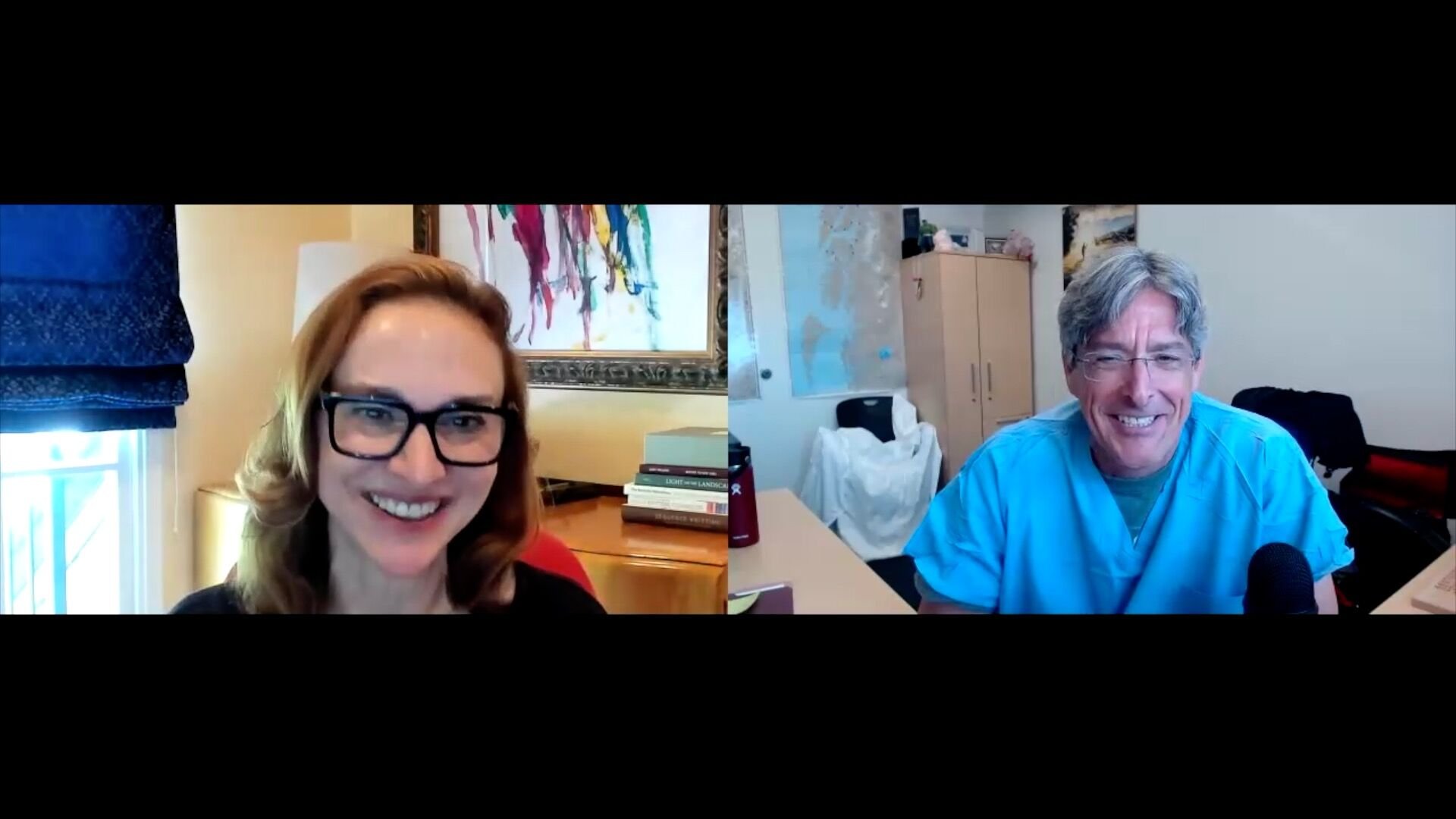










How to Manage Interruptions and Limit Attention Residue: A Guide for Physicians
Attention residue happens when you switch tasks, but a part of your mind remains stuck on the previous task. The little breadcrumbs that remain can significantly decrease your cognitive performance and make it harder to focus. And once you’re interrupted, no matter whether the issue was urgent or trivial, it’s easy to switch over into another unrelated brain drain, such as checking your email or social media, rather than returning to the task at hand.
In this article, we’ll explore strategies that you can use to retake control of your mental focus, manage interruptions, and minimize attention residue in your daily practice.
An earlier version of this article appeared on this website in July, 2024
It’s not just your imagination. It really is more challenging than ever to maintain your mental focus at work.
💉 EHR alerts
💉 Phone notifications
💉 Interruptions from staff
💉 Attention sapping apps
All of these and more conspire to make staying focused a daily struggle for many physicians, regardless of specialty.
Repeated interruptions and the lingering effects of shifting attention, known as attention residue, can severely hamper not only your effectiveness and productivity, but also your personal well-being.
Resolving the current state of disorder in healthcare will require systemic change, including a fundamental shift in the functionality of many EHRs. But protecting your headspace now is a critical skill that can help you stay above the fray.
In this article, we’ll explore strategies that you can use to retake control of your mental focus, manage interruptions, and minimize attention residue in your daily life and practice.
Understanding Attention Residue
Attention residue happens when you switch tasks, but a part of your mind remains stuck on the previous task.
The little breadcrumbs that remain can jumble up your thoughts and make it harder to focus. And once you’re interrupted, no matter whether the issue was urgent or trivial, it’s easy to drift over into another unrelated brain drain, such as checking your email or social media, rather than returning to the task at hand.

Realistically, interruptions have always been part of life in most medical settings. But the challenge has intensified due to
💉 EHR systems that promise constant accessibility
💉 Increasing patient complexity
💉 Expanding administrative burdens
💉 Widespread staff reductions
💉 Growing supervisory responsibilities for non-physician staff
Except for the small but growing number of forward-thinking healthcare systems, the current environment is a near-perfect recipe for attention residue.
This isn’t just theoretical. Studies show that interruptions from a broad range of sources may happen more than every 6 minutes in busy medical environments like the Emergency Department. It’s no surprise that these repeated interruptions can seriously degrade your ability to remain focused and aware.
How to Reclaim Your Mental Focus
Ideally, healthcare leaders will recognize the need for systems and workflows that reduce unnecessary interruptions. Some organizations are already making meaningful progress in this area. But even under the best of circumstances, interruptions are going to happen. Here are a few ways that you can limit the mental drain.
Prioritize and Plan
This can be a difficult step for physicians, since we don’t always have control over the way the day might go. But simply outlining your top priorities can help by giving you a focus and a “north star” for the day.
Start by outlining your top priorities. Whenever possible, focus on these high-impact tasks when your mental energy is at its peak. For many people, that is the first thing in the morning.
Use tools like the Eisenhower Matrix (also known as the Time-Priority Matrix) to strategize your urgent and important tasks, and mitigate those less important time-wasters.
Time Blocking
Consider setting aside specific time blocks for different types of tasks. For example, set aside uninterrupted time to study for your boards, or for administrative work. If you have some control over your schedule at work, scheduling similar patient visits can be helpful, so that your mental flow is less likely to be interrupted.
Communicate your schedule and your plan to create these focused blocks of time to your team (or your family) to minimize unnecessary interruptions. Getting buy-in from your schedulers and administrative staff can help to make time blocking work for you.
Mindfulness and Meditation
Mindfulness is more than a catch-phrase. Techniques like deep breathing, meditation, or yoga can sharpen your ability to focus and help regulate stress. These are tools that can help you to strengthen your cognitive resilience in the face of a demanding clinical environment.
Meditation in particular has been found to be helpful in improving attention, focus, and memory and reducing stress. Just like medication or physical therapy, consistency matters. In one study, it took 8 weeks of regular practice before the impact of meditation was clear.
Taking a mindful pause before and after each patient, study, or procedure is a great way to mentally reset. In many cases, even this very brief break can improve your efficiency and help you to regain a sense of control.
Limit Multitasking
Multitasking was once considered a badge of honor, and something to aspire to. But now we know that when people multitask, they often make more mistakes.
Research shows that multitasking also leads to longer completion times and greater mental fatigue. This is especially true when both (or more) tasks require cognitive effort rather than simple rote actions. In reality, tackling one task at a time is usually faster and far more effective.
So what’s the alternative? When you're faced with a task that’s too large to complete in a single sitting, try breaking it down into smaller, more manageable steps. Each sub-task becomes its own achievable goal, which can help reduce overwhelm and maintain your momentum. Writing these steps out and checking them off as you go can boost motivation and give you a sense of progress, even during busy or fragmented days.
As you knock out these smaller to-dos, you’ll build a sense of accomplishment. That feeling of progress can help quiet the mental clutter and reduce the attention residue that builds up when unfinished work lingers in the background.
Set Boundaries
Not only are they annoying, but interruptions increase the likelihood of errors, directly impacting patient safety. What’s more, these unwanted intrusions also impact your own mental well-being and your relationships by triggering heightened levels of anxiety and annoyance. That’s why setting boundaries is a crucial skill.
Whenever possible, set clear boundaries around your availability with colleagues, staff, and patients. Visual cues such as a closed door or a sign that reads “Do Not Disturb Unless Urgent” can signal your need for focused time without seeming unapproachable. And if you’re in the operating room or in a procedure, be sure that the parameters for interruptions are very clear.
When you're engaged in cognitively demanding work like surgery or a procedure, reviewing charts, developing treatment plans, or reading studies, it’s a good idea to minimize social or nonessential conversation. Let your colleagues know when you're in a focused work mode so they understand that any delay in response is intentional, not personal. Over time, this kind of clear communication builds mutual respect and helps foster a team culture that supports protected time for high-concentration tasks.
It can also be helpful to set expectations with patients and staff that non-urgent in-box messages will only be addressed during or after certain hours of the day.
Reclaiming Your Focus
Maintaining mental focus requires practical, intentional strategies and consistent follow-through. By experimenting with the time-tested approaches I’ve offered above, you’ll strengthen your ability to concentrate, reduce attention residue, and better manage the inevitable interruptions in your day.
If you’ve enjoyed this article and would like to stay in the loop for more insights on creating a sustainable, fulfilling, and happy life as a physician, sign up for my newsletter or reach out on my website. I’d love to hear from you.
If you’d like to learn more about my coaching practice, you can schedule a complimentary introductory meeting by clicking the link below.

Breaking Through Procrastination: Practical Strategies for Physicians
Perfectionism can be a powerful force for excellence, but it can just as easily become a trap. When “not good enough” feels unbearable, procrastination often becomes a way to escape the discomfort. In this article, I’ll give you a set of practical tools to help you work with your perfectionism, not against it, so you can take action with less pressure and more confidence.
An earlier version of this article originally appeared on Doximity.com in December 2022, where I served as an Op-Med Fellow from 2022-2023.
Perfectionism can be a powerful force for excellence, but it can just as easily become a trap. When “not good enough” feels unbearable, procrastination often becomes a way to escape the discomfort. In a previous article, I shared the ways that for many physicians, this pattern fuels stress, backlog, and burnout. In this article, I’ll give you a set of practical tools to help you work with your perfectionism, not against it, so you can take action with less pressure and more confidence.
Medical Documentation Tactics
Let’s start with the elephant in the room: your medical charts. As your notes pile up and paperwork, pre-authorizations, and letters go unfinished, anxiety levels tend to rise. Before you know it, you’re caught in a spiral of regret and self-criticism.
If you already have a system that works, keep up the great work. But for many physicians, the EHR and report generation are a major source of stress and procrastination. It’s essential to get a handle on this beast early in your career.
Pre-charting
Set aside focused time at the beginning or end of the day for pre-charting so that you have important information reviewed and summarized ahead of time. This way you won’t be frantically searching the chart before or during the visit, potentially missing important details. Pre-charting also helps you to focus the encounter, so you don’t get stuck in the weeds.
Documentation
Aim to complete charts either during the visit or immediately afterward. If that’s simply not possible, commit to completion at the end of a session—not at the end of the week. That’s because the fewer times you have to return to a document, the more focused and efficient you will be. And the less attention residue you’ll have pulling your mind into different directions.
Your documentation needs to be succinct, accurate, and clinically useful. A brief personal detail can also help you remember what mattered most to your patient at the next visit. But remember: your notes do not need to be beautifully crafted works of literature. Minor punctuation, spelling, or transcription errors that don’t alter meaning can often be safely ignored.
Use smart phrases whenever appropriate. Explore AI assistants for history-taking if you can ensure accuracy, and if the notes it generates makes sense to you. The goal is not to be sloppy but to convey essential information efficiently so your patient care and communication remain excellent and easy to read.
Task batching
To avoid a dreaded backlog, block off time once or twice daily for patient communications, test review, insurance paperwork, and administrative tasks. This is task batching. Do it consistently—perhaps with Pomodoro intervals—and even if you don’t finish everything, you will have a reliable process.
Let your team know when you’ll be addressing messages and paperwork. Setting clear and reasonable expectations not only helps to streamline your workflow, but it also strengthens teamwork.

Professional Commitments
Committees, research projects, and other professional obligations deserve a thoughtful review. Is each one meaningful to you, or for the future self that you envision? Does it align with how you want to grow?
Focus on what matters
Sometimes taking on more responsibilities is the right thing for your professional growth or your career trajectory. For instance, the work may open important doors that would otherwise not be available to you. In that case, staying engaged is crucial. If you’ve said “yes,” procrastinating on these professional responsibilities may limit future opportunities.
Accountability partners
If you struggle to stay on track, consider partnering with someone who is on the same committee or project. A quick text check-in can keep you both moving forward. Sometimes simply committing to a plan out loud will get you halfway there.
Learn to say no— or maybe later
But if you find that you have a hard time saying no, even when you know that you don’t have the bandwidth or enthusiasm, then it’s time to reassess. As writer and time management guru Oliver Burkeman reminds us, if we’re lucky, we get about Four Thousand Weeks in a lifetime. Time is a fixed resource. When you say yes to one thing, you are saying no to something else.
If your commitments exceed your capacity, you will never get everything done. And the work that you do may not meet your own standards, or those of the people who depend on you. Choose intentionally. And remember that saying “no” doesn’t always mean “never” or “not at all.” You might have the option to say “maybe later” or “in a limited way.”

Your Personal Life
Having a life outside of the clinic or hospital is crucial to your wellbeing. It helps you to decompress, stretches your brain, and keeps you connected to the outside world. When it comes to family and close friends, your time and attention matter. And of course, regular exercise supports just about every aspect of your health and well-being.
The good news? The bar is usually pretty low. No one in your personal life is expecting perfection. Your presence and engagement are enough.
For your home projects, exercise, and other extracurriculars, consider using a Bullet Journal or other daily log to track your progress and stay on track. Writing things down often improves recall, and unlike digital apps, paper lists don’t disappear into the ether.
To begin something new, commit to five to ten minutes a few times a week, or take a single introductory class. Small steps count. And perfection is absolutely not the point. Learning, growth, and joy are.

Procrastination and Self Compassion
If procrastination is a familiar pattern, cultivating self-compassion is critical. But being kind to yourself doesn’t mean ignoring the mess procrastination may have created. Avoidance only increases stress and extends the consequences.
When charts and calls are delayed, procrastination can also affect your patients and your practice. In the worst cases, it may delay care or cause important notifications to be missed, with potentially serious implications.
If the load feels unbearable, recognize that perfectionism-driven procrastination can contribute to depression, anxiety, eating disorders, and other mental health conditions. Seek help from a mental health professional if you need it. And if you are questioning your efforts, your direction, or experiencing burnout, consider meeting with a physician coach.
Above all, remember this: your perfectionism is also one of your superpowers. It reflects your high standards, your problem-solving strengths, and your commitment to keeping people safe. Cherish that. Use it wisely. But don’t let it drag you into overwhelm and procrastination.
DISCLAIMER: As an Amazon Associate I may earn from qualifying purchases, which means that if you click on one of the product links, I’ll receive a small commission. This helps support the website, for which I am grateful! Please do your own research before making any important decisions.
If you’ve enjoyed this article and would like to stay in the loop for more insights on creating a sustainable, fulfilling, and happy life as a physician, sign up for my newsletter or reach out on my website. I’d love to hear from you.
And if you’d like to schedule a complimentary introductory meeting with me, click the link below.

Perfectionism, Procrastination, and Fear of Failure
You probably didn’t become a physician without a healthy dose of perfectionism. Perfectionists often suffer from impostor syndrome, fearing that they are not good enough and will eventually be exposed for all to see. And in fearing that you are not going to meet the high standards you set for yourself, you may subconsciously find ways to procrastinate as a means of avoiding that discomfort.
An earlier version of this article originally appeared on Doximity.com in December 2022, where I served as an Op-Med Fellow from 2022-2023.
You probably didn’t become a physician without a healthy dose of perfectionism. From preschool through residency and beyond, many of us have survived, thrived, and been rewarded for our perfectionist tendencies. And when you didn’t hit the mark? You may have felt the sting of your parents’ and teachers’ disappointment. Eventually, you may have learned to define yourself by your perfectionism.
Self-imposed perfectionism shows no signs of abating, especially among people born in the 1980s and later. Outsiders may counter that “no one is perfect,” but in medicine, the drive to excel is both valued and expected. Your patients rely on your thoroughness and attention to detail to keep them safe and healthy.
But perfectionism has a dark side. When taken too far, it can cause harm to both you and your patients.
Paradoxically, perfectionism can keep you from doing your best work. It can keep you fearful and unwilling to move out of your comfort zone, even when there are better options. It can also hold you back from living your best life.
In this article, I’ll talk about how perfectionism and self criticism often go hand in hand with procrastination. And in a follow up article, I’ll give you some actionable steps that can help you to overcome the self-imposed inertia that perfectionism often creates.

Perfectionism, Procrastination, and Imposter Syndrome
It’s no wonder perfectionists often deal with impostor syndrome. When you fear you won’t meet your own high expectations, procrastination can become an unconscious way of avoiding that discomfort.
What’s more, when you fall prey to imposter syndrome, you may overlook or give up opportunities for the very growth that could nurture your joy in medicine. Learning new skills, taking on a leadership role, and discovering a position that is more aligned with your values may all fall by the wayside when you’re avoiding the discomfort of imperfection.
And when you’re uncomfortable with embracing a beginner’s mindset for fear of not being good enough, you may find yourself reluctant to take up hobbies, activities, or projects that might enrich your life and create new connections.
Perfectionism, Procrastination, and Fear of Success
It might seem counter-intuitive, but another factor holding perfectionists back is often a fear of success. This may arise from a fear of change and discomfort with the unknown. The end result may be the same: procrastination and a failure to act in your own best interests.
Breaking the Cycle of Procrastination
Fear of falling short of your own high standards often shows up in very ordinary ways, including unfinished charts, unanswered messages, and unopened emails. These small backlog items can quickly compound, creating significant stress, frustrated patients and colleagues, and, perhaps, unwelcome attention from administration.
Beating yourself up for feeling overwhelmed and disorganized only makes the problem worse, reinforcing fears of inadequacy and fueling anxiety. Ultimately, the problem comes full circle, becoming a self-fulfilling prophecy.
To break the cycle of fear, frustration, and despair, it’s important to remember that procrastination does not mean you are incapable or irresponsible. It’s not a failure of character or an unwillingness to do hard things. As a physician, you’ve already demonstrated resilience, discipline, and the ability to meet the extraordinarily high demands of the profession.
Harnessing Your Perfectionism
So how do you put these insights into practice and harness your perfectionism so that you can overcome procrastination? Start by putting that superpower to work where it actually counts. Focus on the things that you’re putting off that make a difference. For example, clear, accurate treatment plans, operative notes, and imaging reports. These are the tasks that matter, and people are counting on you to complete them. They don’t need to be polished masterpieces, but they do need to be concise, actionable, and done.
It’s important to recognize that the same level of perfectionism doesn’t have to apply to everything that you do. It’s often the non-clinical commitments, like insurance paperwork, administrative requests, and lingering home projects, that drain your mental energy. If no one’s life or livelihood depends on these tasks being flawless, offer yourself a bit of grace. For many routine responsibilities, perfection isn’t worth the effort and may not even be possible. For those, “good and done” is usually more than enough.
At other times, the most compassionate choice for yourself, as well as the most expedient, is to delegate when you can. And sometimes, when it’s appropriate, you may simply need to say no.
In an upcoming article, I’ll share practical tips to help you break through procrastination and get to the other side.
DISCLAIMER: As an Amazon Associate I may earn from qualifying purchases, which means that if you click on one of the product links, I’ll receive a small commission. This helps support the website, for which I am grateful! Please do your own research before making any important decisions.
If you’ve enjoyed this article and would like to stay in the loop for more insights on creating a sustainable, fulfilling, and happy life as a physician, sign up for my newsletter or reach out on my website. I’d love to hear from you.
And if you’d like to schedule a complimentary introductory meeting with me, click the link below.

Getting Unstuck: How a Simple Mind Shift Can Move Your Life Forward
If you’re a physician, you’re probably balancing patient care, administrative work, and personal responsibilities like a pro. But when you start craving something more, whether professional growth, personal renewal, or a completely new path, it can feel daunting.
As a physician coach, I see this often. From the inside, the obstacles feel huge. But there’s always a way through, and it starts with understanding what’s holding you back.
In this article, I’ll share the most common reasons physicians get stuck, along with practical strategies to help you move forward with clarity and confidence.
An earlier version of this article appeared on this website in April, 2024
If you’re a physician, you’re probably juggling patient care, administrative tasks, and personal responsibilities like a boss. But when you feel the need for something beyond the daily routine, whether that’s professional growth, personal renewal, or a new path, it can feel daunting.
Maybe you’re wanting to learning a new procedure, launch a research project, carve out space for self-care, or perhaps you’re even considering a major career move. These big leaps can seem daunting. So despite your motivation to move forward, it’s common to feel caught in a loop—busy but stuck in place, like a hamster on a treadmill.
As a physician coach, I see this often. From the inside, the obstacles can feel huge. But there’s always a way through, and it starts with understanding what’s holding you back.
In this article, I’ll explore common reasons that physicians feel immobilized, and I’ll offer you some strategies that will get you moving forward with purpose.
Break the Cycle of Habit Loops
The issue may not be a lack of action. Instead, you may find yourself defaulting to actions that feel safe and predictable in the moment, but don’t truly move you forward. It’s a common trap. Whether it’s procrastinating on notes, sidestepping difficult conversations, or saying yes too often, these autopilot habits can hold you back from the progress you want.
➡️Strategy: Notice your default loops and interrupt them. Swap one unhelpful behavior for something small but different. That could be finishing one note before checking email, setting a five-minute timer to reflect before agreeing to a request, or committing to learning something new each week. Even tiny pattern shifts break the cycle and let in some light.
Stop Overthinking and Start Moving
Other times, the problem isn’t repetition, it’s hesitation. You know that you need to make a change, but fear of making the wrong choice or endless analysis of your options keeps you frozen. You tell yourself you’re “waiting for the right time,” but in reality, you’re letting opportunities slip by while the decision sits untouched.
➡️Strategy: Embrace the concept of “progress, not perfection.” Understand that inaction is also a decision, and sometimes the most costly one. But creating your future doesn’t have to mean leaping into the great unknown. Choose a single, manageable step aligned with your goals. Build momentum gradually, and your confidence will rise with each action you take.

Handle Challenges Before They Grow
Unresolved problems don’t vanish. They tend to grow tentacles and multiply. Whether patient-related, administrative, or personal, ignoring nagging issues drains your energy and makes forward motion harder.
➡️Strategy: Be proactive. That doesn’t mean you solve everything on the fly. Instead, put each issue in its place: delegate it, schedule time to address it, or even decide to say no. Building this habit can turn obstacles into action points instead of lingering stressors.
The Weight of Incomplete Tasks
Unfinished notes and half-done tasks are a huge mental burden. For physicians, this irritating backlog is not only stressful but can compromise patient care. It’s a constant source of attention residue that saps your brainpower and makes you less efficient.
➡️Strategy: Get that stuff done. Use templates, smart phrases, and to-the-point documentation practices to streamline charting. Tackle your inbox with a “touch it once” mindset: respond, delegate, or delete. Time-management tools like time-blocking or the Pomodoro Technique can keep you on track and reduce overwhelm. You might even schedule a “chart date” with a friend, making a pact to get your unfinished work done together.
Reclaim Your Value
You know your work matters. Your patients count on you, and you make a difference in their lives. Yet it’s common for physicians to undervalue themselves. When that happens, you may find yourself stuck in toxic environments, missing out on opportunities, or saying yes to projects that drain your energy and don’t serve your best interests.
➡️Strategy: Practice self-reflection and affirmation to strengthen your sense of worth. Journaling can be a very useful exercise. So can revisiting a folder or a box with notes of appreciation from patients and colleagues. When needed, work with a coach to clarify your values and goals, and build confidence. If the burden feels especially heavy, consider scheduling time with a therapist.
Stop Living by Other People’s Expectations
From family expectations to workplace culture, many physicians find themselves following someone else’s script. Over time, this can leave you in roles that don’t align with your values.
➡️Strategy: Define success on your own terms. Take time to reflect on what success means to you, both personally and professionally. Living authentically creates momentum and fulfillment that external definitions of success never will.
Moving Forward
Feeling stuck doesn’t have to be a way of life. When you begin to recognize what’s keeping you in place and apply intentional strategies, you can shift from stagnation to forward motion.
Anchor yourself in your values, trust your resilience, and let small actions become stepping-stones toward change. As you shift your mindset from simply accepting the status quo to creating space for growth, you’ll begin to notice opportunities opening where you once only saw obstacles.
This post may contain Amazon affiliate links. If you choose to purchase through these links, I may earn a small commission at no extra cost to you. Thank you for supporting the work I share here.
If you’ve enjoyed this article and would like to stay in the loop for more insights on creating a sustainable, fulfilling, and happy life as a physician, sign up for my newsletter or reach out on my website. I’d love to hear from you.
And if you’d like to schedule a complimentary introductory meeting with me, click the link below.

Bike Shedding for Physicians: Avoiding Trivial Time Wasters
Your time is precious. You have a demanding and consuming professional life. In all likelihood, you're juggling multiple priorities at any given time. Sometimes the most trivial issues seem to claim the most attention. But as a physician, it's important to be able to focus on the things that really matter, and to avoid getting dragged down into the weeds.
It’s useful to consider the phenomenon known as bike shedding. In a nutshell, bike shedding is a term used to describe the tendency to spend disproportionate amounts of time and energy on relatively minor issues, while neglecting more important but complex concerns.
An earlier version of this article appeared on this website in August, 2023
Your time is a precious commodity, but if you’re like many physicians, you give it away freely. In all likelihood, you're juggling multiple priorities at any given time, trying to get it all done while striving to stay on schedule and keep your patient satisfaction scores high.
Sometimes it’s the most trivial issues that seem to claim the most attention. But as a physician, the work you do has value, and your best work often takes time. Protecting your attention is critical. That’s why it's important to be able to focus on the things that really matter, and avoid getting dragged down into the weeds.
In thinking about the way you use your time, it can be helpful to consider the phenomenon known as bike shedding. The concept isn’t new, but it may be unfamiliar if you don’t hang out with business gurus. The term was coined by C. Northcote Parkinson, a British management expert and naval historian, in the 1950s. In introducing the idea of bike shedding, he described a committee meeting that is called to discuss a specific financial agenda. On the agenda is:
a nuclear power plant costing tens of millions of dollars
a bike shed for the plant costing a few hundred dollars
a coffee budget amounting to about twenty-five bucks
The nuclear power plant is way out of anyone’s comfort zone, and no one wants to look ignorant or ask too many questions. So they quickly approve the budget and proceed to focus on the more familiar topic of the bike shed. After extensive discussion, argument, and finally compromise and agreement, they complete the deliberations over the bike shed with a feeling of satisfaction. They round out the meeting with an hour-long debate over the coffee budget, a topic on which they all have a strong opinion.

How Doctors Fall Victim to Bike Shedding
In a nutshell, bike shedding is a term used to describe the tendency to spend disproportionate amounts of time and energy on relatively minor issues, while neglecting more important but complex concerns. If you’ve spent any time in hospital committee meetings, you can probably relate to this phenomenon. Issues such as EHR functionality and staff management can sometimes fall into this category.
But bike shedding can also happen in your personal life. For example, you might spend hours researching the perfect running shoes, instead of focusing on your training plan. Or you might spend days agonizing over the color scheme of your living room, while putting aside more important but complicated family issues at home.
It’s natural to want to escape from stressful decisions by focusing on things that don’t really matter. And the importance of taking time to step away from the chaos of the day cannot be overstated. But spending that precious time perseverating over things that are not meaningful can be counterproductive.
The bigger problems are still looming. What’s worse, these are the issues that tend to build up steam the longer they are ignored. Eventually you may find that you are pushed or dragged into action, whether you feel ready or not.
From Spinning Wheels to Forward Motion
So how to shift gears and get back on the road? Here are some tips to help you identify and avoid bike shedding, whether at work or at home:
Identify your priorities
🚳What's most important to you? Once you know your priorities, you can make decisions more easily and avoid getting bogged down in trivial matters and unnecessary conflicts.
Delegate
🚳If you can delegate tasks, do it. Delegation is important both at home and at work. This will free up your time so you can focus on the things that matter most
Remember the big picture
🚳When you're feeling overwhelmed, take a step back. What are your long-term professional goals? What do you want to achieve in your personal life? How can you break that down into achievable steps? Keeping your goals in mind will help you to stay focused on the important things.
Set boundaries
🚳It's important to set boundaries so that you spend your time purposefully. This could mean saying no to extra work commitments with little upside so that you can make time for yourself and your loved ones. Or it could mean giving up your spot on the neighborhood committee that causes you stress and lost sleep, when you’d really rather be gardening.
It’s natural to default to bike shedding. It’s a way of avoiding stress and putting off difficult questions. But it's something that you can learn to recognize, navigate, and redirect.
If you find yourself getting caught up in bike shedding, tap the brakes and ask yourself if it's really worth your time and energy. If not, let it go and move on.
If you’ve enjoyed this article and would like to stay in the loop for more insights on creating a sustainable, fulfilling, and happy life as a physician, sign up for my newsletter or reach out on my website. I’d love to hear from you.
And if you’d like to schedule a complimentary coaching discovery session, click the button below.