Focus on Physicians:
Insights, Ideas, and Strategies



















Start with Who You Want to Be: Reframing Success for Physicians
The "have, do, be" concept is a way of thinking about how we relate to the world around us. According to this framework, it’s easy to build our lives around the belief that our possessions, actions, or achievements will make us happy or fulfilled.
But in truth this way of thinking can actually hold physicians back from achieving their dreams.
Instead, you can flip the switch by reflecting on who you want to be right now.
An earlier version of this article appeared on this website in May, 2023
Do you ever find yourself daydreaming, thinking that if you only had (x) then you could do (y), and finally be (z)? Perhaps if you only had more time, more money, a (different) spouse, or (fill in the blank), then everything would fall in line.
This is what is known as the Have-Do-Be mindset. It was first described by the late psychologist and spiritual teacher Ram Dass in the 1970s, but it remains remarkably contemporary.
Put another way, the “have, do, be” concept reflects a pattern of thought around fulfillment and success.
Through your years of education and medical practice, you may have learned to organize your goals around the belief that if you simply acquire the right things—whether possessions, titles, or achievements—then you will naturally do the right things, and finally you will be happy or fulfilled.
By experiencing the world through this lens, your sense of well-being may become tied to what you acquire or accomplish, rather than who you are and how you live day to day
Although it might sound logical, in truth, this way of thinking can actually hold you back from achieving your dreams. It can make you a passive observer, giving up your power and your agency in service to an imagined future over which you may in fact have very little control.
There’s another way to look at things. Instead of focusing on what you wish you could have, and what you feel you can’t yet do, you have the option to flip the script and begin again with a more empowering question: Who do you want to be right now?

When you begin with who you want to be, the next steps often become more clear. Decisions about what to do start to fall into place. What you ultimately have, or what you might visualize as success, may not always arrive right away. But each action taken in alignment with your values moves you closer to the life you want to create. And along the way, you may discover that the goal you originally imagined evolves into something even richer and more fulfilling.
Be
Reversing the script can feel uncomfortable because it forces you to become accountable to yourself.
Getting started right now, rather than waiting for some unmapped date in the future, can be unsettling. Let’s be honest— sometimes it’s easier to daydream rather than to take action. And searching for firm footing to define exactly who you want to be can feel a little awkward.
But there are a few simple steps that can help you to get there with more clarity and certainty. And once you begin, you may even discover a sense of calm and purpose that might have felt elusive before.
The key to getting started is to identify your own personal guiding principles.
Begin by asking yourself what kind of person you want to be, both personally and professionally. In other words, what are your core values? How can you live them out in your work as a physician and in your broader life as a friend, partner, parent, citizen, community member, or individual?
This exercise can be enlightening and sustaining. If you’re looking for a guided way to define your own personal values, my Core Values Worksheet can help.
Do
By naming your core values and aspirations, you can make intentional choices rather than simply reacting to external pressures or other people’s expectations.
Your priorities and goals will become clearer and more personal. And from there, you’ll be able to define the steps you need to take to keep yourself on track.
It doesn’t have to be complicated, and you don’t have to make a life-changing commitment to get started. Doing could be as simple as setting aside a little protected time each day to work on your most meaningful goals. You may surprise yourself by what you discover as you work through this process.
Have
In defining your values and taking action, you begin to build a life that aligns with who you are today and who you hope to become.
The “have” part of this equation will become more tangible and attainable, rather than simply a dream.
Don’t be surprised if your direction takes an unanticipated turn along the way. As you move towards your own North Star, your goals may shift a little, or maybe even a lot. That’s often not a failure of navigation. Instead, it may be a sign that you are now on your own path.
Most importantly, if you’re feeling stuck, a small action can get you out of a rut. Setting aside a 15-minute block each evening to plan the next day is a simple place to start.
Clarity rarely appears before action. Take the first step, and trust yourself as the path begins to unfold.
If you’ve enjoyed this article and would like to stay in the loop for more insights on creating a sustainable, fulfilling, and happy life as a physician, sign up for my newsletter or reach out on my website. I’d love to hear from you.
If you’d like to learn more about my coaching practice, you can schedule a complimentary introductory meeting by clicking the link below.

Using Tension as a Tool: Turning Discomfort into Strength
It’s normal to try to smooth over any sense of discomfort as soon as it arises. But what if you reframed tension as a tool—something to be explored and used to your advantage? Something that might even help you to create balance in your life and greater satisfaction in your medical practice. In this article, we’ll explore the ways that you can make tension work for you.
What do you feel when you think of the word tension? Maybe it’s a furrowed brow, a tightening in the shoulders, or a clenching of the jaw? Why wouldn’t you want to avoid such an uncomfortable feeling?
The Miriam Webster Dictionary defines tension as “inner striving, unrest, or imbalance, often with physiologic indication of emotion”, but also as “a balance maintained in an artistic work between opposing forces or elements.”
It’s normal to try to smooth over any sense of discomfort as soon as it arises. But what if you reframed tension as a tool—something to be explored and used to your advantage? Something that might even help you to create balance in your life and greater satisfaction in your medical practice. In this article, we’ll explore the ways that you can make tension work for you.
Tension as a Stimulus
Tension is a natural part of growth. In the body, muscles strengthen when they are challenged with resistance.
In the mind, as with problem solving, scientific research or even art, breakthroughs happen when we hold space for competing ideas and perspectives. And in personal and professional development, tension often signals the moments where change is possible.

Tension as a Signal
As a physician, you may experience tension as a pull between the demands of patient care and personal well-being, or between your role as a trusted healer and the bureaucratic realities of modern healthcare. Instead of always seeing this as a burden, what if you used it as a signal to reassess, reprioritize, and innovate?
As a coach, I work with physicians who may yearn for immediate relief from career dissatisfaction, burnout, or decision fatigue. But sustainable change doesn’t usually come from escaping tension—it comes from staying with it long enough to understand what it’s trying to reveal.
The tension between wanting stability and craving change, between honoring commitments and protecting personal boundaries, can become the catalyst for transformation when approached with curiosity instead of resistance.
Tension as a Creative Tool
Tension in a work of art—whether through contrast, unexpected juxtapositions, or asymmetry—creates interest. A perfectly balanced, symmetrical photograph might be beautiful, but it can also be forgettable, lost in a sea of similar work. It’s the unexpected tension in a frame that pulls the viewer in, making them linger and engage.
The same is true in problem-solving. Whether you are navigating career decisions, leadership dynamics, or personal dilemmas, the most creative and impactful solutions often emerge from the friction between opposing forces. This idea can also be applied to patient care, for instance when trying to devise a complex treatment plan for a patient with competing health and personal issues.
When you try to escape tension, it can be tempting to settle for the easiest answer instead of the best one. Instead, if you stay with the discomfort a little longer, you may allow space for deeper insight and more creative approaches.
Using Tension Intentionally
Just as yoga can teach you to breathe through physical tension rather than fight it, we can apply the same principle to mental and professional challenges. By leaning into discomfort with awareness, you allow yourself room to experience growth.
Pause Instead of Reacting
When you feel tension -- whether in a difficult conversation, a contentious committee meeting, or an internal conflict—take a moment to pause. Instead of immediately resolving the discomfort by taking the path of least resistance, ask yourself “What is this tension telling me?”
Reframe Tension as Information
Instead of trying to scape it, view tension as a source of data. If a decision is difficult, what values or priorities are in conflict? If a conversation is uncomfortable, what truths might need to be acknowledged?
Use Tension to Expand Possibilities
In my coaching practice, I often ask my clients “What if you didn’t have to choose one or the other? What if both things could be true?” Tension can lead to a binary mindset, an either/or perspective, but staying with it can reveal more nuanced, integrated, and interesting solutions.
Apply Tension to Leadership and Communication
Great leaders use tension productively. Instead of avoiding difficult conversations or suppressing dissent, they recognize that discomfort can lead to clarity, deeper alignment, and stronger teams. Productive tension—when handled with respect—can push individuals and teams toward innovation and better decision-making that makes room for everyone’s perspective.
Let Tension Strengthen Your Work
Whether you’re navigating a career transition, leading a team, or developing a new project, tension signals that something important is at stake. Instead of smoothing things over too soon, ask yourself: How can I use this tension to create something better?
Leaning into Tension
When used mindfully, tension can deepen your thinking, sharpen your skills, and lead to better outcomes in virtually any aspect of your life.
Instead of asking, How do I get rid of this tension? try asking yourself, What can this tension teach me? That shift in perspective might be the key to unlocking your next breakthrough.
If you’ve enjoyed this article and would like to stay in the loop for more insights on creating a sustainable, fulfilling, and happy life as a physician, sign up for my newsletter or reach out on my website. I’d love to hear from you.
And if you’d like to schedule a complimentary coaching discovery meeting, click the button below.

Using the Language of Art to Create Work-Life Balance
Most physicians cite work-life balance as a top priority. Yet there is little clarity on what exactly work-life balance means.
You might be surprised to learn that art theory holds the answer.
In this article we’ll explore ideas of symmetric, asymmetric, radial, and crystallographic balance. And you’ll discover why asymmetric balance might hold clues for your own unique form of work-life balance.
An earlier version of this article was published on KevinMD.com in 2023
For most physicians, achieving work-life balance is a top priority. But what does balance mean? And is it even possible?
In this article, I propose that there is more than one way to conceptualize balance. Before we explore these new perspectives, it’s important to address a common alternative: the concept of work-life integration.
Because the concept of balance often feels unattainable, and perhaps even undesirable, some argue that “work-life integration” is the better term. This popular terminology implies that somehow work and personal life should seamlessly intertwine, one gently flowing into the other.
It’s a trendy buzzword in managerial circles, but for physicians, work-life integration is often not a choice—it’s a given. And between taking call, attending after hours committee meetings, slogging through the EHR, and making time for CME and recertification, what’s labeled as “personal time” often gets consumed by work-related demands.

That’s why the work-life integration construct for physicians often means no real boundaries at all.
In this model, work doesn’t just blend into your personal life—it takes over. And yet, the reverse is rarely possible. There may be no space in the work day for your own needs.
Let’s be honest: it’s rare that you can realistically bring family or personal responsibilities into the hospital or clinic. For most physicians, that’s neither practical nor desirable.
So where does that leave us? I believe that work-life balance—not integration—is still the better goal. But the way we think about balance is often flawed.
When we picture balance, most people imagine a seesaw or a perfectly balanced scale, where equal weight on both sides creates harmony. It’s a tidy image but one that’s unrealistic for most lives, especially for physicians.

Instead, there’s a deeper, more creative way to think about balance—one that borrows from the language of art. By embracing this alternative perspective, you will discover a dynamic and fulfilling concept of balance that can help you to create a more sustainable and happy life.
Before we go any further, it’s valuable to think about work-life balance as more than simply “work” and “life”. Work is an important part of life, and perhaps even a defining feature of the life you’ve chosen. But “life” isn’t just what’s left over after work. It can be useful to think about life as a array of different elements. Broadly speaking, these may include
Family
Friends
Leisure
Self-Care
Anything else that’s meaningful to you
Equalizing all of these factors our using traditional concepts of balance is virtually impossible.
But if we borrow the concept of balance from art theory, it all starts to make more sense.
Concepts of Balance
In art, balance can be
Symmetric
Asymmetric
Radial
Crystallographic (Mosaic)
Let’s take a little detour into art theory so I can show you what this means.

Symmetric
Think of the typical balanced scale, or a mirrored pair.
This is the traditional way that we think of balance.

Asymmetric
The perception of weight across the composition may be balanced, but each element has a different size or mass.
This form of balance tends to create more interesting and dynamic images.

Radial balance
This type of balance uses a central focal point
Rays, spirals, or ripples radiate outward

Fragment, Peru c. 1000-1476 AD, Kate S. Buckingham Endowment, Art Institute of Chicago
Crystallographic (Mosaic) balance
A large number of elements share equal weight
There is no single focal point
Choosing Asymmetry
Any of these constructs may work for you. For many physicians, an asymmetric concept of balance can be especially useful. Think about the way you might create a rock garden. With asymmetric balance, you have wide latitude to play with different scale and elements. There is no exact formula, but you feel it when it’s right.
Compared to the symmetric form of balance, where both sides hold equal weight, asymmetric balance falls apart when the elements are too similar.
In asymmetric balance there is usually a dominant element, with the other components playing a supportive or bridging role. Often two smaller elements work harmoniously to balance a larger one. In an asymmetric painting like Van Gogh’s Starry Night, there may be some tension, but the image still feels complete.

Asymmetric balance can be interesting to play with. Moving one element often means that the others must also be moved in order to maintain a sense of harmony. This new configuration might strike a different, even unexpected, chord and create different relationships between the pieces.
When thinking about creating your own work-life balance, asymmetric balance may be a good starting point to consider. As your priorities shift over time, your vision of balance may also change. At any time, you can rearrange the elements to make them work for you.
How do you begin to define your own work-life balance? Take another cue from the art world. Sit down with pen and paper and sketch it out in words or pictures. This form of reflection is a great way to get clarity on your own ideas so you can create your vision for the future.
If you’ve enjoyed this article and would like to stay in the loop for more insights on creating a sustainable, fulfilling, and happy life as a physician, sign up for my newsletter or reach out on my website. I’d love to hear from you.
And if you’d like to schedule a complimentary coaching discovery session, click the button below.

Connecting With Your Inner Wisdom: A Journaling Guide for Physicians
If you’re a physician, journaling is a wonderful way to access your own thoughts and values, getting in touch with what matters most to you. It’s a form of mindfulness that doesn’t require any skills or knowledge. All you need is a pen and paper and as few as five minutes.
This article is the first in a three-part series. In each one, I’ll share a different collection of journaling prompts designed to help you to connect your own dots and rediscover what truly matters to you. Whether you’re exploring a new professional path, planning for retirement, or seeking greater happiness and satisfaction in your life, these prompts will guide you towards clarity and self-awareness.
With countless demands on your time and attention, it’s easy to lose touch with yourself as you slingshot from one task to the next. This can get you through the day, but after a few months, years, or maybe even decades of living this way, it can be difficult to find your way back to your true self.
I know this, because I experienced this sense of disconnection firsthand. From starting medical school in 1984, through decades of practice, I felt as if I was on a treadmill. I was constantly striving for the next level, whatever that was, and rarely taking a chance to pause or to celebrate. I stayed active, had hobbies and friends, but it all felt pretty frantic. As I began to contemplate my life after cardiology, I wasn’t exactly sure who the “real” me was, or what she wanted next. That’s when I began journaling as a regular practice.
As a full time cardiologist with a busy practice, my days and evenings were highly regimented, with little room to add on yet another task. I was getting nowhere with perseverating over what was making me discontent, and I knew that I needed a way to sort things out.
Journaling was something that I played with over the years, but the habit had never stuck. To be honest, the empty pages always felt a little daunting. So this time, I made a commitment to myself to spend just 10 minutes a day sitting with my thoughts.
The Power of Journaling: A Path Back to Your True Self
Every evening I would pose questions to myself, trying to unravel the knots that I had tied over the years, until I rediscovered the threads that could lead me to my next steps. And remarkably, the process worked! Through introspection and time, I developed a set of goals and a sequence of tiny little steps that got me farther than I ever could have imagined.
This article is the first in a three-part series. In each one, I’ll share a different collection of journaling prompts designed to help you to connect your own dots and rediscover what truly matters to you. Whether you’re exploring a new professional path, planning for retirement, or seeking greater happiness and satisfaction in your life, these prompts will guide you towards clarity and self-awareness.
Getting Started with Journaling
Journaling is a wonderful way to access your own thoughts and values, getting in touch with what matters most to you. It’s a form of mindfulness that doesn’t require any skills or knowledge. All you need is a pen and paper and as few as five minutes.
Why do I say pen and paper, and not a keyboard? Because research has convincingly shown that writing by hand is far more activating for the brain than typing. Newer devices that save and transcribe handwriting, like the reMarkable, may help to bridge the gap between analogue and tech. If writing doesn’t come easily, you could also experiment with dictation. Most important is that you find something that works for you and feels comfortable and natural.
Journaling to Uncover Your Next Steps
This series of prompts will help you to reflect on your values and your sense of purpose, realigning the trajectory your life into something that feels resonant and clear.
For a kick start, if you haven’t already completed the Values Workbook, this is a great time to begin that exercise. You can get your free copy through my website.
Don’t feel as if you need to take on every prompt. There’s a lot to ponder here! Perhaps choose one or two for the week and see where it takes you.

Exploring Your Values
What do I value most about my role as a physician? Are these values reflected in my daily work and life? If not, what changes would need to happen in order for my values to be aligned with my work?
If I could describe the legacy I want to leave in one sentence, what would it be? How do I want people to remember me?
When have I felt most fulfilled in my career? What about those moments made them meaningful?
Clarifying Your Purpose
Why did I choose to become a physician? Does that "why" still resonate with me today? If it has changed, does it still feel true? And if not, what is missing?
What parts of my work energize me the most? How can I focus more on these aspects?
How does my work align with my personal definition of success? Where am I now in relation to that definition?
Evaluating Your Current Path
If my current career trajectory continued for the next 10 years, would I feel proud and content with my life?
What sacrifices am I making to sustain my current career path, and are they worth it?
Are there aspects of my personal life or passions that I’ve neglected? How can I reintegrate them?
Imagining the Future
If I could design my ideal work-life balance, what would it look like? What small steps could I take to get closer to that vision? What could I do today that would start to change things?
Imagine a day in your dream life. What are you doing, who are you with, and how do you feel?
What skills or interests do I have that I’m not currently using in my career? How might I incorporate them? And what skills do I wish I had? Are they important enough that I want to explore how to acquire them?
Confronting Barriers
What fears or doubts are holding me back from making a change I know I need? Are these fears grounded in reality? If so, is there something within my power to change?
Who or what am I afraid of disappointing if I follow my heart? How might I address that fear?
What is the worst that could happen if I pursued a career change or took on a new role? What strategies could I take to mitigate that? Are there other opportunities that outcome might open up for me?
Building Resilience and Courage
When have I faced significant challenges and grown from them? What strengths did I discover?
What does courage look like for me right now? How can I embody it in my decisions?
Who in my life inspires me to live authentically? What lessons can I learn from them?
Finding Alignment
Are there moments in my work when I feel disconnected from my authentic self? How can I realign?
How do I want to feel at the end of each day? What changes would help me experience that feeling more often?
What small, actionable steps can I take this week to bring more meaning into my work and life?
Cultivating Gratitude and Joy
What aspects of my career am I most grateful for? How can I focus more on these positives?
When was the last time I felt joy in my personal or professional life? What contributed to that moment?
What can I do today to make space for more joy and connection in my life?
In the next article in this series, I’ll share prompts to guide your exploration of personal projects, family connections, and meaningful relationships. The final article of the series explores journaling to envision your future.
If these prompts have been useful, or if you have some of your own that you’d like to share, drop me a line! I’d love to hear from you.
This post contains Amazon affiliate links. I may earn a small commission when you click on the links, at no additional cost to you. These commissions help to support the website.
If you’ve enjoyed this article and would like to stay in the loop for more insights on creating a sustainable, fulfilling, and happy life as a physician, sign up for my newsletter or reach out on my website. I’d love to hear from you.
And if you’d like to schedule a complimentary coaching discovery session, click the button below.

Why Are We Afraid to Talk About Work-Life Balance?
For many physicians, work-life balance (WLB) is the elephant in the room. In 2022, 85% of physicians finishing residency cited work-life balance as their number one consideration when choosing a job.
Dissatisfaction with WLB is strongly correlated with burnout, and is a common reason that many physicians choose to leave their current practice. Although women physicians tend to rate WLB as somewhat more important than men, among millennials it is a top priority for both genders. Yet physicians often avoid raising this crucial issue with potential employers and even colleagues for fear of being judged.
In this article I’ll give you nine ways to create your own version of work-life balance.
An earlier version of this article appeared on Doximity, where I was a 2022-2023 Op-Med Fellow.
For many physicians, work-life balance (WLB) is the elephant in the room. According to CHG Healthcare, in 2018, 63% of physicians finishing residency programs cited WLB as their number one consideration when choosing a job. In 2022, it was 85%.
Dissatisfaction with WLB is strongly correlated with burnout, and is a common reason that many physicians choose to leave their current practice.
Although women physicians tend to rate WLB as somewhat more important than men, among millennials it is a top priority for both genders.
Yet physicians often avoid raising this crucial issue with potential employers and even colleagues for fear of being judged and found lacking.
The Fear is Real
This fear of judgment is based in reality: providing the best and most timely care to patients often requires self-sacrifice. The profession is demanding and the stakes are high; it’s a given that occasionally, or maybe even often, you will have to put personal needs aside to care for patients whose needs can’t wait.
But it’s not uncommon for physicians to fall prey to the notion that consistently putting aside their own, or their family’s, well-being is necessary to answer the “calling” of medicine. Healthcare institutions sometimes perpetuate this with an “always on” culture, idealizing self-sacrifice without adequately compensating for it.
For physicians whose work requires collaboration and partnership with others in the profession, openly wanting more from life may also stir up fears of being perceived as weak, lazy, or not a team player.
These concerns are real, and the demands of the profession are heavy. But when you get past the angst of admitting that you want more out of life and make an effort to seek balance, you will find that your relationships, your sense of fulfillment, and ultimately the care you give your patients can flourish.
Tangible Benefits of Seeking Balance
Research shows that not only do people who make time for family, hobbies, and health feel a greater sense of balance, but they may also become better physicians for it.
A British study found that employees who engaged in creative activities were more likely to discover creative solutions to problems at work.
A study of nearly 300 ICU staff members, including physicians, found that those who engaged in hobbies experienced less post-traumatic stress.
And a Duke study found that higher WLB measures among hospital staff, including physicians, correlated with greater patient safety and improved teamwork.

On the opposite end of the spectrum, not attending to life outside of work can have serious consequences. A study of members of the American College of Surgeons published in 2012 found that those with conflicts between work and home life were more than twice as likely to experience burnout and depression. Experiencing this conflict also meant that the surgeons surveyed were more likely to leave their current practice.
And yet, balancing your life is easier said than done.
A Personal Story
Each doctor has a different story. Here’s mine:
As a cardiologist I was able to find WLB, although it required a substantial degree of focus and dedication. While in practice, I wrote four books (admittedly health related), became a yoga teacher, and competed successfully with my horses. I also made time to travel and hike around the world.
However, these efforts were not without sacrifice: I had to give up significant income in order to take a half day off a week to train with my horses. And I usually chose to take most of my allotted (uncompensated) vacation time.
Although I was fortunate enough to have an organized system of cross-coverage with my partners, the time off nevertheless meant that I was often catching up on EHR responsibilities late into the evening, sometimes even from the other side of the world.
Still, for me the loss of income and long nights catching up on charts was worth it. Not only was my life richer, but my diverse experiences and friendships made me a more compassionate and open-minded physician. My patients were always curious about my adventures, and often felt more connected to me when they realized that I shared some of their own interests. And having the opportunity to “fill my cup” gave me more energy and enthusiasm for my work.
What Does Work-Life Balance Look Like for You?
Work-life balance is deeply personal. It shifts with life’s seasons—whether you’re a new parent, an early-career physician, or a seasoned leader.
Parents of young children might prioritize family time and set hobbies aside for a while.
New physicians may need to focus on building their patient base and refining their skills.
Ambitious professionals seeking leadership roles might accept that these positions come with time demands that require trade-offs.
Whatever your circumstances, achieving balance starts with acknowledging your needs and crafting a plan to meet them.
Discovering Balance
Here are some things to consider as you embark on your new path:
Acknowledge Your Desires: Wanting more from life doesn’t make you less dedicated. You’re allowed to be a doctor and a spouse, parent, or adventurer.
Create a Plan: Start small. Identify what balance looks like for you right now, and map out achievable steps to get there.
Reassess Your Practice: Are there opportunities to cut back hours or take a regular day off? Could changing roles or employers help you reclaim time?
Delegate Wisely: Hire help where needed—whether it’s a scribe, a babysitter, or a housecleaner. Small investments in assistance can free you for the things that matter most.
Reevaluate Your Commute: Use your travel time for audiobooks, meditation, or CME. Or consider moving closer to work to reclaim precious hours.
Say No Strategically: Not every committee or project is worth the sacrifice. Be intentional about the responsibilities you take on.
Embrace Imperfection: You don’t need to dive headfirst into a new hobby. Start small—10 minutes of yoga, a quick walk, or a short meditation can work wonders.
Limit Distractions: Replace mindless scrolling with meaningful activities, whether it’s reading, journaling, spending time with loved ones, or pursuing a creative interest.
Try Something New: Join a workshop or pick up a hobby you’ve always been curious about. The joy of learning can be invigorating.
Book a Getaway: Set a date, buy a ticket, and commit to taking time off. The anticipation alone can be rejuvenating.
Taking the First Step
No matter what work-life balance means to you, realize that an ideal balance looks different for each person. It can change over the course of a lifetime.
The most important way to achieve the balance you’re seeking is to put your ideas into action. Your life will be so much richer if you consciously put in the effort, often in ways that you might not anticipate today. And you may find that in the process, you generate more joy, creativity, and resilience in your medical practice.
If you’ve enjoyed this article and would like to stay in the loop for more insights on creating a sustainable, fulfilling, and happy life as a physician, sign up for my newsletter or reach out on my website. I’d love to hear from you.
And if you’d like to schedule a complimentary coaching discovery session, click the button below.
References
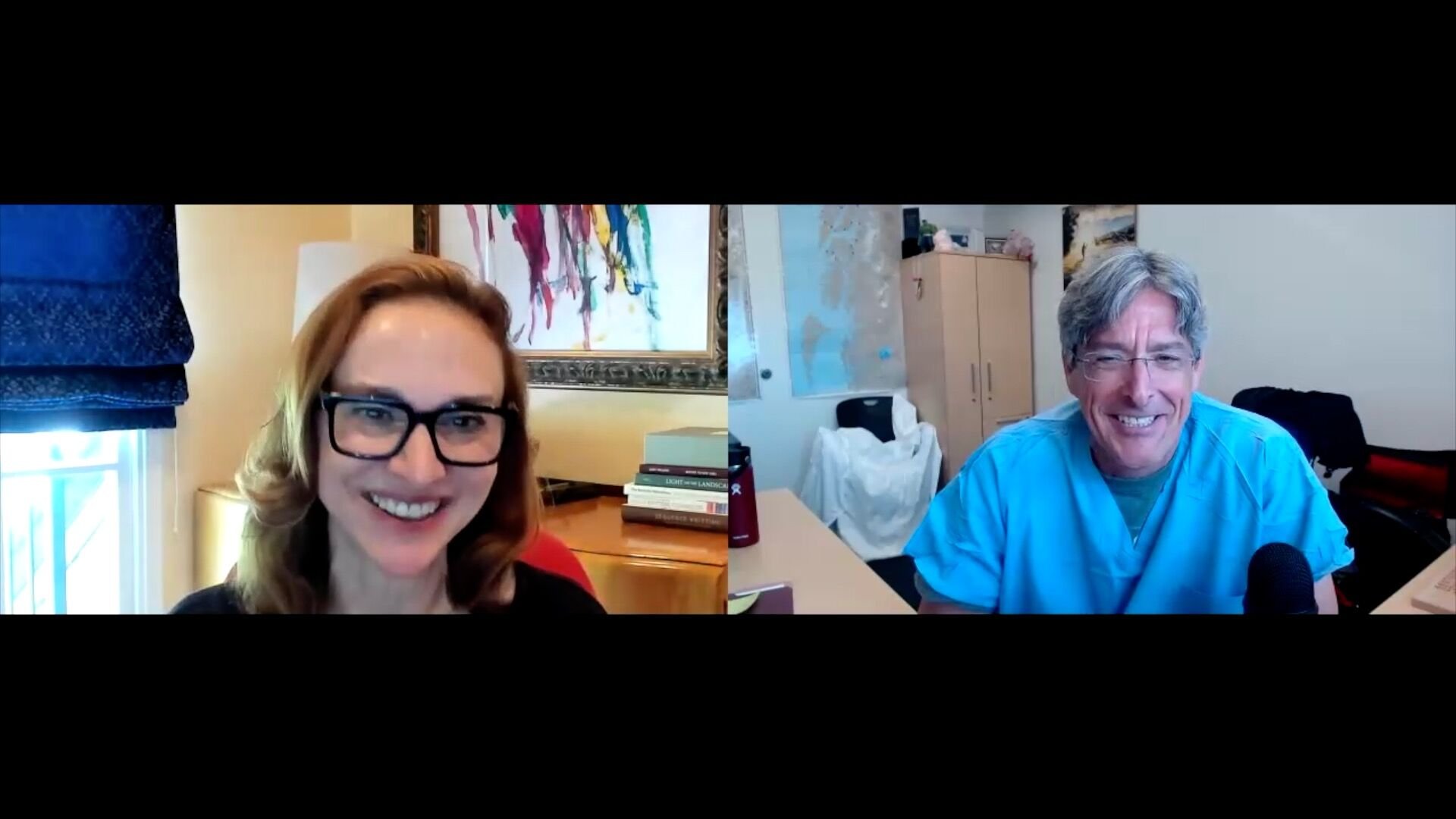
My Podcast Appearance on Dr. Bill Lombardi’s Journey to Better
It was a thrill to appear on the legendary cardiologist Dr. Bill Lombardi’s podcast The Journey to Better. I was honored to be invited onto the show to discuss mindfulness, goal setting, and combating burnout.
It was a thrill to appear on legendary cardiologist Dr. Bill Lombardi’s podcast The Journey to Better. I was honored to be invited onto the show to discuss mindfulness, goal setting, and combating burnout.
Dr. Lombardi is one of the highest-volume operators for complex PCI and chronic total occlusions in the world. He has been open about his own struggles with well-being in this high stakes and intense field of cardiology. His episodes will resonate for cardiologists, but also for any physician who has experienced the struggles, highs, and lows of caring for patients in today’s world.