
Focus on Physicians:
Insights, Ideas, and Strategies




















How Physician Coaching Turns Insight Into Action
If you’re a physician, chances are that you are a highly reflective individual. Your work probably focuses around thinking carefully, solving complex problems, and making decisions that impact lives.
You may recognize that you are delaying a difficult conversation, taking on thankless work that offers no personal satisfaction, or saying yes too quickly. You may realize that your work doesn’t align with your professional or personal goals. You may understand that your calendar does not reflect your values.
And yet the same patterns repeat.
This is where coaching can make a difference.
If you’re a physician, chances are good that you are a highly reflective individual. You know how to think carefully, solving complex problems by integrating data, observation, and skills, and you make decisions that impact other people’s lives every day. But when it comes to your own life, things may sometimes feel more murky.
Perhaps you realize that your work doesn’t align with your professional or personal goals. Maybe you are delaying a difficult conversation, taking on thankless work that offers no personal satisfaction, or saying yes too quickly.
Put more simply, it could be that your calendar does not reflect your values. And yet the same patterns repeat. This is where coaching can make a difference.
At its best, coaching will help to bring valuable insight to the surface and translate it into clearer choices, intentional action, and practical systems that work for you.

Why clear thinking matters
Physicians often try to solve unsustainable work patterns with more effort, more discipline, or more self-criticism.
But a sustainable professional life usually requires more than willpower. It requires naming the priorities that will make your next steps clearer and easier to act on.
Sometimes this means putting systems in place that will be simple enough to use when you are busy, tired, or under pressure.
In coaching, we might build systems for:
✅ Work-life boundaries
✅ Career projects
✅ Calendar use
✅ Difficult conversations
✅ Follow-through and accountability
Your coach will not prescribe a system or a process. Instead, a coach will partner with you to design your own way forward, creating enough structure so that your values and long-term goals do not disappear under the pressure of daily clinical work.
Career projects need structure, too
Many physicians have ideas they care about but struggle to move forward because those ideas feel too broad.
“I want to get more involved in medical education.”
“I might want to move into leadership.”
“I want to write.”
“I want to explore a different career direction.”
“I want to build something outside my clinical role.”
These are meaningful goals, but they are not yet actionable.
In coaching, we can translate a broad aspiration into a visible project with simple and actionable steps. In essence, we may create a series of SMART goals. That might include defining the project, identifying the first useful output, and creating a 30- to 90-day plan.
For example, if your goal is to build career leverage through medical education, weekly actions might include:
✅ Reaching out to one person involved in a teaching program
✅ Drafting a one-paragraph teaching idea
✅ Updating your CV to highlight education-related experience
✅ Identifying one committee, elective, workshop, or curriculum opportunity
✅ Creating a short proposal
✅ Blocking one hour per week for project development
The purpose is to make the project real enough to engage with. Small outputs create momentum. Momentum creates information. And information helps clarify whether the path is worth pursuing further.
A coach will help you follow through
Many high-achieving physicians are excellent at following through on obligations to others. But they may struggle to follow through on commitments to themselves.
If this is you, that does not mean that you lack discipline.
Often, it means the goal is too vague, the next step is too large, an unnamed obstacle is in the way, or you’re trying to make a change without enough support.
In coaching, each session should end with a clear commitment. That commitment may be small, but it should be specific enough to act on.
At the next session, we review what happened.
If the action was completed, we look at what worked and how to build on it.
If it was not completed, we do not use that as a reason for self-criticism. We get curious.
❓Was the step too big?
❓Was the goal still meaningful?
❓Was there an unspoken obstacle?
❓Did procrastination show up?
❓Did perfectionism get in the way?
❓Did urgent work displace important work?
❓Does the system you’re using need to change?
The missed step often contains useful information. Coaching helps turn that information into a better plan.
Coaching is where insight becomes practice
It is valuable to understand your patterns. It is even more valuable to begin changing how those patterns play out in real life.
Coaching can help you move from:
“I know I need better boundaries”
To
“Here is the conversation I need to have.”
From:
“I want to develop my career”
To
“Here is the project I am advancing this month.”
From:
“I need better work-life balance”
To
“Here is how I am protecting time, energy, and attention this week.”
Insight opens the door. A good coach can help you walk through it.
If you have questions about coaching and how it might work for you, please contact me through the website, or schedule your complimentary 30 minute discovery session.
If you’ve enjoyed this article and would like to stay in the loop for more insights on creating a sustainable, fulfilling, and happy life as a physician, sign up for my newsletter or reach out on my website. I’d love to hear from you.

What Should You Expect From Physician Coaching?
If you’re considering investing in physician coaching, you probably want to know what you will actually have to show for it when your coaching arc is complete.
Will there be a written plan? Goals? Metrics? Accountability? Practical strategies? Or will coaching mainly consist of talking through problems and reflecting on what comes up?
These are reasonable questions, and they’re the questions that prospective clients often ask me.
If you’re considering investing in physician coaching, you probably want to know what you will actually have to show for it when your coaching arc is complete.
Will there be a written plan? Goals? Metrics? Accountability? Practical strategies? Or will coaching mainly consist of talking through problems and reflecting on what comes up?
These are reasonable questions, and they’re the questions that prospective clients often ask me.
Here’s what you should know: Good coaching creates space for reflection. Sometimes that’s exactly what’s needed to get unstuck. But coaching can also help you set goals, develop an action plan, or navigate difficult circumstances and conversations.
Having a safe place to think out loud with a compassionate, objective coach can lead to important breakthroughs and meaningful change. Coaching may help you recognize and reframe habitual patterns involving perfectionism, imposter syndrome, procrastination, or over-responsibility. That shift in perspective can change how you approach both your work and your life.
And when you are looking for something more concrete, coaching can help you translate your insight and vision into clearer decisions, more intentional actions, and purposeful changes in the way you work and live.
What might a successful three-month coaching arc look like?
There is no single definition of success because each physician brings different goals and circumstances.
One physician may want to establish clearer limits around an expanding workload. Another may be exploring leadership opportunities. Someone else may be considering a career transition, developing a medical education project, or trying to protect more time and energy for life outside medicine.
The first step is to clarify the personal values that matter most to you. The next is to imagine what success would look like in concrete terms, while recognizing that the destination is not set in stone. Goals and circumstances may change over time, while your core values can serve as important guideposts.

What happens during the first month of coaching?
As with most aspects of coaching, this looks different for each person. But the first several sessions usually focus on clarifying three things:
⭐ What is creating the most pressure right now?
⭐ What broader patterns may be contributing to the problem?
⭐ What would make coaching feel worthwhile?
Using my Focus-Shift-Balance-Fly framework, this is where we begin with Focus.
We work toward clarity before rushing into solutions. And we begin to notice the patterns, assumptions, and habits that may be contributing to the challenge.
As clarity develops, we begin the early stages of Shift—moving from reacting to circumstances toward making intentional choices about how to respond, and what else to explore.
An immediate challenge can then become an opportunity to develop skills and perspectives that apply far beyond a single workplace issue.
What should happen after each coaching session?
A coaching session does not need to generate pages of homework to be useful. Sometimes a worksheet, journal prompt, or other strategic exercise can help create momentum. But more paperwork is not always the best answer for an already overloaded physician.
No matter what form it takes, each session should lead to discovery and a defined next step that takes place outside of the coaching conversation.
Depending on the topic, that might include:
✅ A brief action plan
✅ A script or outline for a difficult conversation
✅ A decision-making framework
✅ A calendar or weekly planning experiment
✅ A boundary statement
✅ A list of information to gather
✅ A measurable step on a career project
✅ A reflection question designed to uncover a recurring pattern
There’s no one-size-fits-all action plan. That’s what makes coaching such a human-centered and personalized process.
What should be different after three months of coaching?
Three months is not enough time to redesign an entire career. But it is enough time to create meaningful momentum that extends into the future.
Depending on the focus of the coaching, a physician may have:
🔺Greater clarity about priorities
🔺A more functional calendar or planning system
🔺Better-defined work boundaries
🔺More confidence approaching difficult conversations
🔺A repeatable process for making values-based decisions
🔺Visible progress on a career project
🔺Greater awareness of patterns such as over-responsibility, perfectionism, or avoidance
🔺A clearer understanding of what a sustainable medical career would require
At this stage, you have begun experimenting with what is possible, making intentional adjustments, and designing your life in a way that better honors your values.
Rather than simply reacting to demands, you are beginning to create systems, habits, and choices that support the future you want to build.
Most importantly, you have more than insight. You are moving forward with greater confidence, intention, and alignment.
Coaching is structured, but not rigid
Coaching is not a standardized productivity program. It’s designed to support you as an individual, with all of the complexity that implies.
A strategy that works well for one physician may be unrealistic for another, even when the problems seem similar. That could be due to professional responsibilities, family needs, personal values, or organizational culture.
As a coach, my role is to create a space where you are empowered to clarify your own goals, uncover the obstacles, examine patterns, develop practical strategies, and receive the support and accountability that serve you best.
You remain the expert on your own life, values, and circumstances. And through coaching, you will renew and refine your own vision, creating your own future.
If you have questions about coaching and how it might work for you, please contact me through the website, or schedule your complimentary 30 minute discovery session.

Physician Coaching or Mentoring: What’s the Difference?
As a physician coach, I am often asked to explain the difference between coaching and mentoring.
The main difference is this: A mentor generally acts as an advisor. A coach does not give you the answers, but will collaborate with you to help you find and follow your own path.
An earlier version of this article appeared on this site in May, 2023.
As a physician coach, I am often asked to explain the difference between coaching and mentoring. It’s an important question, especially when you are thinking about investing in a coach. Both coaches and mentors can help you think more intentionally about your professional life and move toward goals that matter to you.
Coaching and mentoring have some important things in common, but they also work in meaningfully different ways.
Simply put, a mentor usually offers advice based on experience. Unlike a mentor, a coach does not need to have specific expertise in your specialty. Instead, in coaching you are considered the expert in your own life. A coach guides you to step back, think more clearly, and decide what is right for you.
Sometimes a combination of both coaching and mentoring can be helpful. In this article, we’ll go over the differences between the two, and how each can help you to achieve your goals and dreams.
Coaching vs Mentoring: The Core Differences
A mentor is usually someone with more experience in an area you want to explore. They may have followed a path similar to the one you are considering, so they can share what worked, what did not, and what they wish they had known. They will often give you specific guidance and direction.
A coach takes a different approach. Rather than telling you what to do, a coach asks questions that help you sort through your own thoughts, priorities, and possibilities. Through this process, you’ll develop your own meaningful goals that support the life that you envision for yourself.
That does not mean a coach simply sits back and listens. A coach may offer observations, help you notice patterns, challenge assumptions, and support you in creating a realistic plan. But the goal is not to steer you toward a particular answer. It is to help you find the answer that fits your life.
What happens in physician coaching?
Coaching often begins with taking a closer look at what matters most to you.
What are your values? What is working well? What feels out of balance? What is the life that you are hoping to build, and what might be getting in the way?
From there, you and your coach can identify meaningful goals and begin turning them into practical next steps. Those goals may change over time as you gain clarity or discover new options.
Physician coaching usually starts with a professional concern, but personal life and well-being often become part of the conversation. That is not surprising. For most physicians, career decisions are closely connected to family, health, identity, finances, and quality of life.
A coach also brings neutrality to the process. A mentor, colleague, or supervisor may have ideas about what you should do next. They may even be invested in the outcome. Coaching offers more freedom to explore a wider range of possibilities.
Why do physicians seek coaching?
A physician may seek coaching for many different reasons. Some examples include:
As you can see, these are often complex topics that do not have straightforward or defined answers. The process and outcome will be different for each person, depending on their own unique desires, circumstances, and stage of life.
Two physicians dealing with burnout, for example, may be seeking very different solutions. One may want to change schedules or responsibilities. Another may be considering a new role or leaving clinical practice altogether.
Coaching creates a safe space to explore what is meaningful and possible for you, and to envision a future that aligns with your hopes and dreams.
Mentorship: Guidance from experience
Mentoring is often especially helpful when you have a specific goal and want guidance from someone who has already done something similar.

You might seek a mentor if you want to:
Learn a new procedure
Build a research career
Move into leadership
Navigate promotion
Develop an area of expertise
Start or grow a medical practice
A mentor can explain how things work, introduce you to the right people, and help you avoid common mistakes.
Mentorship can be especially important early in a physician’s career, but it can also be valuable later on. Many physicians seek new mentors when they take on an unfamiliar role or move into a new area of interest. But that can also be a valuable time to engage a coach.
How coaching and mentoring can work together
Coaching and mentoring are different, but you do not have to choose only one.
A physician moving into leadership might work with a mentor who understands the organization and can offer practical advice. At the same time, a coach might help that physician think through communication, boundaries, confidence, and the kind of leader they want to become.
A physician experiencing burnout might talk with a mentor about optimizing a clinic schedule or revising a practice role. A coach could help explore the larger questions underneath the burnout.
Which one do you need?
Mentoring may be the better fit when you are asking:
How is this usually done?
What specific steps should I take?
Are there skills that I need to develop or hone?
Who should I meet with?
What mistakes should I avoid?
What do I need to know about this field or organization?
Coaching may be more helpful when you are asking:
What do I really want?
Why do I feel stuck?
What is getting in the way?
What matters most to me now?
How do I make a decision I can feel good about?
How do I turn my intentions into action?
Empowering physicians: The coaching experience
As a physician, you may find yourself spending so much time responding to other people’s needs and expectations that it can be difficult to step back and think about your own life. Coaching creates that space.
Coaching can help you see a situation more clearly, recognize choices you may not have considered, and move forward with greater confidence.
If you have questions about coaching and how it might work for you, please contact me through the website, or schedule your complimentary 30 minute discovery session.
If you’ve enjoyed this article and would like to stay in the loop for more insights on creating a sustainable, fulfilling, and happy life as a physician, sign up for my newsletter or reach out on my website. I’d love to hear from you.

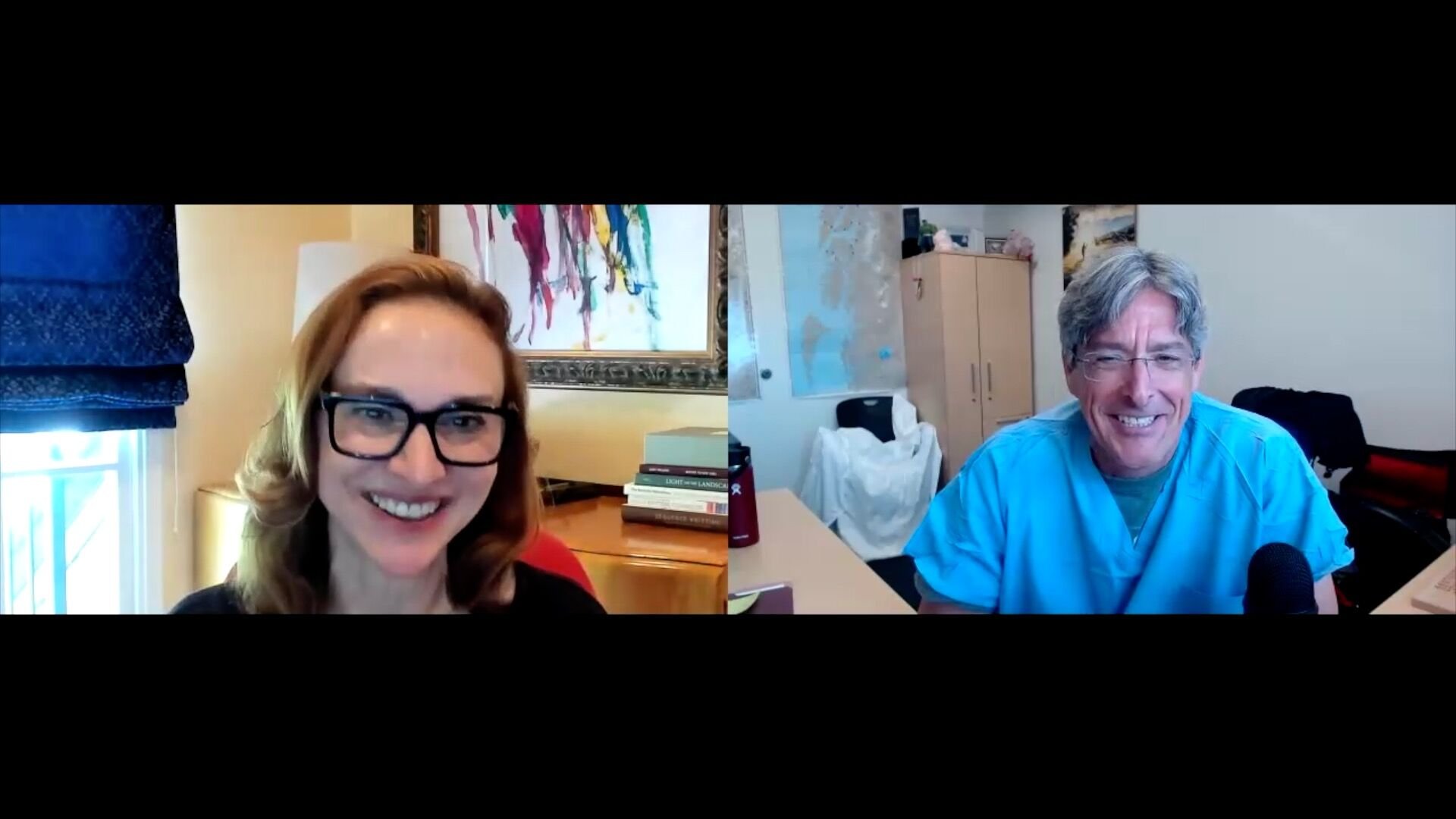
My Podcast Interview on Burnout and Misalignment with James Nutter on A Life Well Lived
I had another fascinating conversation with James Nutter of IM Wealth on his podcast A Life Well Lived: A Physician's Guide to Wealth. We talked about the ways that living out of alignment with your personal values can lead to burnout, disappointment, and disengagement.
Giving name to your values breathes life into them. It helps you to develop goals and plans that are realistic, purposeful, and personally fulfilling. And naming values that you share with your spouse or loved ones can also help to connect you more deeply to the life you are living now and the future you are dreaming of.
I had another fascinating conversation with James Nutter of IM Wealth on his podcast A Life Well Lived: A Physician's Guide to Wealth. In this episode, we focused on the ways that living out of alignment with your personal values can lead to burnout, disappointment, and disengagement.
Giving name to your values is powerful, because it breathes life into them. This acknowledgement of who you are and what you stand for can give you the insight you need to create a life that feels purposeful and personally fulfilling. And naming values that you share with your spouse or loved ones can also help to connect you more deeply to the life you are living together now and the shared future you are dreaming of.
In this episode we discuss:
🔥 Why burnout is not a personal failure
🔥 How chronic misalignment shows up as anxiety, fatigue, cynicism, or numbness
🔥 Why achieving impressive goals can still feel empty
🔥 The importance of clarifying personal values before setting career goals
🔥 How a personal mission statement can act as a decision-making filter during hard seasons
🔥 Practical ways physicians can advocate for healthier systems without burning bridges
Rather than beginning with a run for the exit from clinical practice when your values don’t line up with your organization, we discuss how you can start with building alignment, optionality, and agency. We explore how small but intentional systems — both personal and organizational — can reduce burnout at its source and restore a sense of meaning and coherence to your life. And we look at ways that you can design calculated shifts that over time will help you to create a sustainable and joyful life.
If you are feeling trapped, exhausted, or uncertain about your next step, this episode offers both validation and direction. Burnout is not proof that you are broken. Often, it is information which, when understood clearly, can become a catalyst for wiser, more aligned change.
Besides being an inspiring podcast host, James specializes in holistic financial guidance for physicians. I don’t formally endorse specific services or financial advisors, but I value his empathetic perspective and his insight into the unique challenges that physicians face.
You can find our conversation anywhere you listen to podcasts, or through the Spotify link below.

Maximize Efficiency and Achieve Work-Life Balance: The Time Priority Matrix for Physicians
The time-priority matrix (also known as the Eisenhower Matrix) is a simple visual tool that helps you sort tasks by urgency and importance so you can spend your energy where it matters most. This tool is especially valuable for busy physicians who are constantly pressed for time.
An earlier version of this article appeared on this website in July, 2024
Do you ever finish the day feeling as if the time raced by, but instead of making meaningful progress on your goals, you’ve just been putting out fires?
If you’re feeling a constant surge of urgent issues layered on top of your daily responsibilities and opportunities, it can be hard to step back and decide what truly deserves your attention.
The Time Priority Matrix can help you to visualize not only where your time is going but how you are spending it. By sorting your daily activities into clear categories, you will discover how your attention is being directed, and where opportunities may exist to streamline, refocus, and make better use of this valuable and limited resource.
This framework is also known as the Eisenhower Matrix. Former US President Dwight D. Eisenhower didn’t create the idea, but he famously referenced Dr. Roscoe Miller, a former president of Northwestern University, when he said:
"I have two kinds of problems: the urgent and the important. The urgent are not important, and the important are never urgent.”

The matrix was later popularized by Stephen Covey in his landmark book The 7 Habits of Highly Effective People. It’s often taught to business leaders, but the concepts can easily be applied to physicians and anyone else seeking to take back some control of time and attention.
How to Use the Time Priority Matrix
Quadrant I
Quadrant I tasks are both urgent and important. Ideally these are limited, but as a physician, these tasks are part of daily life.
The critically ill patient, the urgent report, the call from a worried family member. Many of these urgent and important demands are unavoidable and outside of your control. But sometimes there is a way to mitigate the urgency, and that's where Quadrant II comes into play.
Quadrant II
Quadrant II includes preparation, planning, and prevention. This is the quadrant of anticipation, which means troubleshooting before problems arise. It’s the foundation of preventive care.
You can also apply this idea to your own life. For example, if you're studying for your boards, setting aside a consistent amount of time each day over several months will take you much further than cramming in the final weeks before the exam. Similarly, when you’re learning a new skill or technique, consistently making time to practice it builds confidence and readiness.
Building trusting relationships with patients and colleagues also falls into Quadrant II. By investing time and effort early, you foster trust and collaboration. These qualities are difficult to build without preparation. Ultimately, that groundwork allows your care to be delivered more efficiently and effectively.
Work in this quadrant might not always be exciting or immediately fulfilling, but it will keep you on track to accomplish the goals that are meaningful to you.
You can apply Quadrant II ideas to your personal life as well. Consider your relationships, family, and other interests. What can you do to ensure that the things that matter to you outside of work are cared for and able to flourish?
Quadrant III
Quadrant III is more problematic. These tasks feel urgent, but they are not particularly important.
Physicians are often deeply familiar with this quadrant: interruptions, EHR redundancies, pre-authorization inefficiencies, certain meetings, and much of email communication. These demands can fragment attention and drain energy.
One helpful strategy here is working in focused “chunks,” a technique called task batching. By grouping similar tasks together, you’ll reduce context switching and improve efficiency. Setting and sticking to clear boundaries, like addressing non-urgent issues only at designated times, can also limit interruptions.
Delegation is another key Quadrant III strategy. Can routine paperwork be handled by someone else, leaving only physician-specific sections for you? Can your staff be empowered to manage simple patient requests or schedule visits without your input when an in-box message clearly requires more than a brief response, but doesn’t need emergency care? Reasonable delegation can easily save you an hour or more every day.
Quadrant IV
Quadrant IV is where you’re most likely to reclaim meaningful time and mental space. Mindless scrolling, low-value emails, watching random TV shows, and stressing over social media are good examples of this quadrant's activities.
Sometimes you need a little downtime, but being intentional with how you are spending it may help you to gain some well-earned margin for the things that matter most to you.
Reclaiming Your Time
Reflecting on how you’re using your time is a powerful exercise. The Time Priority Matrix gives you a practical framework for understanding and managing both your professional workload and your personal life more effectively. By mindfully prioritizing your tasks based on urgency and importance, you’ll enhance your productivity, improve your patient care, and create a healthier, more sustainable, and more fulfilling work-life balance.
DISCLAIMER: As an Amazon Associate I may earn from qualifying purchases, which means that if you click on one of the product links, I’ll receive a small commission. This helps support the website, for which I am grateful! Please do your own research before making any important decisions.
If you’ve enjoyed this article and would like to stay in the loop for more insights on creating a sustainable, fulfilling, and happy life as a physician, sign up for my newsletter or reach out on my website. I’d love to hear from you.
And if you’d like to schedule a complimentary introductory meeting with me, click the link below.

Define Your Values to Create Your Ideal Life a Physician
Your values are integral to your identity. They’re the deeply personal forces that shape your decisions, your relationships, and the way you move through the world. And although they are fundamental to who you are, it’s surprisingly easy to drift out of alignment with them. In this article, I’ll guide you through a simple exercise that will help you clarify your personal values.
An earlier version of this article appeared on this website in January, 2023
Your values are integral to your identity. They’re the deeply personal forces that shape your decisions, your relationships, and the way you move through the world. And although your values are fundamental to who you are, it’s surprisingly easy to drift out of alignment with them. Responsibilities, expectations, and the sheer momentum of daily pressures can pull you off course.
When you take time to clarify and name your values, you may find that they readily crystallize into five or six core ideas. These become the anchors that bring your life meaning, purpose, and steadiness.
In this article, I’ll guide you through a simple exercise that will help you clarify your personal values. As your bring your values into the light, your awareness will sharpen and your decisions will start to feel more intuitive and connected. You’ll recognize which of your many opportunities are worth a wholehearted “yes,” which ones deserve a thoughtful “no,” and how to move toward your next step, even when the path seems rocky and untraveled.

First, Define Your Values
The first step towards living your values is to define them. This can feel a little unnecessary at first, since you likely know intuitively what matters to you. But putting a name to your values and seeing them written out in black and white can be surprisingly illuminating.
For this exercise, think of a value as a single word that captures an idea, a belief, or a way of being in the world. I’ve created a list of values for you to get started with. You can find them here. Or you can get a guided Values Workbook for free when you sign up for my newsletter.
Go through the list and circle the values that speak most strongly to you. Don’t overthink it. Your values may change over time, and that’s completely normal. There are no right or wrong, or good or bad, answers.
Once you have circled your top values, write them out. Take a good look at what you have written and see if you can narrow them down into five groups. From there, discover what themes emerge. These are your core values.
Next, Put Your Values into Action
Now, thinking about your core values, consider how you might choose to elevate these values in your daily life. Don’t try to make sweeping changes. Instead, think of small actions or choices that might more completely align your values with your life.
If you notice a wide gap between your values and the way you’re currently living, it may be a sign to pause and reassess your path.
Translating values into daily practice isn’t always straightforward. If it feels cumbersome or misaligned, you don’t have to navigate this process alone. A physician coach can be a valuable partner, helping you build deeper self-awareness and explore options that will help you to honor your unique values and aspirations.
If you’ve enjoyed this article and would like to stay in the loop for more insights on creating a sustainable, fulfilling, and happy life as a physician, sign up for my newsletter or reach out on my website. I’d love to hear from you.
And if you’d like to schedule a complimentary introductory meeting with me, click the link below.

Coaching for Physicians: A Guided Journey to Goal Setting, Overcoming Obstacles, and Finding Fulfillment
If you’re curious about physician coaching, and want to know more, this article is for you. As someone who loves getting outdoors, I like to use the metaphor of a hike or journey when describing my coaching process. In this coaching journey, I serve as your experienced companion, providing support, insight, and encouragement, helping you navigate both familiar and new terrain, and celebrating with you as you discover your destination.
An earlier version of this article appeared on this website in January, 2024.
Are you curious about physician coaching? You might have heard a colleague share how working with a coach helped them navigate a tough decision. Or you may have encountered an article or podcast and found yourself wondering: What is physician coaching, exactly—and could it help me too?
In this article, I’ll explain what physician coaching is, and how it might help, using the metaphor of a hike to bring the journey to life. If you’re seeking clarity, support, or a new direction in your medical career, coaching might be exactly what you need to take the next step.
A Personalized Process Grounded in Experience
Each coach brings their own approach, though most certified coaches share a common foundation of skills and frameworks. As someone who loves being outdoors, I often describe coaching as a journey. Not a sprint. Not a race. But a purposeful hike. Sometimes it’s a steady climb. Sometimes it’s a scramble over rocky terrain. And sometimes, it’s about pausing to take in the view before deciding which trail to follow next.
In this journey, I’m your experienced companion. I walk beside you, not ahead of you—with a map, some hard-earned wisdom, and a deep respect for your unique path. Together, we’ll explore what’s working, what’s not, and what’s possible.
The Trailhead: Orientation and Goal Setting
Just like preparing for a hike, we’ll begin by understanding where you are and where you want to go.
And don’t worry if you’re not sure where to begin—the trail often emerges once you take the first step. As each step builds upon the last, you may find yourself surprised at the ways your strength and endurance will naturally grow along the way.
Packing Your Gear: Equipping for the Journey
Every hiker needs the right gear. In coaching, this means equipping you with practical, personalized tools—like time management strategies, communication skills, mindfulness practices, or boundary-setting techniques. Together we’ll figure out what supports you best, so you're ready for whatever terrain lies ahead.

Hitting the Trail: Taking Action
With goals set and tools in hand, we’ll move ahead with purpose. Session by session, we’ll check in, reassess, and keep the forward momentum. Some weeks may feel steady and smooth. Others might bring steep climbs or unexpected but welcome detours. That’s all part of it. Coaching helps you stay grounded, supported, and focused—even when the path feels uncertain.
Navigating the Tough Spots
Hard climbs are inevitable—whether it’s a challenging colleague, overwhelming workload, or inner doubts. Together, we’ll tackle those moments with curiosity and compassion. Coaching gives you the support you need to discover your own innate strength and flexibility. Equipped with a deep sense of your own personal values and goals, you’ll find that you can navigate difficulty without losing your direction.
Rest Stops and Scenic Views: Celebrating Your Wins
Progress isn’t only about pushing forward. It’s also about pausing to recognize how far you’ve come. We’ll recognize and celebrate your wins, however big or small. And we’ll reflect on what’s fueling your growth. Honoring your progress keeps you energized and inspired to move boldly into your future.
New Trails and Changing Seasons
The journey doesn’t end at the first summit. Like a trail that changes with the seasons, your life will continue to evolve. Coaching can help you navigate transitions, reimagine your path, and stay resilient in the face of change. Like a good hike, there’s always more to discover.
The Lookout Point: Reflection and Renewal
As your coaching journey comes to a close, we’ll take a long look at what’s behind you, and we’ll consider the journey forward. From this higher vantage point, you’ll see the terrain you’ve covered, the shifts you’ve made, and the path that’s opened up ahead. You’ll leave with tools, confidence, and a renewed sense of possibility.
Ready to Take the First Step?
You don’t need to have it all figured out. You just need to decide when to begin.
Whether you’re standing at the edge of burnout, craving change, or simply wondering what else is possible, coaching can offer you a powerful space to pause, reflect, and move forward on your own terms.
If you’ve enjoyed this article and would like to stay in the loop for more insights on creating a sustainable, fulfilling, and happy life as a physician, sign up for my newsletter or reach out on my website. I’d love to hear from you.
And if you’d like to schedule a complimentary introductory meeting with me, click the link below.

Taking Action Creates Clarity
When tackling a big life decision or career shift, you don’t need to have all the answers or even all the skills upfront—just take the first step.
The key to breaking loose? Take action in small, low-risk increments. These manageable steps not only build momentum but also chip away at the stress and anxiety that come with feeling stuck.
Here are five steps that can help you jump start the process.
An earlier version of this article appeared on this website in August, 2023
Do you ever feel like you’re standing on the edge of a cliff, unsure of how to move forward but knowing you can’t stay where you are? Maybe it feels like you’re staring down a steep ski slope, wondering how you’ll ever get to the bottom in one piece.
I’ve been there—literally. As I hesitated at the top of a daunting ski run, my adventurous friend Erica hollered, “Just point your skis down the mountain and go!” It wasn’t the most comforting advice, but it was the nudge I needed.
Spoiler alert: my descent was not graceful. But by simply starting, I learned to navigate the pitch of the slope, feel the texture of the snow, and chart a strategic path to my goal— the hot toddy waiting for me at the bottom of the mountain.
The same principle applies when tackling a big life decision or career shift: you don’t need to have all the answers or even all the skills upfront—just the courage to take the first step.
Why Taking Action Matters
When you’re physically stuck on a freezing ski slope with hot-shot skiers zooming past, you have no choice but to move. But when you’re stuck in the figurative sense—facing an unfulfilling job, a stalled project, or a major life change—it’s easy to freeze in place.
The key to breaking loose? Take action in small, low-risk increments. These manageable steps not only build momentum but also chip away at the stress and anxiety that come with feeling stuck.
How to get unstuck? Here are five steps that can help you jump start the process.

Step One: Get Out of Your Head and Onto the Page
Although there are a lot of great apps for note taking, mind-mapping, and the like, research shows that putting something on paper is often more meaningful and memorable. Simply pick up a notebook and write out what it is you hope to accomplish: that is, your goal.
Step Two: Make it SMART
Run your goal through the SMART test. Writing your responses to these questions in your notebook can help bring your ideas to life.
Is it Specific?
Is it Meaningful to you?
Is it Achievable given your current circumstances?
Is it Realistic?
Is it Time-bound, with a clearly defined deadline?
Step Three: Break It Down
List every action step you can think of, starting with the smallest one. Tiny steps add up. Whether there are five or fifty, writing them down gives you a roadmap. Each step leads you closer to your goal.
Step Four: Schedule It
Commit to your steps by scheduling them. Apps like Todoist can help you stay on track by sending reminders and giving you that satisfying “pop” when you check something off. Prefer analog? Keep a running list in your notebook. The method doesn’t matter—what counts is consistency.
Step Five: Celebrate Your Wins
Progress deserves recognition! After completing a major step—or a cluster of smaller ones—reward yourself. Whether it’s indulging in your favorite treat, going for a walk, diving into a good book, or sharing the moment with an accountability partner, celebrate what you’ve achieved.
Just Starting Changes Everything
Here’s the beauty of taking action: it often brings unexpected clarity. Goals can evolve as you learn and grow, and that’s perfectly normal. As you continue to move forward, the process itself becomes a source of insight and empowerment.
It’s also important to understand that while you have control over your actions, the outcome may not always be under your direct control. Those unexpected turns are often a source of clarity, moving you closer to a life that is personally authentic, sustainable, and meaningful.
Whether you’re staring down a treacherous ski slope, contemplating a career change, or trying to find your way through a knotty problem at work, progress happens when you take that first intentional step.
If you’ve enjoyed this article and would like to stay in the loop for more insights on creating a sustainable, fulfilling, and happy life as a physician, sign up for my newsletter or reach out on my website. I’d love to hear from you.
And if you’d like to schedule a complimentary coaching discovery session, click the button below.
References:
Masicampo, E. J., & Baumeister, R. F. (2011). Consider it done! Plan making can eliminate the cognitive effects of unfulfilled goals. Journal of Personality and Social Psychology, 101(4), 667–683.
Umejima, K. et al. (2021). Paper notebooks vs mobile devices: Brain activation differences during memory retrieval. Front. Behav. Neurosci., 15. 1-11.

Coaching for Healthcare Leaders
As a member of the American College of Cardiology’s Physician Well-Being Working Group, I am fortunate to be part of the change that’s happening within cardiology and healthcare in general.
Coaching is increasingly recognized as a way to support and retain physicians, an aid for reducing burnout, and a tool that can improve the healthcare environment for physicians, staff, and the patients that we serve.
The first in a series of webinars put on through the ACC was presented in early 2024. You can watch it here, or maybe take it along with you and listen during your commute to work.
As a member of the American College of Cardiology’s Physician Well-Being Working Group, I am fortunate to be part of the change that’s happening within cardiology and healthcare in general.
Coaching is increasingly recognized as a way to support and retain physicians, an aid for reducing burnout, and a tool that can improve the healthcare environment for physicians, staff, and the patients that we serve.
The first in a series of webinars put on through the ACC was presented in early 2024. You can watch it here, or maybe take it along with you and listen during your commute to work.